
How do we bridge the gap between abstract academic concepts and the tactile curiosity of a developing mind? This is the fundamental challenge facing STEM educators, who must move beyond textbooks to foster genuine intellectual engagement. By creating environments where scientific principles are not just observed but physically constructed, local institutions are attempting to move the needle on early childhood interest in technical fields.
Building Scientific Literacy Through Tangible Practice
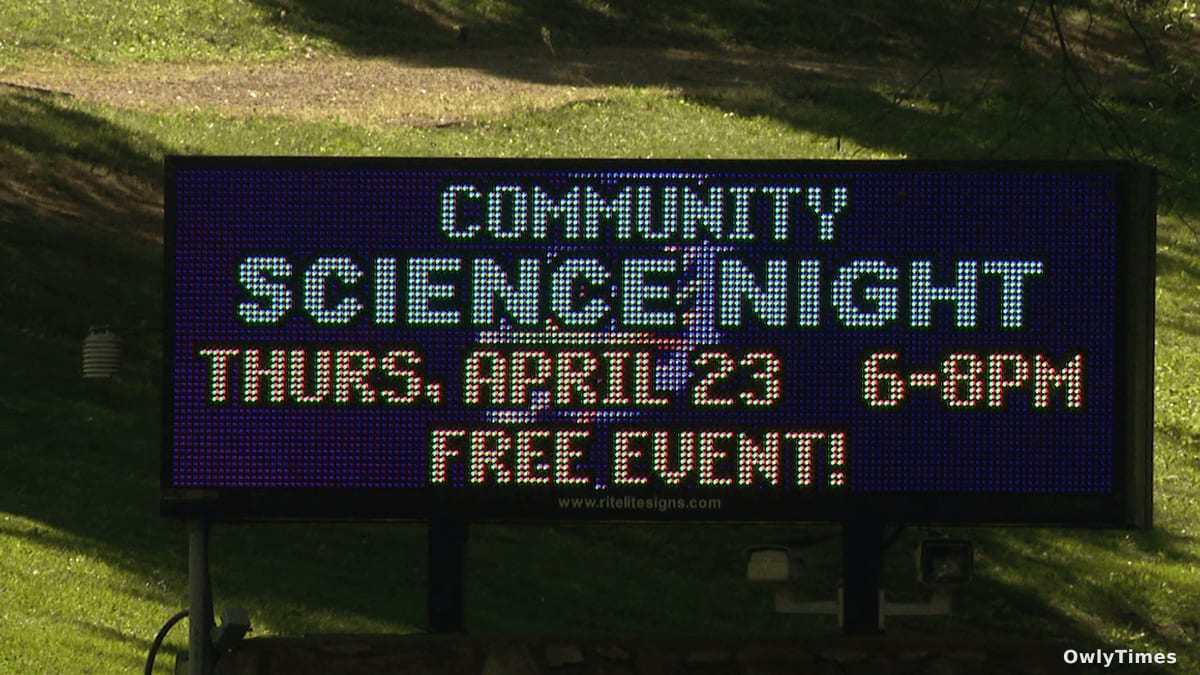
On Thursday, April 23, 2026, Haywood Community College (HCC) will open the doors of its Hickory Building for its annual Community Science Night. Running from 6 p.m. to 8 p.m., the event is designed to demystify complex subjects through a series of six hands-on stations. While many public science outreach programs rely on passive demonstrations, the methodology here prioritizes the creation of physical artifacts.
Kevin Winfree, an HCC math instructor, highlights the pedagogical value of this approach. "The cool thing about this event is that the kids actually get to make something and usually five or six different things, then take it with them and leave with it," says Winfree. By allowing students to bring their projects home, the college extends the duration of the learning experience well beyond the two-hour window of the event itself.
Navigating the Promise and Limits of STEM Outreach
It is important to distinguish between the stated goals of such initiatives and their measurable impact. While headlines often frame these events as "science festivals" or "STEM boosters," the study of education tells us that a single evening of engagement is rarely enough to shift long-term academic trajectories. These events serve as a spark, but they are not a substitute for sustained curriculum.
Limitations to consider include the scale of the impact. While the event is part of the state’s larger science festival, the local nature of the program means it can only reach a small fraction of the student population in Haywood County. Furthermore, the reliance on a two-hour window for complex exploration means that depth of understanding is necessarily sacrificed for breadth of exposure. The success of this model depends entirely on whether participants follow up these experiences with deeper academic exploration in the classroom.
Scaling the Impact of Hands-on Education
The inclusion of food—specifically free pizza and drinks—is a standard but effective logistical choice for increasing accessibility, ensuring that the barrier to entry remains low for families. As WLOS staff reported on April 22, 2026, the event is free of charge, which is a critical factor in removing socioeconomic hurdles to scientific enrichment.
The true test of this event’s efficacy will not be measured by the number of attendees on Thursday night, but by the longitudinal interest in STEM courses at the local level. The next reading of enrollment numbers in introductory STEM programs at HCC following this year’s outreach cycle will indicate whether these community-based efforts are successfully translating into formal student interest. As we observe the ongoing state science festival, the broader trend to watch is how these tactile, short-form engagement strategies evolve to meet the needs of an increasingly digital-native generation.





