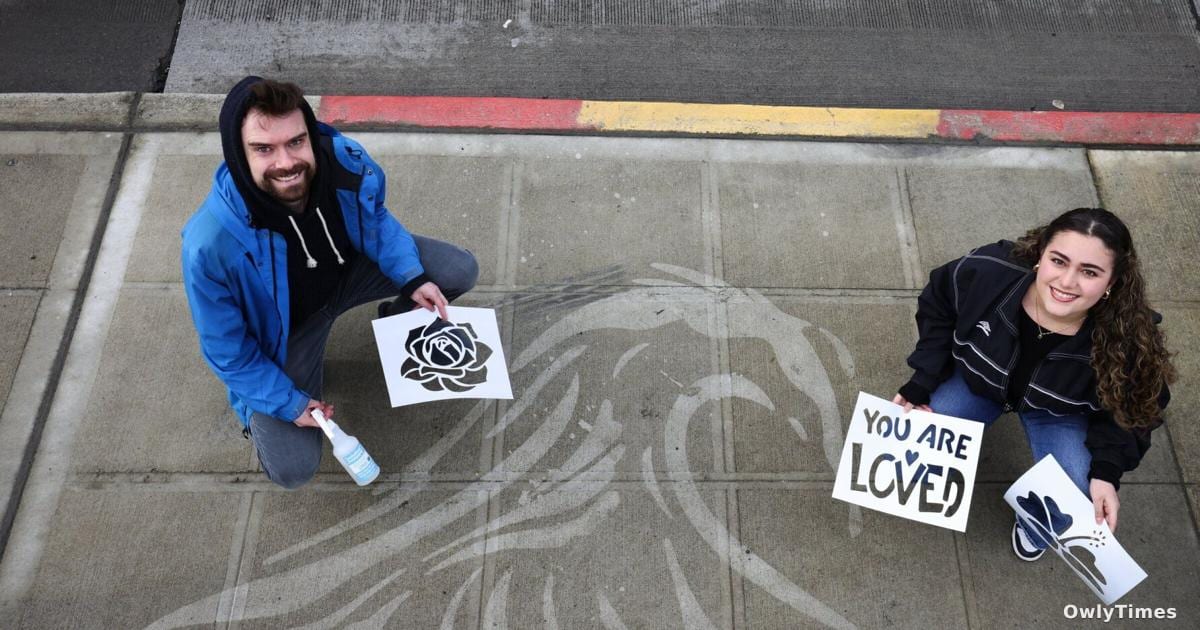

$250,000 in Kickstarter funding launched a Seattle-based art form from a late-night hobby into a global business, and now, a city-funded initiative to brighten commutes. Rainworks, the company behind the ephemeral street art that appears with the rain, isn’t just selling a product—it’s capitalizing on a uniquely Seattle acceptance of, and even affection for, inclement weather. This isn’t a story about art for art’s sake; it’s a case study in turning a regional characteristic into a sustainable revenue stream, and a model for how public works projects can leverage low-cost, high-impact interventions.
From Sidewalk Stencils to Global Demand
Peregrine Church, then a 20-year-old experimenting with superhydrophobic coatings in 2013, stumbled upon a market gap. These coatings, designed for industrial applications to repel water from machinery and electronics, held artistic potential. The initial challenge wasn’t the technology, but the aesthetics: early coatings were visible even when dry and lacked environmental friendliness. Church’s breakthrough came with sourcing a suitable, invisible, and eco-friendly coating from a manufacturer in Belgium. The first rainwork, a simple “STAY DRY OUT THERE” stenciled onto a West Seattle sidewalk, was a proof of concept. But it was a 2015 viral video—reaching tens of millions of views—demonstrating the process that truly ignited demand.
Based on the original yakimaherald.com report.
Follow the money: that video didn’t just generate views, it generated pre-orders. Recognizing the need to scale production, Church and co-founder Xack Fischer turned to Kickstarter in 2015, raising $250,000 to create and distribute DIY rainwork kits. This initial funding wasn’t just capital; it was market validation. It proved that a significant audience was willing to pay for the experience of creating their own temporary art. Rainworks has remained a sustainable business ever since, expanding beyond kits to include commissioned art installations for cities and organizations worldwide.
Seattle’s Embrace of “Delightful” Infrastructure
The Seattle Department of Transportation (SDOT)’s recent $30,000 commission for Rainworks to install four rain-activated artworks at the Beacon Hill transit plaza isn’t an isolated incident. It’s part of a broader strategy, funded by the Seattle Transit Measure and Seattle Transportation Levy, to transform transit stops into more welcoming and navigable spaces. This investment, while modest in the context of the city’s overall transportation budget, demonstrates a shift towards prioritizing “surprise and delight” in public infrastructure.
Allison Schwartz, who leads SDOT’s community and mobility hubs program, explicitly stated the goal: “We thought rain-activated art would be a great first step in bringing some surprise and delight into the small plaza.” This is a departure from traditional infrastructure projects focused solely on functionality. The Beacon Hill plaza, serving routes 50, 60, and 107, was chosen as a demonstration project, and student input—specifically a desire for play elements and connection to water—directly influenced the artwork’s design, featuring sea lions, an orca, a tidal wave, and a 25-foot maze. The positive response, both at the plaza and on social media, suggests a high return on investment for this relatively low-cost intervention.
The Global Footprint of Temporary Art
Rainworks’ impact extends far beyond Seattle. Their online map showcases hundreds of user-submitted rainworks across the globe—from a globe in China to a crocodile in Scotland. This isn’t simply brand awareness; it’s a distributed network of brand ambassadors, organically expanding the company’s reach. The business model, consisting primarily of individual sales and art commissions, benefits from this network effect.
Kamil Caputis, Rainworks’ creative lead, emphasizes the importance of community moderation, ensuring submissions are appropriate. This curation is crucial for maintaining brand integrity and fostering a positive user experience. The company’s willingness to collaborate with organizations like the Kirkland city government—creating art focused on Lake Washington pollution prevention—demonstrates a commitment to social responsibility and expands their market beyond purely aesthetic applications. In 2024, that partnership resulted in artwork featuring river otters playing basketball with the message “Animals live and play here too — protect their home.”
What This Means for Your Wallet
Rainworks’ success isn’t just a feel-good story about turning rainy days into opportunities for joy. It’s a lesson in identifying unmet needs and leveraging unique regional characteristics. For investors, it highlights the potential of niche markets and the power of viral marketing. For consumers, it demonstrates that small-scale, community-driven initiatives can have a significant impact on quality of life.
But the key question remains: can Rainworks scale its business model without losing its core identity? The company’s reliance on a specialized coating supplier in Belgium introduces a potential supply chain vulnerability. Watch for Rainworks to either diversify its sourcing or invest in developing its own coating technology to mitigate this risk. Furthermore, the increasing demand for commissioned artwork could strain the company’s creative capacity. Will they maintain the quality and originality of their designs as they expand, or will the pressure to scale lead to homogenization? The answer will determine whether Rainworks remains a unique Seattle success story, or becomes another example of a promising startup diluted by rapid growth.





