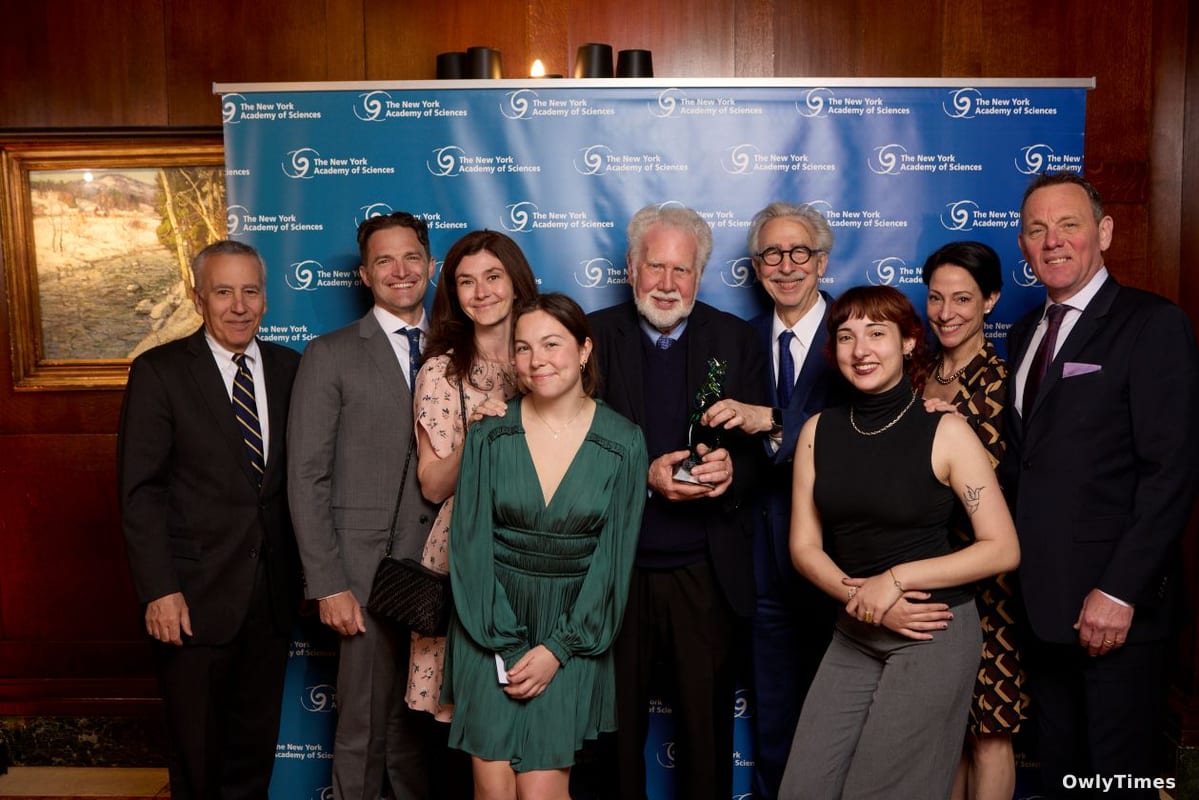

What does it mean to build an institution in an era defined by institutional skepticism? This question serves as the quiet, underlying tension behind the recognition of John E. Sexton, a legal scholar and former university president whose career has been defined by his belief in the “commonweal.” On April 21, 2026, the New York Academy of Sciences awarded Sexton its second-ever Trailblazer Award at the University Club in New York City. While the event served as a celebration of a long career in academia, the discourse surrounding the honor highlights a growing friction between the values of the past and the challenges facing contemporary intellectual life.
The Trailblazer Award, inaugurated in 2025 with AI pioneer Yann LeCun, aims to recognize those who have significantly altered the trajectory of their fields. The headline-level narrative focuses on Sexton’s long tenure as the 15th president of New York University from 2002 to 2015. However, the substance of his acceptance speech pointed toward a more foundational concern: the erosion of faith in the institutions that once acted as the bedrock of society. By referencing the Latin motto of the defunct Brooklyn Preparatory School—Sanctitas, Scientia, Sanitas—Sexton argued that the preservation of the mind, body, and soul is no longer viewed as a societal axiom.
Defining the Scholar-Administrator
Sexton’s professional history is a study in bridging disparate disciplines. Before his administrative roles, he served as a professor of religion at Saint Francis College and later as a law clerk to Chief Justice Warren Burger of the United States Supreme Court. His academic path, which included a PhD in the History of American Religion from Fordham University and a JD magna cum laude from Harvard Law School, suggests a career built on the integration of theology and legal theory.
At NYU, where he joined the law faculty in 1981, his influence was perhaps most visible in his approach to interdisciplinary teaching. He famously developed a course titled “Baseball as a Road to God,” which he later adapted into a 2014 book. Critics of such unconventional curricula often miss the stated pedagogical goal: to encourage “noticing capacity” and to cultivate a slower, more deliberate way of observing the world. This approach, while distinct from traditional legal scholarship, reflects his broader philosophy that higher education should foster a heightened sensitivity to the “specialness of our life.”
The Challenge of Community in a Polarized Era
There is a notable contradiction between the public perception of high-level academic administration and the humble tone Sexton struck during the Spring Soirée. While Linda G. Mills, the current president of NYU, credited him with “redrawing the map” of higher education, Sexton’s own remarks leaned into self-deprecation. He compared his inclusion among the Academy’s honorees to the Sesame Street game, “One of These Things (Is Not Like the Others),” framing his role not as a leader of miraculous acts, but as an observer of them.
This perspective provides a necessary counterpoint to the celebratory tone of such awards. As Sexton noted, the primary hurdle for the current generation of leaders—including the Academy’s president, Nicholas Dirks, and board chair Peter Salovey—is navigating a climate where collective thought is increasingly under challenge. The shift from a society that values sacrifice for the “commonweal” to one that views such institutions with suspicion is a measurable trend that continues to dictate the environment in which universities and scientific bodies must operate.
Next Steps for the Academy
The next reading of the Academy’s fundraising success, as measured by the ongoing support garnered through the annual Spring Soirée, will serve as a bellwether for the organization’s reach. As the Academy seeks to maintain its influence, the focus will remain on how its leadership navigates the balance between traditional academic inquiry and the rapidly shifting demands of modern research. Whether this community of thought can successfully re-establish its standing in a polarized society remains the primary challenge for the coming years.