
The fundamental bottleneck in modern material science is not the lack of computational power, but the scarcity of high-quality, physical data. For decades, the process of discovering a new superconductor or a more efficient semiconductor has been a painstaking, manual endeavor defined by slow feedback loops and limited trial-and-error. San Francisco-based Periodic Labs is betting that the path to discovery lies in closing this loop by marrying autonomous robotics with generative AI, a premise that has now attracted a valuation of $7.5 billion.
Automating the Scientific Method
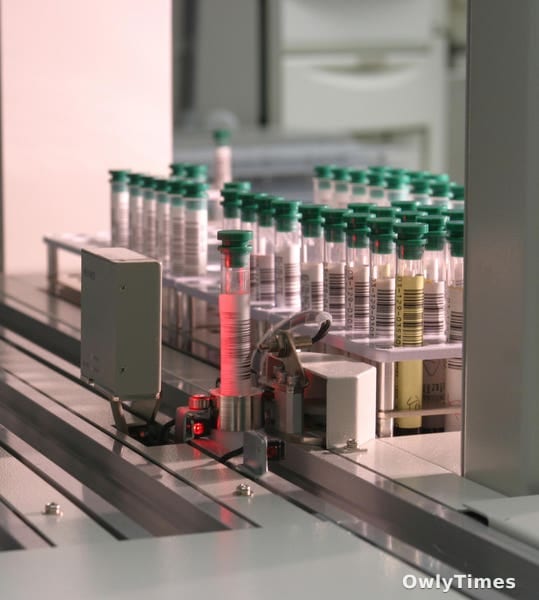
At the heart of the company’s architecture is a vision of the "AI scientist," a system designed to perform thousands of chemistry and physics experiments without human intervention. By deploying autonomous robotic laboratories, the firm aims to generate its own proprietary data rather than relying on the static, pre-existing datasets that train most large language models. This shift represents a departure from purely digital simulation, moving toward a "closed-loop" model where an AI predicts a material's properties, directs a robot to synthesize and test it, and then ingests the results to refine its own internal logic.
The company was co-founded by Liam Fedus, formerly a vice president of research at OpenAI, and Ekin Dogus Cubuk, a former research scientist at Google’s DeepMind. Their strategy is currently focused on the practical application of these systems to identify superconductors that function at higher temperatures and to assist the semiconductor industry in R&D processes. By hiring more than 20 researchers from powerhouses like Meta, OpenAI, and DeepMind, the firm is signaling that the industry's focus is shifting away from conversational agents and toward agents that can perform bench science.
The Reality of Market Valuations
While the headlines tout a staggering $7.5 billion valuation, the financial mechanics behind this number reveal a company moving at an unprecedented pace. When the startup emerged in September of last year, it secured a $300 million seed round at a $1.3 billion valuation. If the current deal, led by the investment vehicle AMP—founded by former Andreessen Horowitz general partner Anjney Midha—closes at the $7.5 billion mark, the company’s valuation will have increased nearly sixfold in less than eight months.
However, it is vital to distinguish between market enthusiasm and technological maturity. The reported $500 million infusion is predicated on the promise of future performance rather than existing commercial scale. While Bloomberg noted in March that these discussions were already underway, the leap from a $1.3 billion valuation to $7.5 billion suggests that investors are pricing in the "holy grail" of autonomous scientific discovery, not merely the current output of the robotic labs.
Limitations to Consider
The primary risk for any organization attempting to automate the bench is the "garbage in, garbage out" problem. If the robotic experiments do not produce data that is meaningfully superior to human-led research, the AI models will not yield the breakthroughs promised to investors. Furthermore, the reliance on high-temperature superconductors as a primary goal is a notoriously difficult field of study where progress has historically been measured in decades, not months. The company has not responded to requests for comment, leaving the specific technical benchmarks of their current robotic fleet largely opaque to the public.
The next reading of the company’s progress will be measured by their ability to transition from these highly publicized funding rounds to verifiable material discoveries. As they scale their robotic infrastructure, the industry will be watching to see if their AI-generated data can truly outpace the traditional, human-led research methods that have defined the semiconductor and materials sectors for generations.