
The persistent search for order in the universe has led physicists down some unexpected paths, but few as conceptually jarring as the recent accidental creation of a “time crystal” at New York University. While headlines proclaim a defiance of the laws of physics, the reality, as often happens, is more nuanced – and arguably more fascinating. This isn’t about building a time machine, but about uncovering a fundamentally new state of matter with potentially revolutionary implications for technologies like quantum computing. The significance lies not in breaking physics, but in revealing a previously unknown way that matter can organize itself, challenging our intuitive understanding of equilibrium and energy.
The core concept hinges on symmetry, specifically time symmetry. For centuries, we’ve operated under the assumption that the laws of physics function identically whether time moves forward or backward. A time crystal disrupts this notion. Unlike a traditional crystal, which exhibits repeating patterns in space, a time crystal displays repeating patterns in time – oscillating without any external energy input. Imagine a clock that ticks forever without winding. This isn’t perpetual motion, a long-discredited idea, but a stable, low-energy state where the system inherently repeats its motion. The NYU team, led by David Grier, Mia Morrell, and Leela Elliot, weren’t even looking for time crystals; they were studying how microscopic particles interact through sound waves.
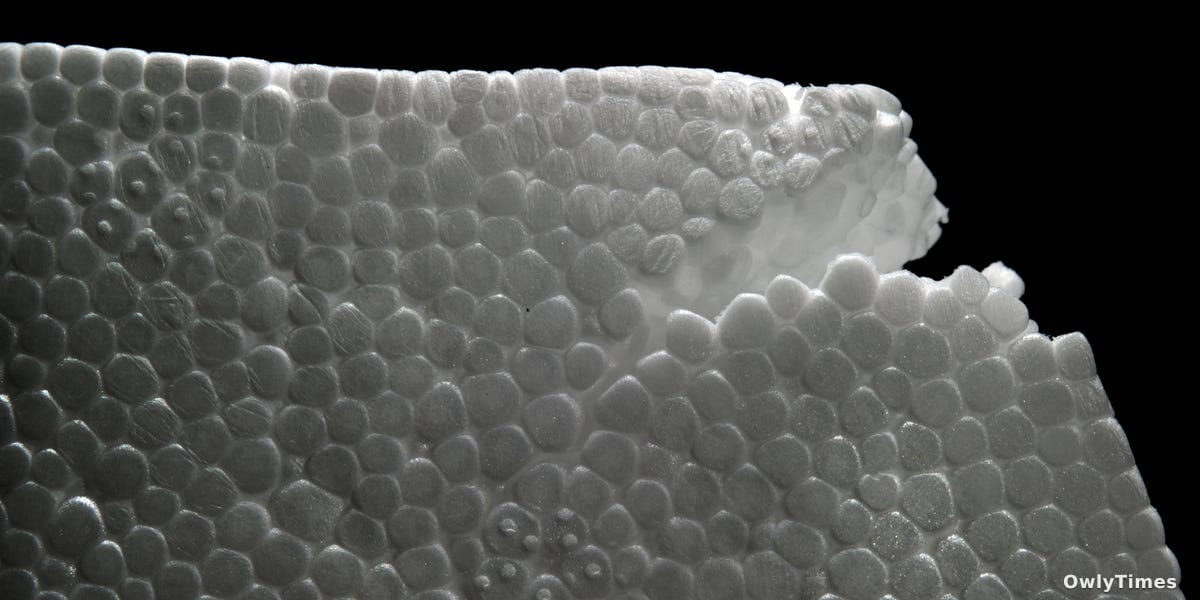
Their experiment, detailed in Physical Review Letters, involved levitating tiny polystyrene beads using precisely tuned sound waves. These aren’t just floating randomly. The researchers created a “standing wave” – a stationary oscillation of sound – and observed that the beads, due to slight variations in size, began to interact in a peculiar way. “Unless the particles have identical scattering properties, their wave-mediated interactions are nonreciprocal,” the researchers explained. This “nonreciprocity” means that one bead influences another differently than vice versa, creating a feedback loop that allows them to harvest energy from the sound wave and sustain their oscillations. Crucially, this system, functioning with as few as two beads, is the smallest to ever demonstrate time crystal behavior. The fact that such a complex phenomenon can emerge from such a simple setup is what makes this discovery so compelling.
This article draws on reporting from popularmechanics.com.
The implications extend beyond fundamental physics. The ability to create and control these oscillating systems could be harnessed for quantum technologies. Elizabeth Rayne, who reported on the discovery for SYFY WIRE, notes the potential for use in quantum computer memory, where the stable, repeating oscillations could store information, or as highly sensitive quantum sensors that require no external power source. However, it’s important to temper enthusiasm. These are theoretical applications at this stage. The current system requires carefully controlled laboratory conditions – a specific frequency of sound, a vacuum environment, and precisely sized particles. Scaling this up to a practical device presents significant engineering challenges.
The Challenge of Maintaining Order
One key limitation to consider is the fragility of the system. While the oscillations can persist for hours, any disturbance – a change in temperature, a stray vibration – can disrupt the delicate balance and collapse the time crystal state. This sensitivity highlights the difference between demonstrating a phenomenon and engineering a reliable technology. Furthermore, the polystyrene beads used in the experiment aren’t ideal for all applications. Their properties limit the frequencies at which the system can operate and may not be compatible with other materials needed for quantum devices. The researchers acknowledge this, emphasizing that their work provides a proof of concept, a foundation for exploring more robust and versatile time crystal systems.
Beyond Polystyrene: Expanding the Search
The NYU team’s accidental discovery has spurred a flurry of research activity. Other groups are now exploring different materials and methods for creating time crystals, including using trapped ions and superconducting circuits. A recent breakthrough, also highlighted by Rayne, demonstrated a time crystal linked to an external system for the first time, opening up possibilities for controlling and manipulating these states. This is a critical step towards realizing practical applications. The focus is shifting from simply creating time crystals to controlling them – tuning their oscillations, interacting with other quantum systems, and protecting them from environmental noise.
What to Watch For in the Coming Years
The next crucial step is to move beyond proof-of-concept experiments and begin to explore the potential of time crystals in real-world devices. Specifically, researchers will be attempting to integrate time crystal elements into prototype quantum sensors and memory modules. The key question isn’t if time crystals can be used in these applications, but how efficiently and reliably. Will the inherent fragility of these systems prove insurmountable, or can engineers develop techniques to shield them from external disturbances? The answer to that question will determine whether time crystals remain a fascinating curiosity or become a cornerstone of future quantum technologies.





