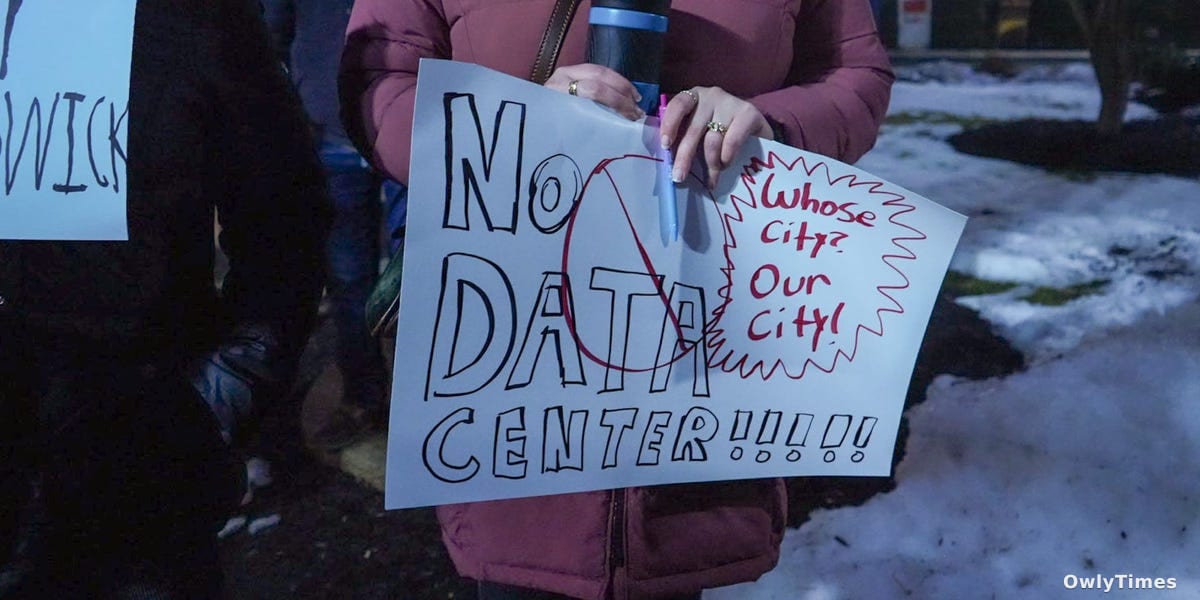

Is the future of artificial intelligence going to be decided not in Silicon Valley boardrooms, but in New Jersey city council meetings? That’s the question bubbling beneath the surface of a recent victory for residents of New Brunswick, who successfully blocked a potential data center from being included in a redevelopment plan. The real story here isn't about one city’s zoning dispute – it’s about a fundamental power imbalance emerging as Big Tech’s insatiable appetite for data clashes with the practical realities of local communities. We’re being told AI is inevitable, a transformative force, but the infrastructure powering it is anything but preordained.
The Data Center Land Grab and Its Discontents
The scramble for server space is real. According to a Business Insider investigation, over 1,200 data centers were approved for construction across the US by the end of 2024. That’s a 40% increase from the previous year, fueled by the explosive growth of large language models and the promise (or threat, depending on your perspective) of ubiquitous AI. These aren’t small operations; they’re warehouse-scale facilities capable of consuming as much power as entire states and guzzling water at alarming rates, particularly in drought-prone regions. The narrative from tech companies focuses on innovation and progress, but rarely acknowledges the very tangible costs borne by the communities hosting these facilities.
This piece references the Business Insider report.
New Brunswick’s Revolt: A Modern-Day “Shot Heard ‘Round the World”
The scene in New Brunswick on February 18th felt surprisingly… revolutionary. Ben Dziobek’s jubilant announcement – “They canceled it! They canceled it!” – echoed the spirit of local resistance. This wasn’t a protest against some abstract technological threat, but a direct response to a potential drain on local resources and a disruption of community life. As Daniel Dominguez, New Brunswick’s city planner, conceded, the data center wasn’t “critical to the project,” suggesting the city was willing to sacrifice local interests for the sake of attracting tech investment. The Climate Revolution Action Network played a pivotal role, framing the issue not just as environmental concern, but as a broader fight against the unchecked expansion of AI infrastructure into residential areas. Their success demonstrates that simply allowing a possibility isn’t the same as having community buy-in.
Beyond New Jersey: A National Pattern of Resistance
New Brunswick isn’t an isolated case. Similar battles are erupting across the country. In Clarmore, Oklahoma, a resident was arrested for exceeding their allotted speaking time at a council meeting discussing a proposed data center. In San Marcos, Texas, hundreds protested a data center plan for nearly nine hours before the city council ultimately scrapped it. These aren’t NIMBY (“Not In My Backyard”) arguments, though that label will inevitably be applied. They’re legitimate concerns about water usage, energy consumption, noise pollution, and the overall impact on quality of life. The fact that these protests are gaining traction suggests a growing awareness – and a rising level of skepticism – about the promises of AI. It’s a stark contrast to the breathless coverage often found in tech publications.
The Illusion of Inevitability and the Power of Local Control
The tech industry operates on a narrative of inevitability. AI will change the world, therefore we must build the infrastructure to support it, regardless of the consequences. But this ignores a crucial point: technology isn’t neutral. It’s shaped by the decisions of those who build it, and those decisions are often driven by profit motives. The resistance in New Brunswick, Clarmore, and San Marcos demonstrates that communities aren’t passive recipients of technological change. They have agency, and they’re increasingly willing to exercise it. The question now is whether this localized resistance can coalesce into a broader movement demanding greater transparency and accountability from Big Tech.
Here’s what to watch for: in the next 18 months, expect to see a surge in legal challenges to data center permits, focusing on environmental impact assessments and water rights. The communities that successfully push back won’t just be protecting their local resources; they’ll be setting a precedent for how we negotiate the future of AI – a future that, despite the hype, isn’t written in code, but in the decisions made by ordinary people.