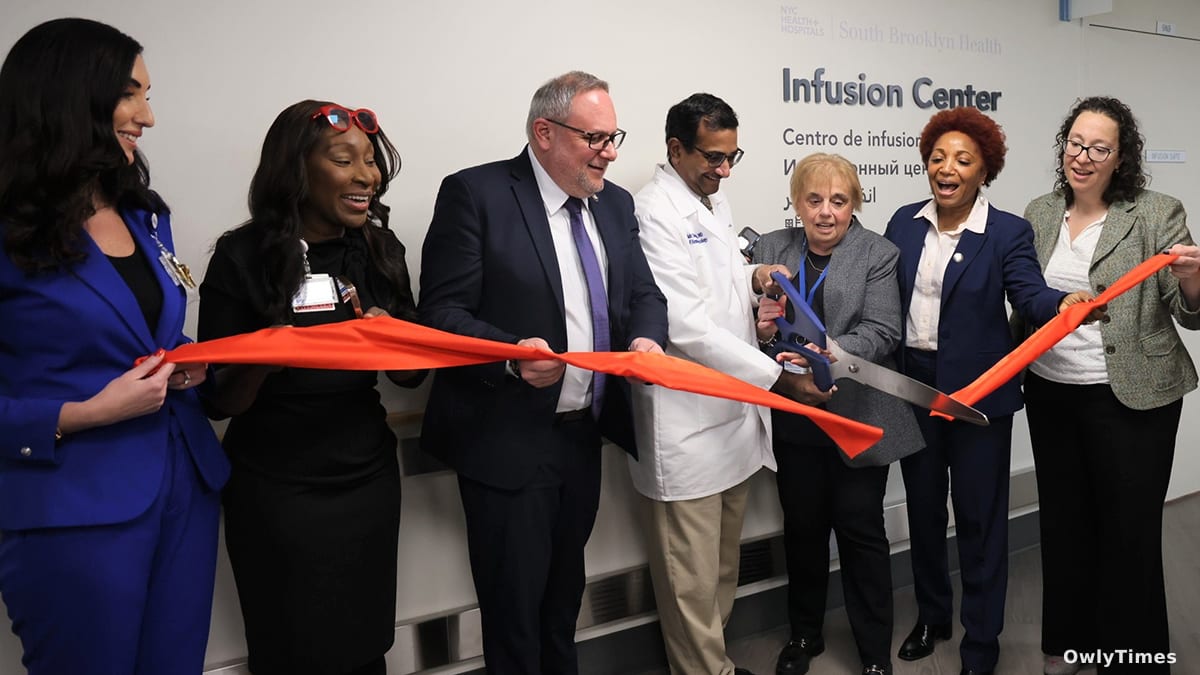

The narrative around cancer care often focuses on cutting-edge technology and distant, specialized centers. But a quietly significant shift is underway, one prioritizing accessibility and holistic support within communities already facing healthcare disparities. The March 2nd opening of the expanded Oncology and Infusion Center at NYC Health + Hospitals/South Brooklyn Health isn’t simply about more exam rooms – it’s a deliberate restructuring of care, bringing a wider range of services under one roof and signaling a commitment to treating the whole patient, not just the disease. While headlines tout the $2 million renovation and increased capacity, the deeper story lies in the intentional integration of services and the implications for equitable cancer care in a historically underserved area of Brooklyn.
The expansion itself is substantial. The center has grown from five to thirteen exam rooms and from seven to eleven infusion bays, a physical manifestation of the anticipated doubling of patient volume. This isn’t merely about accommodating more people; it’s about reducing wait times and improving access for a population where proactive screening and timely treatment are often barriers. However, it’s crucial to understand that increased capacity alone doesn’t guarantee improved outcomes. The true innovation lies in the broadening of services now housed within the center – breast cancer prevention, infusion therapy, plastic surgery, rheumatology, medical oncology, and survivorship services are now coordinated in a single location. Svetlana Lipyanskaya, CEO of South Brooklyn Health, emphasized this point, stating the redesign aims to improve the patient experience by making care “more connected and accessible.” This contrasts with the common experience of cancer patients navigating fragmented care across multiple specialists and locations, a logistical and emotional burden that can significantly impact treatment adherence.
The addition of Dr. Bindu Bahuleyan, a board-certified plastic and reconstructive surgeon, is particularly noteworthy. Reconstructive surgery following cancer treatment is often considered an ancillary service, relegated to a separate process after the primary oncological intervention. Integrating this expertise directly into the Oncology and Infusion Center acknowledges the importance of addressing the physical and psychological impact of cancer treatment, offering a more comprehensive and supportive experience. This holistic approach is echoed by Dr. Selwena Brewster, Chief Medical Officer, who described the center as a space where patients can feel “dignity, comfort, and reassurance.” The fifty-six percent increase in staff, from sixteen to twenty-five, further supports this commitment to personalized care, allowing for more attentive support throughout the patient journey.
Source material: nychealthandhospitals.org.
However, it’s important to consider the limitations of this expansion. While the increased capacity is a positive step, South Brooklyn Health, like many public hospitals, operates within a complex funding landscape. Sustaining these expanded services will require ongoing investment and advocacy. Furthermore, the success of this integrated model hinges on effective communication and collaboration between the various specialties now co-located. Simply having services in the same building doesn’t guarantee seamless care; robust protocols and shared electronic health records are essential to avoid siloing and ensure continuity. Dr. Thandavababu Chelliah, Division Chief of Oncology, acknowledged the importance of removing “barriers to care,” but the specific barriers related to insurance coverage, language access, and transportation for South Brooklyn residents remain to be fully addressed.
The opening also arrives at a moment of heightened scrutiny regarding healthcare equity in New York City. While Assembly Member Michael Novakhov presented a citation to Rosanne DeGennaro, CAB Chair, recognizing the center’s importance, broader systemic issues – such as disparities in cancer screening rates and access to preventative care – persist. The Community Advisory Board’s enthusiastic support, as voiced by DeGennaro who shared her personal experience as a patient, underscores the community’s need for accessible, high-quality cancer care. But this expansion isn’t a panacea. The real test will be whether South Brooklyn Health can leverage this investment to demonstrably improve cancer outcomes and reduce disparities within its service area.
Looking ahead, the focus should be on evaluating the impact of this integrated model on key metrics: patient satisfaction, treatment adherence, time to diagnosis, and ultimately, survival rates. Researchers should also investigate the cost-effectiveness of this approach compared to traditional, fragmented care models. More importantly, the South Brooklyn Health model offers a blueprint for other public hospitals serving diverse communities. The question now is whether this commitment to integrated, accessible cancer care can be replicated and scaled to address the broader challenges of healthcare equity across New York City and beyond – and whether the data will support the promise of a more patient-centered, effective approach.





