
Beyond Bricks and Bubbles: The Enduring Relevance of Hands-On Science
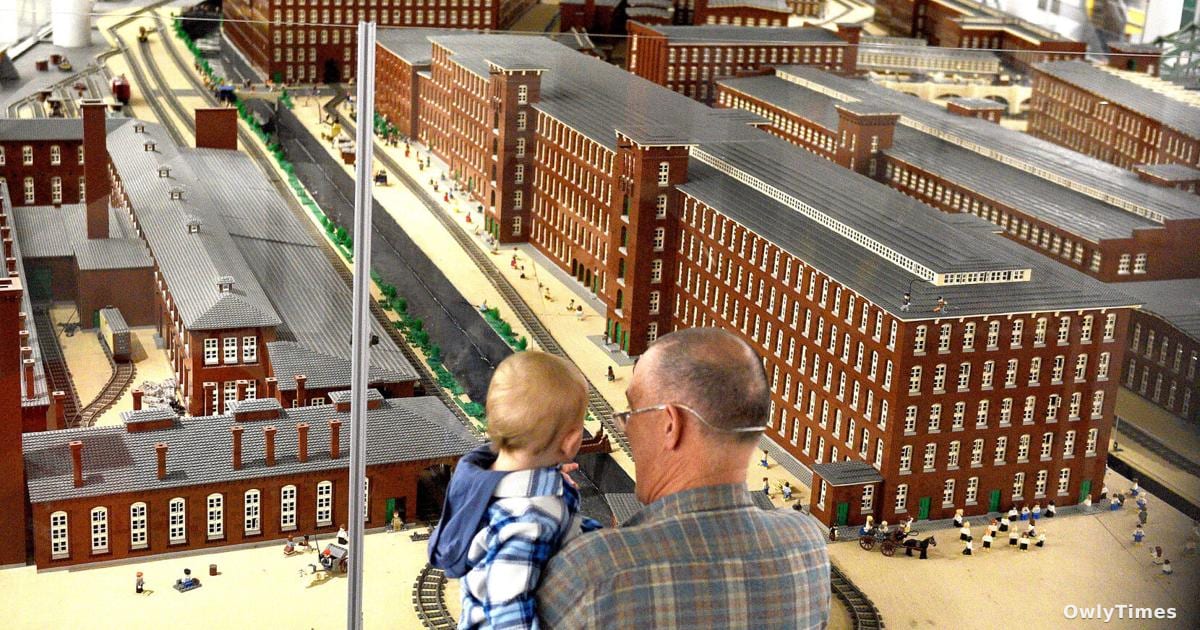
The celebration of the SEE Science Center’s 40th anniversary in Manchester isn’t simply a nostalgic look back at four decades of field trips and summer camps. It’s a timely reminder of a fundamental, and often overlooked, challenge in science education: bridging the gap between abstract concepts and tangible understanding. While national conversations often focus on STEM workforce development and standardized test scores, the SEE Center’s longevity speaks to the enduring power of informal learning – the kind that happens when a grandfather like Greg Scholand of Ossipee helps his grandson Perry build a miniature Millyard out of Lego, sparking curiosity about engineering and local history simultaneously. This isn’t about creating future scientists, necessarily, but about cultivating a scientifically literate public, a need that feels particularly acute in an era defined by misinformation and complex global challenges.
A History Rooted in Community Need
The SEE Science Center, originally founded as the Science and Technology Center of New Hampshire in 1984, emerged from a specific local concern. As reported by Will Martino of the Union Leader, the center wasn’t born from a top-down initiative, but from a grassroots effort to provide accessible science experiences. This origin story is crucial. Many science museums and centers are affiliated with universities or large institutions, potentially creating barriers to entry for families without those connections. The SEE Center’s consistent presence in Manchester for four decades demonstrates the viability of a community-focused model, one that prioritizes engagement over exclusivity. This is particularly noteworthy given the shifting landscape of museum funding, where reliance on grants and donations can lead to fluctuating accessibility and program availability.
This article draws on reporting from unionleader.com.
What the Anniversary Reveals About Informal Learning’s Impact
Headlines about the SEE Center’s anniversary understandably focus on the sheer number of visitors over the years – a significant figure, though not explicitly stated in the reporting. However, the real story lies in how the center impacts those visitors. Studies consistently show that informal learning environments, like science centers, foster different kinds of learning than traditional classrooms. Classrooms prioritize knowledge acquisition and assessment, while centers like SEE emphasize exploration, experimentation, and self-directed learning. This isn’t to diminish the importance of formal education, but to highlight the complementary role of informal settings. A child who builds a Lego Millyard might not immediately grasp the principles of structural engineering, but they will develop a sense of spatial reasoning, problem-solving skills, and a positive association with scientific thinking. These are foundational elements for future learning, regardless of career path.
Limitations to Consider: Measuring Intangible Outcomes
Assessing the long-term impact of informal science education is notoriously difficult. While attendance numbers are easily quantifiable, measuring changes in attitudes, beliefs, or future career choices requires complex longitudinal studies. The Union Leader article doesn’t offer data on these outcomes, and that’s not a criticism of the reporting, but a reflection of the inherent challenges in evaluating this type of impact. It’s also important to acknowledge that access to the SEE Center isn’t universal. Families with limited transportation or financial resources may face barriers to participation, potentially exacerbating existing inequalities in science education. The center’s continued success relies on addressing these accessibility issues and ensuring that its programs reach a diverse audience.
The Future of Hands-On Discovery: Expanding Reach and Relevance
Looking ahead, the SEE Science Center’s next steps should focus on leveraging its established community trust to address emerging scientific challenges. Consider the recent reporting on rising gas prices, highlighted by Senator Maggie Hassan’s statement regarding the $38 million increase paid by New Hampshire motorists since the start of the Iran war. This isn’t a direct connection to the SEE Center, but it illustrates the public’s need for a deeper understanding of complex systems – energy markets, geopolitical factors, and the science behind alternative fuels. Could the SEE Center develop exhibits or programs that explore these topics in an accessible way? The center’s strength lies in its ability to translate abstract concepts into tangible experiences. The question now is: how can it adapt its model to address the evolving scientific literacy needs of the 21st century, and ensure that another generation has the opportunity to learn through play, exploration, and the simple joy of building something new?