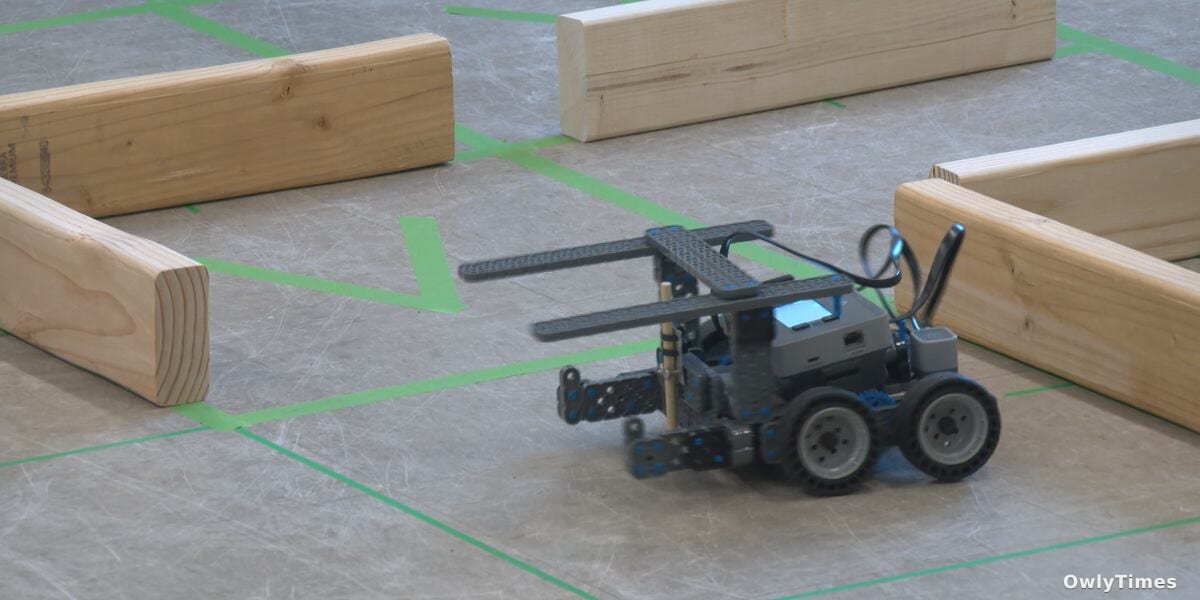

The air in UVA’s gymnasium crackled with a different kind of energy than a typical basketball game. It wasn’t the roar of the crowd, but the focused hum of whirring motors, the rapid-fire clicking of timers, and the hushed, intense collaboration of young minds wrestling with physics, engineering, and the sheer pressure of competition. This wasn’t about touchdowns or three-pointers; it was the Virginia Science Olympiad State Tournament, and for the students gathered there this weekend, it was a championship of a different order. While high school sports consistently dominate local news and school funding, events like Science Olympiad reveal a growing, and often overlooked, battle for student engagement – one fought not on athletic fields, but in labs and workshops.
Beyond the Classroom: The Rise of Specialized STEM Competition
The tournament, which drew students from across the Commonwealth, isn’t just an academic exercise; it’s a carefully constructed ecosystem of specialized challenges. As Alex Siragy, Science Olympiad coach and science teacher with Tandem Friends School, explained, “This is really an opportunity for them to dig into something that they wouldn’t necessarily get a chance to do inside the classroom.” This isn’t about regurgitating textbook facts. Events range from building complex robots – a particular strength of Charlottesville’s Tandem Friends School team – to intricate knowledge tests, demanding a depth of understanding that goes far beyond standardized curricula. The key, Siragy emphasizes, is choice. “The students can choose which events they want to work on; the events are highly specialized,” he said. “So, it gives them a chance to feel like they’re an expert in a particular field and really hone their craft.” This level of specialization is a deliberate response to a generation craving agency and a sense of mastery, something traditional education often struggles to provide.
Source material: whsv.com.
The appeal of this “expert” experience is particularly potent in a cultural moment where young people are increasingly skeptical of traditional institutions. A 2023 Pew Research Center study found that trust in institutions – including schools – has declined significantly among Gen Z, with many seeking alternative avenues for learning and skill development. Science Olympiad taps into this desire, offering a space where students can pursue passions, build tangible skills, and experience the satisfaction of solving real-world problems. It’s a counter-narrative to the often-cited anxieties about STEM education, suggesting that the problem isn’t a lack of interest, but a lack of opportunity for directed interest.
A Different Kind of Team Spirit
What’s also striking about Science Olympiad is the nature of the competition itself. It’s collaborative, not adversarial. While teams are vying for a state championship, the atmosphere is one of mutual respect and shared intellectual curiosity. Siragy himself highlights this, recalling his own experience as a high school competitor. “It’s a really awesome experience that allows students to bond over subject matter that is really challenging, but also really, really fascinating to them and lets them experience a competitive environment that’s outside of a sports environment.” This is a crucial distinction. In a society increasingly polarized and hyper-focused on individual achievement, Science Olympiad offers a model of teamwork built on intellectual pursuit, a space where students are celebrated for their collective intelligence rather than individual prowess.
This emphasis on collaboration also speaks to the evolving demands of the modern workforce. Employers are increasingly seeking candidates with strong problem-solving skills, adaptability, and the ability to work effectively in teams. Science Olympiad, with its complex challenges and collaborative environment, is arguably better preparation for these demands than many traditional extracurricular activities. The tournament saw 150 teams competing this year, a number that, while substantial, still represents a fraction of the total high school population in Virginia.
The Participation Gap and the Future of STEM
Siragy’s call for more schools to participate isn’t just a plea for broader recognition; it’s a recognition of a systemic inequity. Access to STEM opportunities, particularly those that extend beyond the classroom, is often limited by socioeconomic factors and geographic location. Schools in wealthier districts are more likely to have the resources to support Science Olympiad teams, including dedicated coaches, lab equipment, and travel funding. This creates a participation gap, potentially stifling the talent and innovation of students from underserved communities. The fact that Tandem Friends School, a private institution, consistently performs well in the robotics contests underscores this disparity.
The question now isn’t simply whether Science Olympiad is a valuable experience – the evidence strongly suggests it is – but how to make it accessible to all students. Will school districts prioritize funding for STEM extracurriculars, recognizing their potential to cultivate the next generation of innovators? Or will these opportunities remain largely confined to those who can already afford them, exacerbating existing inequalities? The future of STEM isn’t just about developing cutting-edge technologies; it’s about ensuring that everyone has the opportunity to participate in shaping that future. The energy in that UVA gymnasium this weekend wasn’t just about winning a tournament; it was a glimpse of what’s possible when young minds are given the space to explore, collaborate, and excel.





