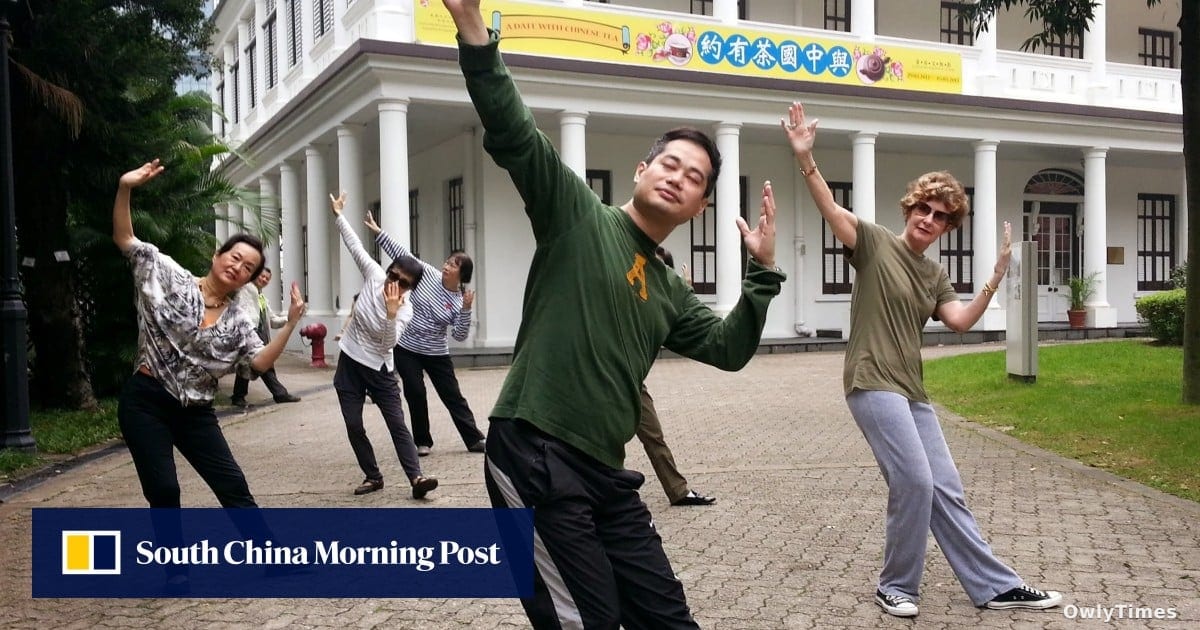

Can a movement tradition be simultaneously ubiquitous in our public parks and entirely invisible to the average wellness seeker? In Hong Kong, the answer is a resounding yes. While the city’s skyline is dotted with high-end, English-language yoga studios catering to the modern fitness enthusiast, the indigenous “internal” arts of qigong and tai chi have largely remained locked behind a language barrier. This disconnect highlights a fascinating tension: as scientific inquiry begins to validate the physiological benefits of these ancient breath-movement traditions, the actual instruction remains elusive to large swaths of the population.
The Gap Between Public Perception and Traditional Practice
The frustration of trying to access these arts is not merely a matter of convenience; it is a cultural divide. For years, the casual observer—and many newcomers to Hong Kong—might equate the slow, rhythmic motions seen in Central’s Botanical Gardens with the entirety of the practice. However, as my own search for a teacher revealed, the reality is far more rigorous. When I finally connected with a mentor in a Sai Ying Pun walk-up, his assessment of the public-facing version of these arts was blunt. During our first session, he mockingly mimicked the sweeping, feeble arm circles often performed in parks, declaring that such displays were not true tai chi. This highlights a critical distinction: what the public perceives as a gentle morning stretch often lacks the structural integrity and internal cultivation that define the actual, centuries-old discipline.
Demographic Shifts in a Super-Ageing Society
The urgency of preserving and accessing these traditions is underscored by the shifting demographics of our city. In 2024, Hong Kong officially crossed the United Nations threshold to become a “super-ageing society,” defined by a population in which more than 20 per cent are aged 65 or older. The trajectory is steep; this figure is expected to climb to 31 per cent by 2039. With life expectancy currently sitting at 84 for men and 88 for women, the city is facing an unprecedented demand for health maintenance strategies that go beyond traditional clinical interventions. We are essentially living in one of the few places on earth with better odds of surviving to age 100 than almost anywhere else, yet the resources for longevity—like the specialized breath-work practiced by local elders—remain underutilized by the broader public.
Beyond the Headline: Validation versus Accessibility
It is vital to distinguish between what the headlines promise and what the data confirms. While mainstream media often frames yoga as the gold standard for stress reduction and flexibility, scientific literature is increasingly catching up to the benefits of internal Chinese arts. These practices integrate breath regulation, postural alignment, and focused intent, which are increasingly recognized for their role in improving balance and reducing fall risks in elderly populations. The conflict lies in the delivery: while a yoga studio provides a standardized, commodified environment, the authentic transmission of qigong—as practiced by experts like Lawrence Tse in Hong Kong Park—often requires a level of individualized, linguistically complex instruction that the current commercial wellness market is not equipped to provide.
The Path Toward Integration
The next phase of this evolution will be determined by whether the city can bridge the gap between its ageing demographic and its diverse population of younger residents and expatriates. Moving forward, the integration of these practices into the mainstream health conversation will depend on whether more English-speaking instructors emerge to translate these nuanced, internal techniques for a modern audience. We are currently watching a transition where, for the first time, the scientific community is providing the data to justify the efficacy of these movements. Whether this leads to a formalization of instruction or remains a niche cultural curiosity will be the primary indicator of how we manage the health of our rapidly aging society in the coming decades.