
Are we actively making a generation less smart? It sounds like a dystopian headline, but the data emerging from classrooms across the country – and increasingly, the globe – suggests a disturbing possibility. The real story here isn't about the promise of technology in education, it’s about a systematic, decades-long experiment that’s quietly eroding fundamental cognitive skills, and the uncomfortable truth that we may have traded genuine learning for digital distraction.
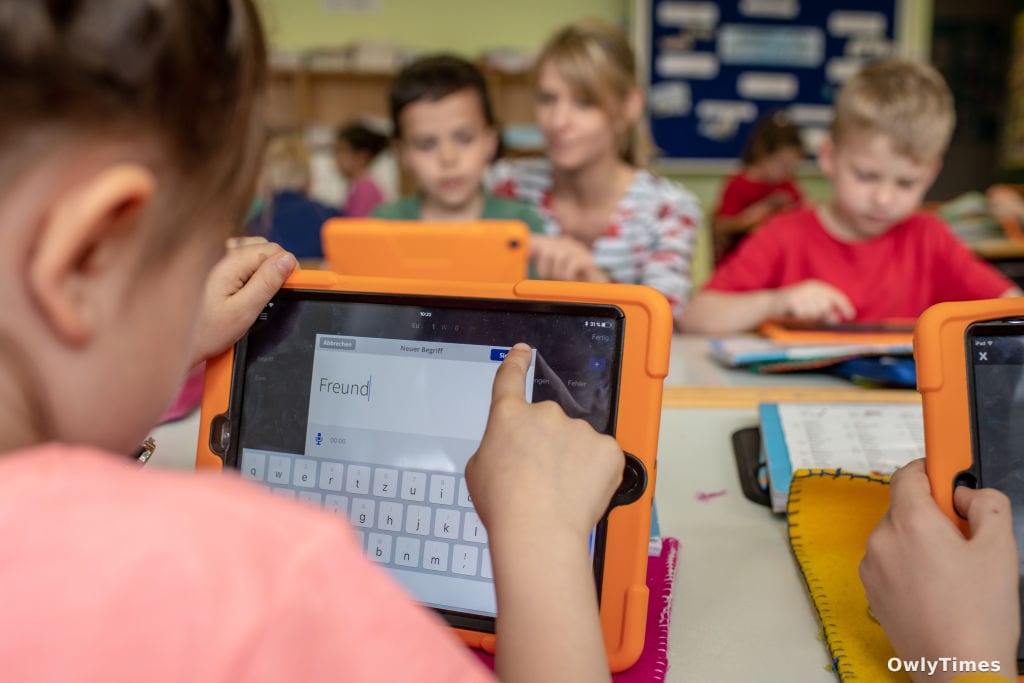
For over a decade, Utah has been a bellwether for a troubling trend in standardized testing. After years of steady gains, reading and math scores on the National Assessment of Educational Progress have been steadily declining. Jared Cooney Horvath, a neuroscientist and former teacher, pinpointed a critical inflection point: 2014, the year Utah implemented Student Assessment of Growth and Excellence (SAGE), its first computer-adaptive test. “Before 2014, computers were in schools, they were just peripheral,” Horvath told Fortune. “After 2014, every school had to have digital infrastructure in order to take the state assessment.” This wasn’t simply about adding a new tool; it was about fundamentally restructuring how education happened.
Horvath, author of the forthcoming book “The Digital Delusion: How Classroom Technology Harms Our Kids’ Learning—And How To Help Them Thrive Again,” argues that Utah’s experience isn’t an outlier. He presented his findings to the U.S. Senate Committee on Commerce, Science, and Transportation, warning that the impact extends beyond test scores, affecting the very cognitive capabilities those tests are designed to measure. The stakes are higher than just academic performance; for the first time in modern history, today’s generation is failing to outperform their parents on standardized assessments. Gen Z is, statistically, the first generation poised to be less cognitively capable than those who came before. This isn’t a future projection – it’s a current reality reflected in data from the Program for International Student Assessment, which shows a direct correlation between increased screen time and decreased scores among 15-year-olds worldwide.
Source material: Fortune.
The narrative sold to schools – and funded with over $30 billion in U.S. spending since 2002 – was one of personalized learning and empowerment. Maine led the charge in 2002 with the Maine Learning Technology Initiative, distributing Apple laptops to seventh graders. By 2016, 66,000 Maine students had laptops and tablets. The pitch was that computers could adapt to individual learning styles, providing access to a world of knowledge at students’ fingertips. But Horvath contends this was a solution in search of a problem. Achievement gaps were closing and test scores were rising before the mass influx of EdTech. The argument for disruption, he suggests, was manufactured to create demand for a new market.
This isn’t a new critique. The roots of this debate stretch back to the 1950s and the “teaching machines” of behaviorist B.F. Skinner and Sidney Pressey. These early attempts at individualized, automated instruction ran into a fundamental roadblock: the “transfer problem.” Students could excel within the confines of the machine, but struggled to apply that knowledge in real-world contexts. As Pressey himself conceded, students learned to master the tool, not the subject matter. The pattern is eerily consistent, regardless of the decade or the technology.
Today’s “teaching machines” are powered by AI, and the concerns are amplified. A recent Pew Research Center survey found over half of U.S. teens are using AI for schoolwork, and a Brookings Institute report suggests widespread abuse, with students using AI to cheat rather than learn. Educators interviewed for the report lamented that students “can’t reason. They can’t think. They can’t solve problems.” Horvath echoes this sentiment, arguing that genuine learning requires friction – the struggle to grapple with a problem and work through it. AI, he argues, is best utilized by experts who can critically evaluate its output, not by novices seeking shortcuts. “The tools experts use to make their lives easier are not the tools children should use to learn how to become experts,” he stated in his testimony.
The core issue, Horvath argues, is a confusion between curriculum and pedagogy. EdTech has focused on how material is taught – through computers – rather than what is taught. He suggests a return to fundamentals: prioritize math, literacy, and numeracy, building a strong foundation of knowledge before introducing advanced tools. Teach students about AI, but don’t let AI replace the essential process of learning. The push for digital integration, he believes, has fundamentally misdiagnosed the state of education, and the consequences are becoming increasingly clear.
What happens when a generation grows up outsourcing its thinking to algorithms? We’re already seeing the early signs – a decline in critical reasoning skills, an increased reliance on external validation, and a diminished capacity for independent thought. The next critical data point to watch isn’t test scores, but the ability of young adults entering the workforce to solve novel problems, adapt to changing circumstances, and contribute meaningfully to a complex world. If those skills continue to atrophy, the digital delusion won’t just be a pedagogical failure – it will be a societal one.