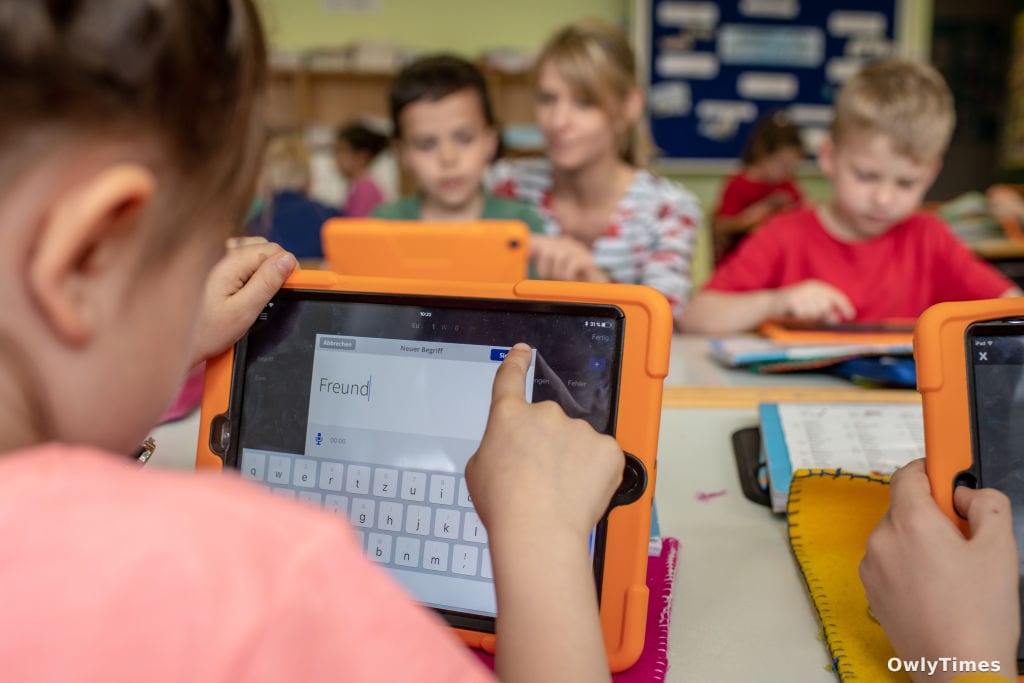

Is the push for a hyper-digitized classroom actually preparing our children for the future, or are we just beta-testing their attention spans for the benefit of Big Tech? We’ve spent the last decade treating "one-to-one" device programs as the gold standard of modern education, but the tide is turning. When local parents and teachers in Croton—organized under the Croton Community Collective—pack a church hall to capacity, they aren't looking for more apps; they are looking for an exit strategy from the screen-first status quo.
The real story here isn't just about school board politics—it's about the growing friction between the Silicon Valley vision of an "all-digital" childhood and the reality of student development. Founded in June 2025 by teacher Jill Anderson, the Croton Community Collective has rapidly scaled to 320 members, signaling a shift that is likely coming to a school district near you. This isn't just a group of concerned parents; it is a constituency that has moved beyond vague worries about "screen time" to asking pointed questions about the pedagogical trade-offs between analog and digital literacy.
The Analog-Digital Tug-of-War
The questions posed to the five candidates in the upcoming May 19 election for the Croton-Harmon Board of Education are a masterclass in current tech-skepticism. By distilling 120 community-submitted questions into six core inquiries, organizers have highlighted the growing national discomfort with the status quo. The debate over whether students should be writing and reading on screens versus paper is no longer a niche hobby for technophobes; it’s a central point of contention for local governance.
We are seeing a direct reaction to the "EdTech" sprawl that has defined the last few years of schooling. When candidates are asked to justify the district's current practices against the backdrop of cities like Los Angeles and Baltimore—which are actively stripping away one-to-one devices in early grades—it forces a confrontation with the "more is better" tech narrative. The pressure is on to prove that these devices are tools for learning, rather than just expensive distractions that require constant administrative policing.
The Accountability Gap
The conversation has reached a boiling point regarding the enforcement of phone-free environments. Even with the New York State Union of Teachers and the New York State Governor aligning on the necessity of bell-to-bell phone bans, the reality in schools remains fragmented. The central question for these candidates is not whether a policy exists, but how they will hold the superintendent and administrators accountable for its implementation.
This is the ultimate test for modern school boards: can they actually control the tech, or are they just along for the ride? The Croton Community Collective is essentially demanding that the board move from being passive consumers of tech vendor pitches to active regulators of the classroom environment. Whether it's the role of AI in academic integrity or the hard limits on device access, the demand for local control is surging.
The next reading of the local school board election results on May 19 will show whether this demand for a tech-skeptical curriculum is a passing trend or the start of a broader, community-led rollback of the digital classroom.