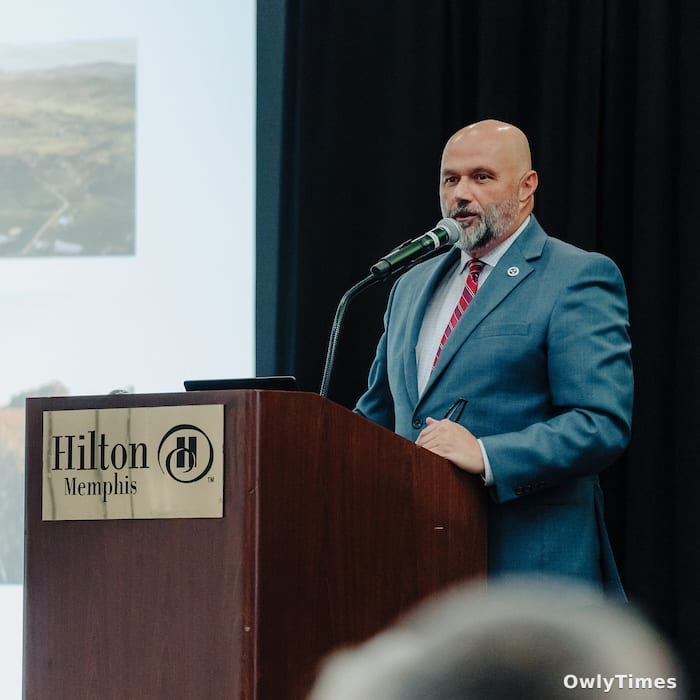

Can data alone close the widening chasm in patient outcomes between Tennessee’s wealthiest and poorest regions? This question served as the quiet subtext for the inaugural Tennessee Rural Health Care Center of Excellence Innovation and Practice Conference, held yesterday in Memphis. While the gathering of nearly 100 stakeholders focused on the mechanics of policy and grant distribution, the underlying challenge remains the state’s 44th-place national ranking in overall health.
The Geography of Health Inequality
The disparity in health outcomes across Tennessee is not merely a statistical curiosity; it is a structural crisis. Michael Meit, MA, MPH, director of the Center for Rural Health and Research at East Tennessee University, illustrated this divide by contrasting Lake County—the state’s poorest—with Williamson County, its wealthiest. In Lake County, the median household income sits at $30,500, with a heart disease mortality rate of 442.2 per 100,000. Conversely, Williamson County residents enjoy a median income of $131,202, accompanied by a heart disease mortality rate of just 121 per 100,000.
These figures underscore the reality that geography is currently a primary determinant of life expectancy in the state. According to a June 2023 report from the Governor’s Rural Health Care Task Force, 22 Tennessee counties currently operate without a hospital. Furthermore, more than 50% of the state’s rural hospitals lack maternity care, leaving vast swaths of the population without access to essential reproductive health services.
Bridging Policy and Practice
The conference served as the public debut for the Tennessee Rural Health Care Center of Excellence, established at the University of Tennessee Health Sciences in 2025. Wendy Likes, PhD, DNSc, who serves as the principal investigator for the grant that founded the center, emphasized that the event was designed to demonstrate the tangible potential of institutional support. The center’s strategy focuses on a multifaceted approach: streamlining existing health initiatives, providing technical assistance, and prioritizing workforce development.
To catalyze these efforts, the center distributed $1.75 million in its first round of funding to seven organizations. Among these recipients is the Tennessee Charitable Care Network, whose director, Christi Granstaff, noted that the presentation of these projects helped clarify the immense complexity involved in rural health delivery. By bringing together leaders from research, policy, and direct practice, the center aims to move beyond isolated silos of care.
Limitations of the Current Approach
While the infusion of capital and the formation of the center signal a shift in state strategy, it is important to distinguish between administrative coordination and clinical impact. The initiatives discussed by Tennessee Health Commissioner John V. Dunn, DVM, PhD, EMBA—including the Rural Health Resilience Program and the Rural Health Transformation Program—are foundational steps toward building a more robust infrastructure. However, these programs are currently in their nascent stages.
The primary limitation remains the scale of the deficit. Addressing systemic health issues in regions without basic hospital access requires more than technical assistance; it requires long-term, sustained clinical presence. The true test of these initiatives will be whether the collaborative model can move the needle on the state’s aggregate health rankings or if the benefits remain confined to the specific pilot projects funded by the current $1.75 million allocation.
The next readings of the state’s health metrics, alongside the progress reports from the seven grant recipients, will serve as the primary indicators of whether this collaborative framework is effectively tempering the geographic divide in health care access.





