
Beyond Widening: A Local Solution to Highway 22 Congestion Gains Traction
The persistent challenge of safely navigating Highway 22 in Teton County, Wyoming, isn’t simply about volume – it’s about access. While state-level discussions often center on widening the highway, a collaborative proposal from the Teton Science Schools and the Indian Springs Ranch homeowners association offers a distinctly local approach: a subterranean tunnel allowing drivers to bypass dangerous left turns. This isn’t merely a traffic fix; it’s a pointed challenge to the Wyoming Department of Transportation’s (WYDOT) preferred expansion strategy, and a demonstration of how localized solutions can address complex infrastructure problems while prioritizing environmental concerns. The plan, recently lauded by the Teton County Board of County Commissioners, represents a growing tension between top-down highway projects and community-driven, incremental improvements.
Original reporting: jhnewsandguide.com.
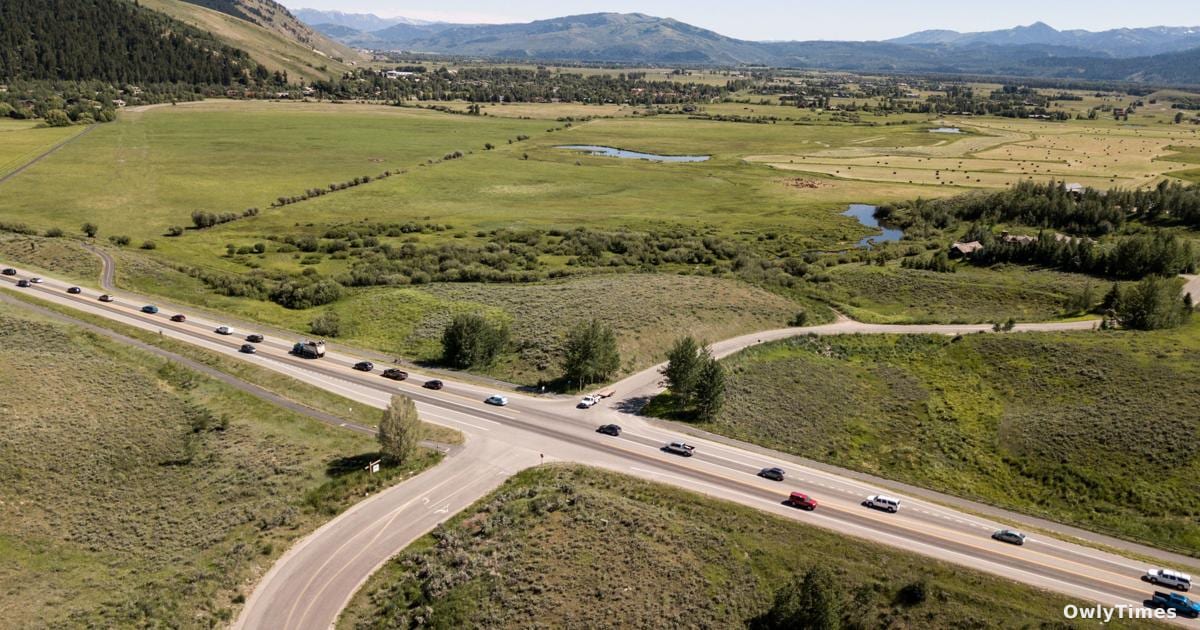
The immediate impetus for the tunnel stems from documented safety issues. As Rich Bloom, board treasurer for the Teton Science Schools, articulated to the County Commissioners last Tuesday, “We’ve had collisions with students inside Science School vehicles.” The intersection of Indian Springs Drive and Coyote Canyon Road has become increasingly hazardous, particularly during peak hours when drivers struggle to find gaps in the constant flow of traffic heading towards Jackson, Wilson, Teton Village, and Teton Valley. The proposed solution – a 16-foot-high, 16-foot-wide box culvert – would allow vehicles exiting both the Science School and the Indian Springs Ranch subdivision to pass under the highway, connecting to Indian Springs Drive and Coyote Canyon Road respectively via right-hand turns. A roundabout on Coyote Canyon Road is also included in the plans, alongside provisions for a dedicated pathway tunnel or a bike lane within the main tunnel structure.
This proposal isn’t emerging in a vacuum. It directly responds to, and potentially circumvents, WYDOT’s previous plans for the area. During the Highway 22 expansion project planning, the transportation agency initially favored rerouting Indian Springs Ranch traffic to a proposed “Tribal Trail connector road,” effectively cutting off direct access from Indian Springs Drive to Highway 22. However, this plan sparked significant opposition from the Science School, Indian Springs residents, and the Jackson Hole Conservation Alliance, all concerned about potential impacts to a rare wetland – a fen – located adjacent to the highway. A “wetland walk” hosted by the three groups in September highlighted the ecological sensitivity of the area, arguing that a new road connection would threaten this valuable habitat. The tunnel proposal, as Wayne Turner, Science School executive director, emphasizes, offers a “win-win-win” by addressing traffic concerns and protecting the fen.
The County Commissioners’ enthusiastic support, particularly from Vice Chair Wes Gardner who called it a “great solution to a really complicated problem,” also reflects a broader philosophical shift regarding Highway 22 improvements. For months, Commissioner Luther Propst has been a vocal advocate for an “intersection-by-intersection” approach, urging WYDOT to consider smaller-scale, community-focused solutions instead of a full highway widening. At a recent county transportation workshop, Propst directly questioned John Eddins, a district engineer for WYDOT, about the possibility of exploring “community alternatives” within the agency’s National Environmental Policy Act review. Eddins, however, indicated he lacked a definitive answer to Propst’s proposal, highlighting a clear disconnect between local priorities and state-level planning. This dynamic underscores a critical point: infrastructure decisions aren’t solely technical exercises; they are inherently political, shaped by competing interests and values.
Currently, the project’s cost remains undefined. The Science School and Indian Springs Ranch are planning to fund more detailed engineering drawings to establish a firm price tag, and are hoping for financial support from the county. While the tunnel represents a potentially less expensive alternative to a full highway expansion, it’s crucial to remember that even “incremental” solutions require significant investment. Furthermore, the long-term effectiveness of the tunnel hinges on accurately predicting future traffic patterns and ensuring the roundabout functions efficiently during peak hours. The existing repurposed cattle tunnel used by bikers and walkers, deemed too narrow and not meeting county pathway specifications by Director of Public Works Heather Overholser, also highlights the need for careful consideration of non-motorized transportation needs.
Looking ahead, the key question isn’t simply if the tunnel will be built, but how this localized success might influence broader highway planning in Teton County. Will WYDOT remain committed to its widening strategy, or will the demonstrated viability of the tunnel encourage a more flexible, community-driven approach to addressing Highway 22’s challenges? Residents should watch closely for the results of the refined engineering studies, and, crucially, for WYDOT’s response to the County’s increasingly assertive push for incremental improvements. The fate of the fen, and the future of Highway 22, may well depend on it.