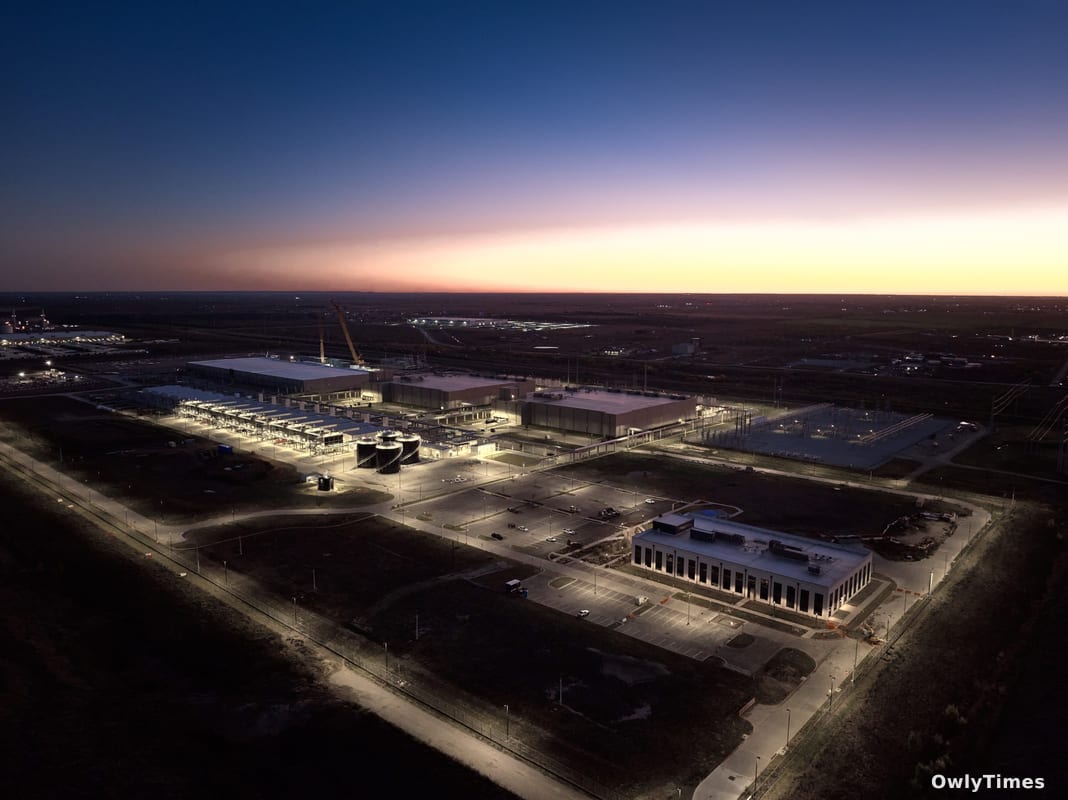

$80.6 Billion Power Play: Texas Data Center Boom and the ERCOT Bottleneck
Eighty-point-six billion dollars. That’s the scale of gas-fired power capacity currently under development in Texas, a figure almost entirely driven by the explosive growth of data centers and, crucially, a looming energy constraint. While headlines tout Texas’s ascent as a potential data center leader – poised to surpass Northern Virginia as the world’s largest market by 2030, according to JLL – the sheer magnitude of this power buildout reveals a critical tension: demand is rapidly outpacing supply, threatening to stall the very boom it’s fueling. Curt Holcomb, vice chairman of data center solutions at JLL, confirms we’re in a “development super cycle,” but the cycle’s continuation hinges on resolving the power equation.
This article draws on reporting from fortworthreport.org.
Currently ranked fourth behind Northern Virginia, the Pacific Northwest, and Columbus, Ohio, Texas’s climb is predicated on its advantages – abundant energy, available land, and a pro-business climate. The Dallas-Fort Worth area leads the state, but growth is spreading to Houston and West Texas. This expansion isn’t simply about attracting new businesses; it’s a fundamental shift in energy infrastructure. Nearly half of the $80.6 billion in planned gas-fired capacity is earmarked specifically to power these data centers, a statistic that underscores the industry’s energy intensity and the state’s reliance on fossil fuels to meet it. This represents a 233% increase over the $24.2 billion in planned capacity in 2022, demonstrating the accelerating demand.
The urgency is palpable. Holcomb acknowledges the bottleneck: “If ERCOT and the utilities could provide the amount of power that we see demand for, then this thing would be kind of easy, but it takes time to grow capacity.” This isn’t a theoretical concern. The recent partnership between Google and TPG Rise Climate to co-locate data centers with new clean energy plants signals a proactive, albeit expensive, attempt to circumvent the limitations of the existing grid. The $1.1 billion investment proposed by Edged Data Centers in Fort Worth, and the subsequent tax breaks approved by the city council, further illustrate the lengths to which municipalities are going to incentivize these projects – and secure the associated tax revenue. These facilities, while not large employers, generate “enormous” tax revenues, according to Holcomb, making them attractive to local governments.
However, the focus on gas-fired power raises environmental concerns, even as the industry explores alternatives. While data centers are evolving – moving from systems consuming 100% of water to closed-loop systems using only 10-15% – the carbon footprint of powering these facilities remains substantial. The industry’s stated openness to “everything,” including renewable energy sources like wind and solar, is encouraging, but the sheer scale of demand necessitates a diversified approach. The fact that Texas already boasts significant wind and solar capacity is a key draw, but integrating these intermittent sources reliably into the grid remains a challenge.
Beyond the power dynamics, the data center boom is creating localized real estate ripples. The Greater Fort Worth Association of Realtors’ data reveals a 55% year-over-year increase in home transactions in the 76102 ZIP code, albeit from a small base of 31 transactions. While this surge isn’t directly attributable to data center workers – the industry’s employment footprint is relatively small – it reflects the broader economic impact of increased investment and development in the area. The average sale price in the 76132 ZIP code, which saw a 25.9% transaction increase, reached $632,858 in 2025, indicating rising property values in areas benefiting from the influx of capital. Shawn Buck, 2026 president of the association, highlights the localized nature of the market, emphasizing that Fort Worth offers “something for everyone.”
What this means for your wallet: Expect continued upward pressure on electricity prices in Texas, particularly in areas experiencing rapid data center development. While the long-term economic benefits – increased tax revenue and potential job creation – are significant, consumers will likely bear the cost of upgrading the energy infrastructure needed to support this growth. The critical question now is whether ERCOT and utility providers can deliver on the promised power capacity before demand overwhelms the system, turning Texas’s data center dream into an energy crisis. Investors should closely monitor ERCOT’s grid reliability reports and the progress of planned power projects, as any delays could significantly impact the valuation of data center assets in the state.