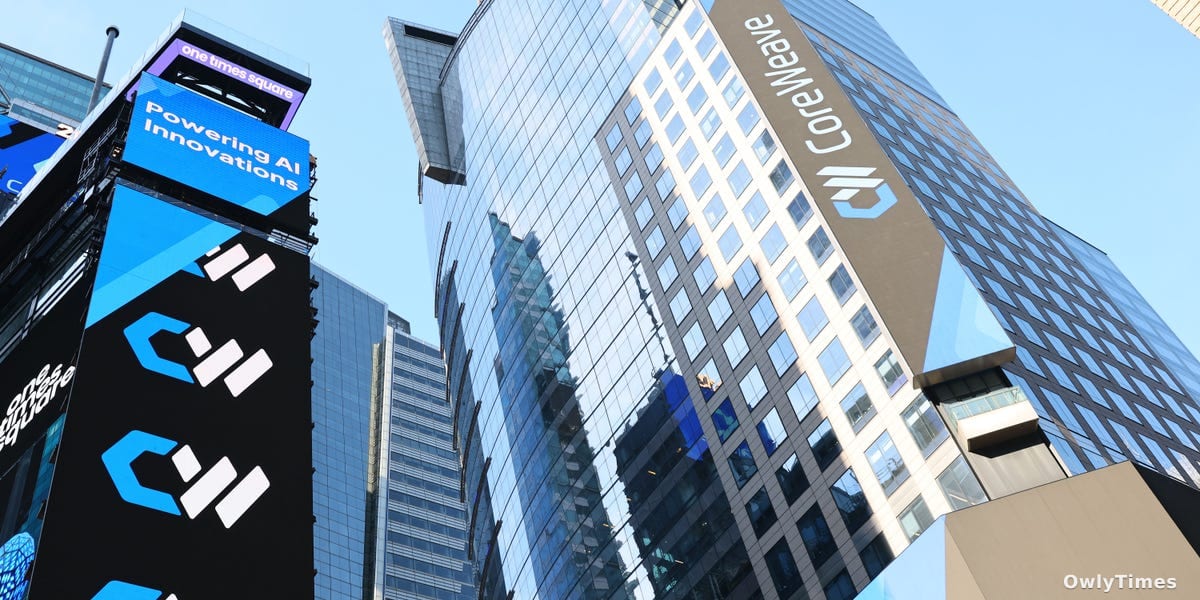

$30 billion. That’s the figure looming over the AI infrastructure race, representing CoreWeave’s projected capital expenditure for 2026 – a figure more than double its 2025 outlay. This isn’t simply aggressive expansion; it’s a calculated gamble underpinned by a startling new development: Nvidia is now positioned to guarantee CoreWeave’s data center lease payments. Follow the money, and a clear picture emerges – CoreWeave isn’t just building for the future of AI, it’s leveraging the financial strength of the industry’s dominant chipmaker to ensure that future arrives, even if traditional financing channels remain constrained.
The revelation, disclosed during an analyst call last month and reported by Alex Platt, a research analyst at D.A. Davidson, mirrors a recent arrangement between Google and Fluidstack, where Google guaranteed lease payments for a Texas data center. This isn’t a charitable act; it’s a strategic alignment. Nvidia has already invested billions in CoreWeave, including a recent $2 billion stock purchase and a commitment to buy up to $6.3 billion of computing capacity should CoreWeave struggle to find buyers. The lease guarantee is simply the next logical step in securing its position at the heart of the AI boom. As a CoreWeave spokeswoman stated, the partnership will “accelerate” their procurement of land, power, and shell infrastructure, attempting to keep pace with surging demand.
Source material: Business Insider.
However, the narrative isn’t without tension. While CoreWeave insists this isn’t a sign of independent financing struggles – and maintains it can procure infrastructure independently – the timing is revealing. Last week, efforts to secure $1.4 billion in third-party construction financing for a Lancaster, Pennsylvania data center leased by CoreWeave failed, prompting a 12% stock dip (since partially recovered). Blue Owl, a major lender, extended only a $500 million short-term loan, expiring in March, leaving the long-term financing of the $4 billion project in question. The need for Nvidia’s backing, even as a potential option, suggests a tightening credit environment for even the most promising AI infrastructure plays.
This deepening reliance on Nvidia is reshaping investor sentiment. Platt notes a “pretty stark shift” from low expectations three months ago to a now-optimistic outlook. This turnaround is fueled not just by Nvidia’s financial commitment, but by the signal it sends: Nvidia believes in CoreWeave’s growth trajectory enough to put its own balance sheet on the line. This confidence is translating into tangible deals, like the recently announced $8.5 billion financing arrangement with Morgan Stanley and MUFG, secured against contracts with Meta. The ability to leverage customer relationships – and now, Nvidia’s creditworthiness – is proving crucial for CoreWeave as it scales.
The stakes are high. Moody’s forecasts CoreWeave’s capital expenditures will exceed $30 billion in 2026, and the company’s debt is projected to reach $38 billion by year-end. While this debt load is substantial, CoreWeave points to a $55.6 billion backlog of contracted revenue as justification. The key question now isn’t just if CoreWeave can build, but if it can deliver on that contracted revenue and translate infrastructure investments into profitability. S&P Global Ratings director Steven McDonald suggests a successful scaling operation could lead to a credit rating upgrade, lowering borrowing costs and further fueling growth.
What this means for your wallet: The increasing financial entanglement between AI infrastructure providers like CoreWeave and chip giants like Nvidia isn’t just a story for Wall Street. It directly impacts the cost of AI services. If CoreWeave can secure financing and rapidly expand capacity, it will increase competition in the neo-cloud market, potentially driving down prices for AI computing power. However, if financing remains challenging and Nvidia exerts increasing control, consumers could face higher costs and limited options. Watch closely to see if CoreWeave’s earnings report on Thursday confirms its ability to deliver on its ambitious expansion plans – and whether Nvidia’s role shifts from supportive partner to de facto lender of last resort.