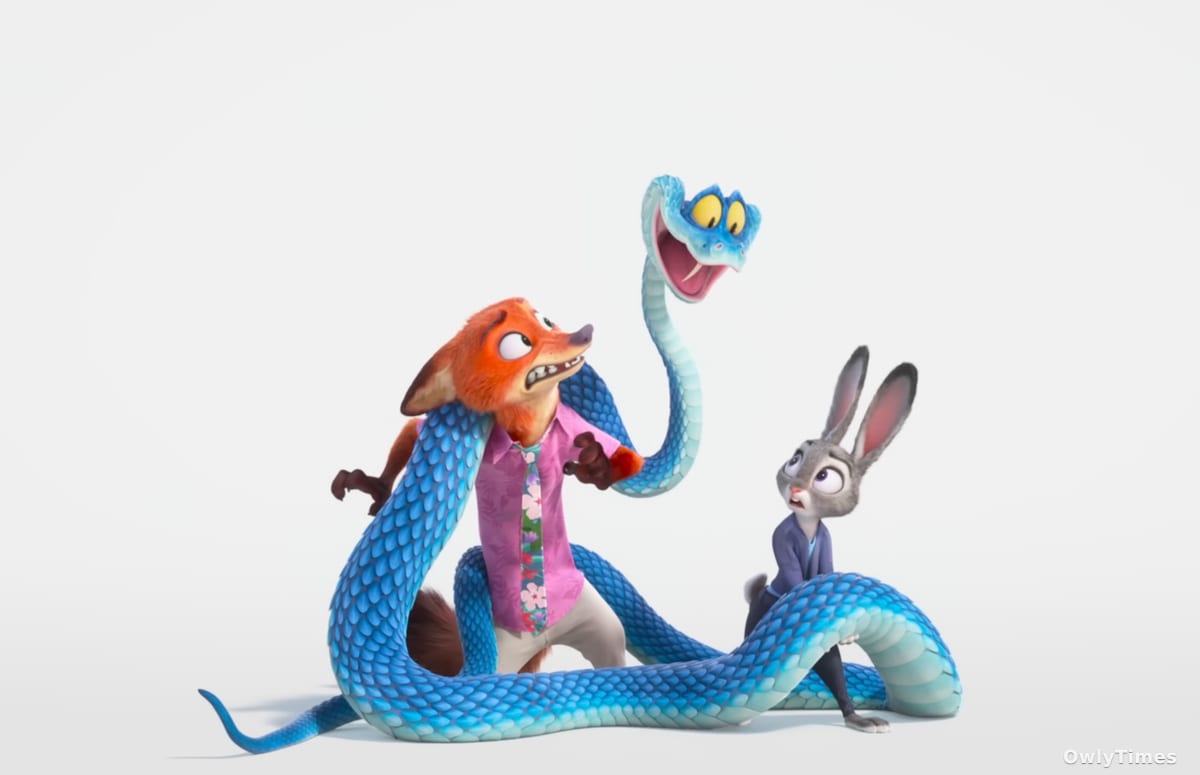

The enduring narrative of the villainous snake – a trope reinforced from ancient mythology to blockbuster films like Anaconda – is facing a surprisingly potent challenger: a children’s movie. The Oscar-nominated Zootopia 2 isn’t simply entertainment; it’s a carefully constructed argument for re-evaluating our relationship with one of the most misunderstood creatures on Earth. While headlines focus on the film’s heartwarming story of acceptance featuring a pit viper named Gary De’Snake, the underlying message speaks to a critical, often overlooked, ecological truth: removing snakes from the environment wouldn’t simply be an inconvenience, it would be a disaster.
The film centers on Judy Hopps and Nick Wilde investigating why snakes were ostracized from Zootopia, ultimately learning from Gary (voiced by Ke Huy Quan) that “Snakes never hurt anyone.” This sentiment, while emotionally resonant within the film’s narrative, isn’t presented as a literal truth, but rather as a plea to challenge ingrained prejudice. What Zootopia 2 effectively does is create empathy for a creature consistently demonized, prompting viewers to consider the ecological role that’s often absent from the story. The film’s success isn’t about rewriting the history of snakebites, but about reframing the conversation around their inherent value.
Based on the original scientificamerican.com report.
This value, according to ecological research, is substantial. Emily Taylor, director of the Physiological Ecology of Reptiles Laboratory (PERL) at California Polytechnic State University, San Luis Obispo, succinctly states the stakes: “If they were to disappear, we’d be in big trouble.” Snakes occupy a crucial position as “mesopredators” – they prey on rodents but are themselves preyed upon by larger animals. This dual role is what makes them so vital to ecosystem health. Eliminating them isn’t simply removing a predator; it’s dismantling a foundational layer of the food web, akin to removing a critical support beam from a structure.
The most immediate consequence of snake removal would be a rodent population explosion. A 2024 study conducted by Australian researchers quantified this impact, estimating that a single adult eastern brown snake consumes approximately 50 mice annually, potentially even more. Extrapolating this across farmland, the researchers calculated that brown snakes alone remove thousands of mice per square kilometer each year. This isn’t merely an academic exercise; unchecked rodent populations lead to widespread vegetation loss, impacting both natural ecosystems and agricultural yields. The film’s narrative of a snake-free Zootopia, while fictional, mirrors the very real potential for ecological imbalance.
Beyond their role in controlling rodent populations, snakes also indirectly mitigate the spread of diseases. While snakes themselves can carry Salmonella, the diseases transmitted by their prey – hantaviruses, bubonic plague, Lyme disease – pose a far greater risk to human health. By keeping rodent numbers in check, snakes act as a natural buffer against these zoonotic diseases. Furthermore, recent research reveals snakes contribute to seed dispersal, acting as “ecosystem engineers” by consuming seeds within small mammals and then depositing them, along with a natural fertilizer, through their waste. This highlights a previously underappreciated aspect of their ecological contribution.
Despite these demonstrable benefits, fear of snakes remains remarkably prevalent. A 2001 Gallup poll revealed that Americans reported being more afraid of snakes than of heights, public speaking, or even enclosed spaces. This fear, while understandable given the potential for venomous bites, is disproportionate to the actual risk, particularly in the United States where access to medical treatment significantly reduces mortality. Taylor argues that portraying snakes solely as villains in popular culture exacerbates this fear, hindering genuine appreciation and understanding. The film Zootopia 2, in its gentle depiction of Gary De’Snake, offers a counter-narrative, suggesting that familiarity and understanding can breed acceptance, not fear.
It’s important to acknowledge the very real danger snakes pose. The World Health Organization estimates that snakebites cause 81,410 to 137,880 deaths globally each year. Climate change is also projected to increase the likelihood of snake encounters and bites. However, focusing solely on the threat obscures the broader ecological picture. The next crucial research step isn’t simply improving antivenom, but investigating how changing environmental conditions are impacting snake distribution and behavior, and how these shifts will affect the ecosystems they inhabit. Will altered habitats force snakes into closer proximity with human populations, increasing the risk of bites? And what cascading effects will the loss of snake populations have on the stability of already stressed ecosystems? These are the questions that demand attention, and the answers will determine whether we can move beyond the age-old narrative of the villainous snake and embrace its vital role in a healthy planet.