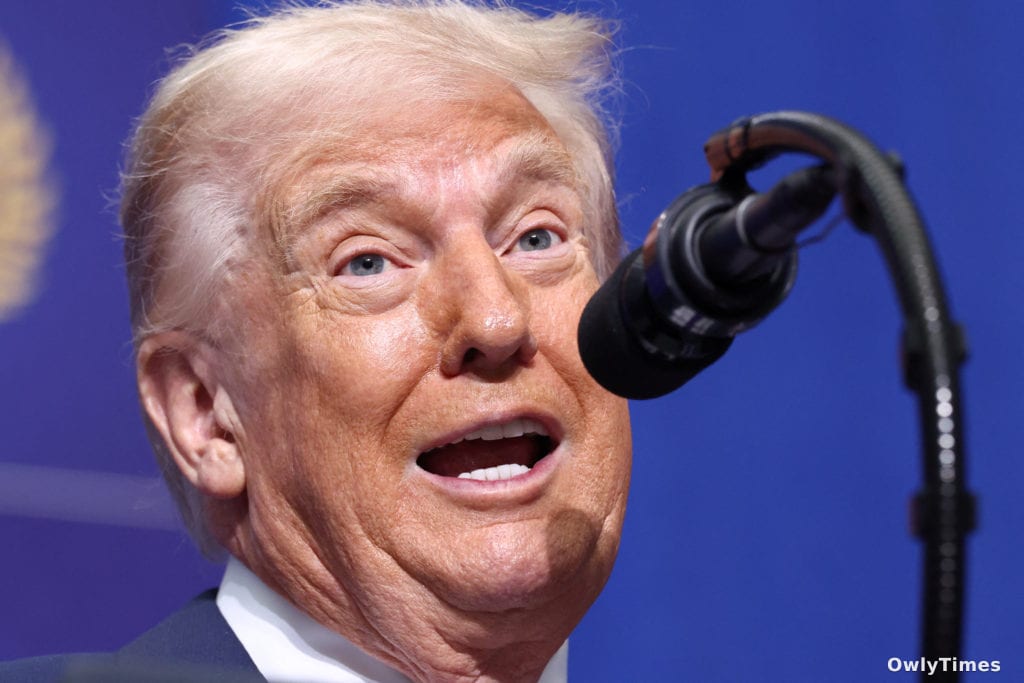

The re-christening of the U.S. Institute of Peace as the “Donald J. Trump U.S. Institute of Peace” isn’t about peace, or even institutional branding – it’s a calculated assertion of control over the narrative of American foreign policy, and a pointed message to a Republican foreign policy establishment that increasingly views Donald Trump with skepticism. The move, announced Thursday at a meeting of Trump’s newly formed “Board of Peace” held at the former USIP building, isn’t simply vanity; it’s a strategic maneuver to embed Trump’s legacy within an institution historically dedicated to conflict resolution independent of direct presidential influence. The curious attribution of the renaming to Marco Rubio, despite a lack of evidence supporting his significant role, adds another layer of complexity, potentially serving as both a public gesture of attempted co-option and a subtle warning.
A Legacy Project Built on Contested Ground
The U.S. Institute of Peace (USIP), established by Congress in 1984, was conceived as a non-partisan institution dedicated to preventing and resolving violent conflicts abroad. Its independence was considered crucial to its effectiveness, allowing it to offer unbiased analysis and mediation services. Trump’s decision to attach his name directly to the institute, and the accompanying claim that Rubio was instrumental in the process, fundamentally alters that dynamic. This isn’t merely a symbolic gesture; it’s a claim of ownership over the very idea of American peacebuilding. The timing is also significant. With the 2024 election looming, and Trump facing legal challenges, solidifying a tangible legacy becomes paramount. The $20.8 million USIP budget, while modest compared to overall foreign affairs spending, now carries the weight of Trump’s brand.
Reporting from PBS informs this analysis.
Who Benefits and Who Loses in the Renaming?
The primary beneficiary is, undeniably, Donald Trump himself. The renaming secures a permanent, visible reminder of his presidency within the foreign policy landscape. It’s a form of political immortality, ensuring his name remains associated with an institution ostensibly dedicated to peace, regardless of the actual impact of his policies. Rubio, while publicly not commenting on the claim, finds himself in a precarious position. Whether he actively supported the renaming or was simply used as a figurehead, the association risks alienating him from the more traditional Republican foreign policy circles he often courts. The clear losers are those who value the independence of USIP and the principles of non-partisan conflict resolution. The institute’s credibility is now inextricably linked to a highly polarizing figure, potentially undermining its ability to effectively mediate conflicts or offer unbiased analysis. Furthermore, the ongoing court challenges to the renaming signal a deeper struggle over the institute’s future direction and its role in American foreign policy.
Historical Echoes of Presidential Branding
This move isn’t unprecedented, but its implications are particularly stark. Throughout history, presidents have sought to leave their mark on institutions, but typically through new initiatives rather than rebranding existing ones with a clear commitment to independence. Franklin D. Roosevelt’s creation of numerous New Deal agencies, while politically motivated, didn’t involve renaming established institutions. Lyndon B. Johnson’s association with the Great Society programs similarly involved building new structures. Trump’s approach – appropriating an existing, respected institution – is more akin to the imperial naming practices of autocratic regimes, where monuments and institutions are routinely renamed to reflect the leader’s personality cult. This echoes historical precedents like Augustus’s renaming of the month Sextilis to August, or Kim Il-sung’s pervasive presence in North Korean iconography. The difference, of course, is that USIP was designed to be different – a bulwark against precisely this kind of politicization.
The State Department’s Role and the Future of USIP
The fact that the State Department is the current custodian of USIP adds another layer of intrigue. While Rubio’s alleged involvement is questionable, the department’s acquiescence to the renaming suggests a degree of internal alignment with the Trump administration’s agenda. This raises questions about the future of USIP’s research agenda and its staffing. Will the institute’s focus shift to align with Trump’s “America First” foreign policy principles? Will dissenting voices be marginalized? The $20.8 million budget, while seemingly small, could be leveraged to promote a specific narrative about American foreign policy, effectively turning USIP into a propaganda arm. The ongoing legal challenges, filed by groups arguing the renaming violates the intent of Congress, will be crucial in determining the institute’s fate.
The political chess move to watch next isn’t whether the courts uphold or overturn the renaming – it’s how Trump utilizes his newly branded institute in the run-up to the election. Will he use it as a platform to promote his foreign policy achievements, or will it remain a largely symbolic gesture? More importantly, will he appoint individuals to the Board of Peace who share his worldview, effectively transforming USIP into an extension of his political operation? The answer to that question will reveal the true extent of his ambition to reshape American foreign policy in his own image.





