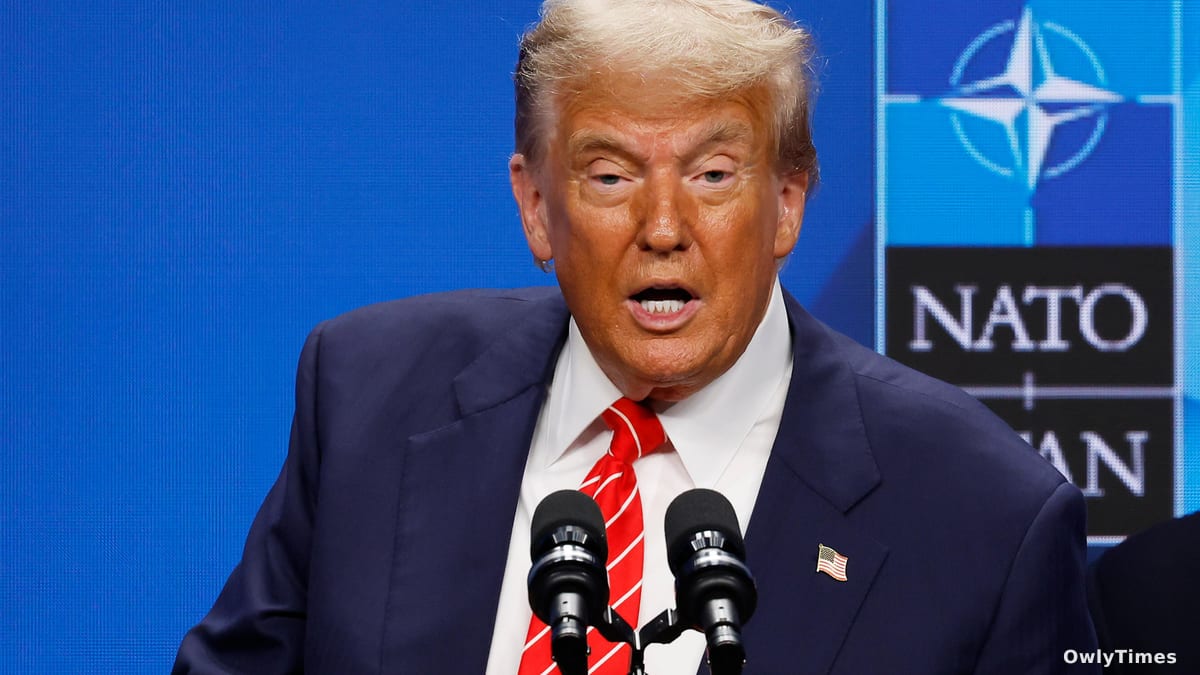

Is the entire post-World War II international order about to unravel because a few countries didn’t play along with a single military operation? That’s the question simmering beneath President Trump’s latest threats to abandon NATO, and it’s a question Washington hasn’t seriously confronted in decades. The real story here isn't whether Trump will actually pull the U.S. out of the alliance – it’s that the very idea of collective defense is being openly questioned by a U.S. President, revealing a fundamental fracture in how America views its role in the world and, crucially, how much it values its allies beyond immediate tactical benefit.
The immediate trigger is, predictably, Iran. After allied nations declined to actively join the conflict, Trump declared via Truth Social that he’s “beyond reconsideration” about leaving NATO, dismissing the alliance as a “paper tiger” – a sentiment echoed by Secretary of State Marco Rubio, who suggested a “re-examination” of the relationship post-war. This isn’t new rhetoric from Trump, who previously griped about defense spending during his first term. But the timing, coupled with his claim that Iran “just asked the United States of America for a cease-fire” (immediately refuted by Iran’s Foreign Ministry spokesperson Esmail Baghaei as “false and baseless”), feels less like a negotiating tactic and more like a genuine dismantling of established norms. The 2025 commitment by most allies to invest 5% of GDP in defense, hailed by Trump as a “big win,” suddenly feels like a hollow concession.
What’s particularly unsettling isn’t the bluster, but the underlying logic. Trump framed U.S. involvement in Ukraine as a “test” for NATO, and the lack of robust allied support for action in the Strait of Hormuz as a failure. This isn’t about strategic calculations; it’s about perceived reciprocity. He’s treating international security like a business deal, demanding immediate, demonstrable returns on investment. This approach ignores the decades of shared security benefits, the intelligence sharing, and the simple fact that a fragmented Western alliance benefits precisely the actors – Putin’s Russia, Iran – that Trump claims to be confronting. The U.S. has been a core NATO member since 1949, founded on principles of deterring expansionism and fostering European integration, but those principles seem increasingly irrelevant in Trump’s transactional worldview.
Based on the original time.com report.
The legal hurdles to withdrawing from NATO are significant, as outlined by legal scholars like Ilaria Di Gioia at Birmingham City University, who point to the National Defense Authorization Act of 2024 attempting to require a super-majority in the Senate. But Trump has a history of circumventing congressional constraints, and the Supreme Court’s past rulings suggest he might succeed. Even the threat of withdrawal, as Gioia notes, erodes trust and emboldens adversaries. The potential for economic lawsuits from contractors reliant on NATO spending adds another layer of complexity, but the bigger damage is already being done. Allies are scrambling to assess the situation, with Poland’s defense minister Władysław Kosiniak-Kamysz rightly pointing out the reciprocal nature of the alliance – a strong U.S. needs strong allies, and vice versa. The UK’s Rishi Sunak, despite facing direct criticism from Trump regarding the UK’s military capabilities, reaffirmed his commitment to NATO, a stance that feels increasingly like a defensive posture.
The response from allies is telling. While publicly reaffirming commitment to NATO, there’s a palpable sense of anxiety and a growing recognition that the U.S. under Trump can no longer be relied upon as a steadfast partner. This isn’t about windmills, as Trump dismissively claims about the UK’s energy policy; it’s about fundamental questions of sovereignty and security. European nations are quietly accelerating their own defense initiatives, recognizing that they may need to be able to defend themselves without consistent U.S. support. This isn’t a collapse of NATO, but a slow, agonizing shift towards a more multi-polar security landscape, one where the U.S. is increasingly isolated and its influence diminished. The average American might not immediately feel the impact of this shift, but the long-term consequences – increased global instability, a more assertive Russia and China, and a potential unraveling of the post-war order – will be profound.
Here’s what to watch for: by the end of 2025, look for a significant increase in European defense spending beyond the agreed-upon 5% target, coupled with a renewed push for greater strategic autonomy. The real indicator won’t be what Trump says, but what European nations do in response to his actions. If they begin to actively build a security architecture independent of the U.S., then the era of American dominance in Europe will be definitively over.