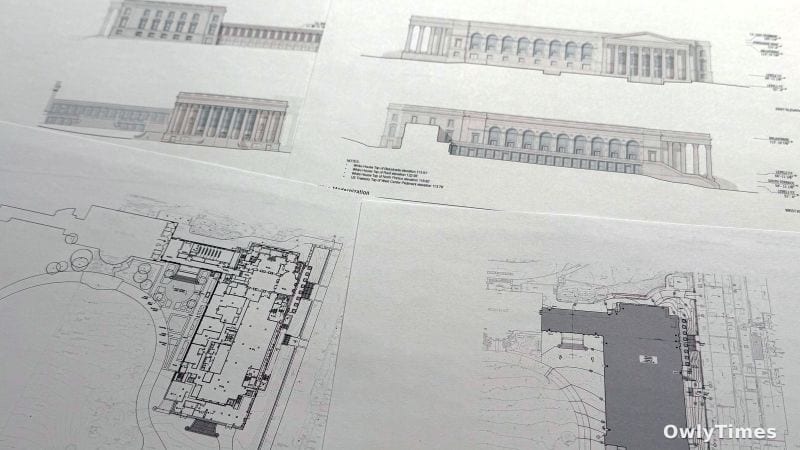

The speed with which the Commission of Fine Arts (CFA) approved President Trump’s East Wing renovation – a unanimous vote for both concept and final design in a single meeting – isn’t about aesthetics; it’s a demonstration of power, a calculated move to bypass institutional resistance and solidify control over the symbolic heart of the presidency. The project, ostensibly about creating a grander ballroom, is fundamentally about reshaping the narrative of the White House itself, and the CFA’s acquiescence reveals a broader strategy of stacking federal agencies with loyalists to achieve that end. The fact that this approval followed the installation of two new commissioners – Chamberlain Harris, a 26-year-old with limited arts experience, and Pamela Hughes Patenaude, a former Trump administration official – is not coincidental, but a direct consequence of a deliberate campaign to neutralize oversight.
A Pattern of Appointments and Accelerated Timelines
The CFA’s decision to fast-track the project is particularly striking given the overwhelming public opposition. Over 2,000 comments were submitted, with a staggering 99% expressing negative views, citing concerns ranging from “illegal demolition” to “inappropriate scale” and a lack of transparency. The committee chair’s summary of these concerns, delivered in lieu of public comment during the virtual meeting, underscores the extent to which the process has been deliberately shielded from scrutiny. This isn’t an isolated incident. Since last year, President Trump has systematically replaced members of the CFA, culminating in a complete overhaul in October as demolition of the East Wing began. This mirrors a tactic employed by previous administrations, but the pace and thoroughness of the replacement are notable. Consider the Lincoln administration’s post-Civil War appointments to federal positions – a similar effort to consolidate power and implement a specific vision, albeit in a vastly different context. The difference here is the explicit dismantling of an independent advisory body designed to constrain presidential prerogative.
This piece references the CNN report.
Who Benefits and Who Loses in the Ballroom Brawl
The immediate beneficiary is, of course, President Trump himself. The new ballroom serves as a potent symbol of his personal brand – grandiose, opulent, and unapologetically self-aggrandizing. Beyond the symbolic value, the project also provides lucrative contracts to associated firms, including that of architect Shalom Baranes, who presented the first public mock-ups of the renovation. The losers are multiple. First, the principle of independent oversight is eroded. The CFA, established to provide expert advice free from political interference, has been effectively neutered. Second, the public loses access to a transparent and accountable process. The denial of in-person public comment, coupled with the overwhelmingly negative feedback ignored, demonstrates a disregard for citizen input. Finally, the historical preservation community loses a potential check on alterations to a national landmark. While renovations are inevitable, the speed and lack of transparency raise questions about the long-term impact on the White House’s architectural integrity.
The Optics of Loyalty and the Question of Expertise
The appointment of Chamberlain Harris is particularly revealing. Her lack of extensive arts experience, coupled with her direct employment by the President, transforms the CFA into an extension of the White House staff. Her statement – “We want this to be the greatest ballroom in the world” – isn’t a critique of design, but a declaration of allegiance. This prioritization of loyalty over expertise is a hallmark of this administration, and the CFA’s transformation reflects a broader trend of politicizing federal agencies. The historical parallel here is the “spoils system” of the 19th century, where government positions were awarded based on party loyalty rather than merit. However, the modern context is more concerning, as it involves the deliberate dismantling of institutions designed to provide independent oversight. The fact that the CFA approved both the concept and final design in a single meeting, a highly unusual acceleration of the process, further underscores the pressure to expedite the project.
The Next Vote: A Test of Remaining Resistance
The East Wing renovation now moves to the National Capital Planning Commission (NCPC), which is also reportedly comprised of President Trump loyalists and is scheduled to meet on March 5th. This is the critical chess move to watch. Will the NCPC rubber-stamp the CFA’s approval, completing the circumvention of institutional checks and balances? Or will there be any remaining resistance, any indication that independent oversight still holds some weight? The NCPC’s decision will not only determine the fate of the East Wing ballroom, but will also signal the extent to which this administration is willing to disregard established norms and procedures in pursuit of its agenda. The outcome will reveal whether the CFA’s capitulation was an anomaly or the new normal for federal oversight of presidential projects.





