
The Performance of Presidential Health: Beyond Reassurance
The sudden, and arguably manufactured, spectacle surrounding Donald Trump’s weekend activities isn’t about golf or Easter services; it’s about the increasingly visible tension between projecting an image of robust leadership and the documented realities of an aging president facing multiple health concerns. While the White House aggressively dismissed rumors of hospitalization at Walter Reed Medical Center – a response triggered by a mere 12-hour gap in public statements, a timeframe previously tolerated during the Joe Biden administration – the subsequent efforts to prove Trump’s activity felt less like transparency and more like a carefully staged performance. This isn’t simply a matter of political opposition “cooking up insane conspiracy theories,” as the White House’s rapid response team asserted on X; it’s a consequence of a deliberate opacity surrounding presidential health, and a growing public awareness of observable physical changes.
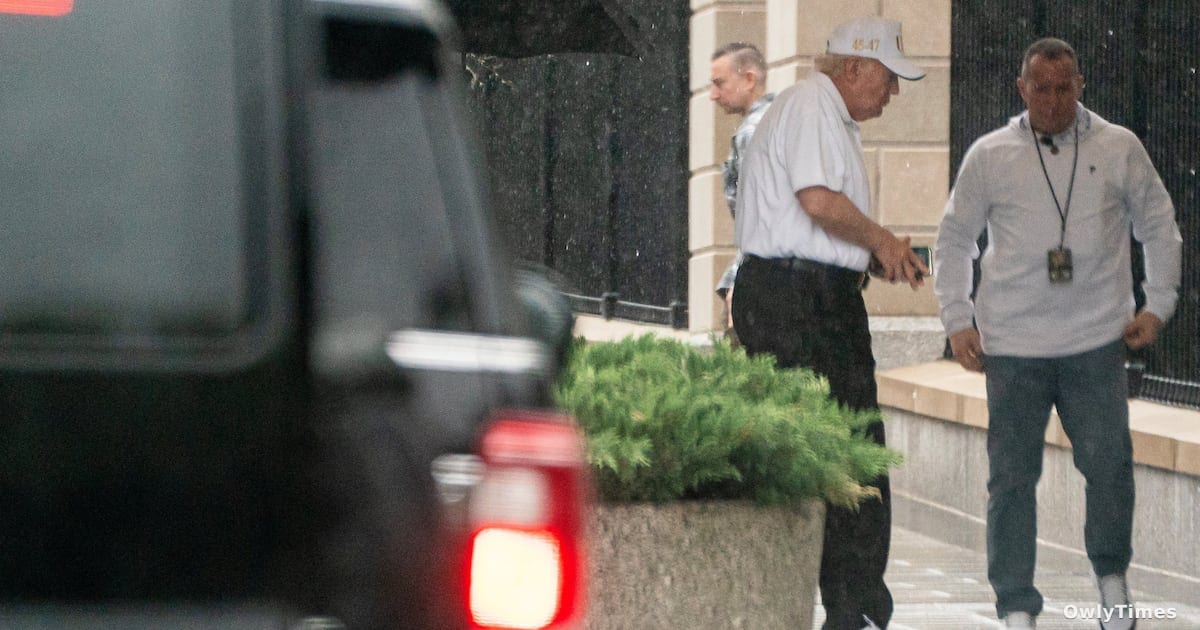
The core of the situation, as reported by Reuters’ Hümeyra Pamuk and captured by photographer Nathan Howard, is a brief public appearance following days of limited visibility. Howard’s photograph, showing Trump returning to the White House from a golf club visit, is significant not for the visit itself – presidents routinely utilize leisure time – but for the posture depicted. The image reveals a visibly hunched figure, dressed in golf attire and clutching a phone, a stark contrast to the traditionally projected image of presidential vigor. This visual cue, combined with reports from The Daily Beast detailing enlarged ankles, bruising, and leg swelling, fuels the underlying concern. The White House’s response – a repost of a CBS News photograph by Emma Nicholson showing a Marine sentry outside the West Wing – is a telling tactic. The presence of the sentry confirms someone is in the building, but doesn’t speak to the president’s capacity or condition. It’s a demonstration of duty, not health.
Source material: thedailybeast.com.
What’s particularly noteworthy is the White House’s defensive posture. The speed and vehemence with which they refuted the hospitalization rumors, and then attempted to demonstrate Trump’s continued work ethic, suggests a sensitivity to scrutiny that extends beyond typical political maneuvering. Communications director Steven Cheung’s statement, proclaiming Trump the “hardest working” president and invoking a blessing, reads less like a factual assertion and more like an attempt to preemptively quell anxieties. This is a common strategy, but the context – a president who has demonstrably slowed in pace and exhibited cognitive lapses – renders it less convincing. The claim from spokesperson Davis Ingle that Trump is the “sharpest, most accessible, and energetic” president in American history feels particularly dissonant when juxtaposed with the photographic evidence and reporting on his physical state.
The Shifting Standards of Presidential Visibility
The current situation highlights a critical, and largely unaddressed, gap in our understanding of presidential health. Unlike other high-pressure positions, there’s no standardized, independent medical evaluation required for presidential candidates or sitting presidents. While presidents routinely undergo physicals, the level of detail released to the public is often minimal, and the interpretation of those results is inevitably filtered through a political lens. The comparison to Biden, referenced by the White House’s rapid response account, is a deflection, not a rebuttal. While Biden’s periods of limited public engagement have also drawn criticism, they haven’t been accompanied by the same level of visible physical decline documented in Trump’s case. The standard isn’t simply about frequency of public appearances; it’s about the quality of those appearances and the consistency between public presentation and observable reality.
Beyond Rumors: Documented Changes and the Need for Transparency
It’s crucial to distinguish between unsubstantiated rumors and documented observations. The reports of bruising, swelling, and cognitive slips aren’t simply “deranged liberal” fantasies; they are observations made by journalists, documented in reports, and increasingly visible to the public. The Daily Beast’s ongoing coverage of Trump’s health issues, while subject to potential bias, provides a consistent record of these changes. The White House’s insistence on “excellent health” in the face of this evidence erodes public trust. The motorcade tour of Washington D.C., including a drive past the Lincoln Memorial and a reported intention to build a monument to himself near Memorial Circle, feels less like presidential duty and more like a symbolic assertion of power, a distraction from underlying concerns. The fact that this occurred on Easter Sunday, a traditionally reserved for religious observance, further underscores the unusual nature of the event.
Limitations to Consider
It’s important to acknowledge the limitations of interpreting visual cues and anecdotal reports. A single photograph, or even a series of photographs, cannot provide a comprehensive assessment of a person’s health. Similarly, reports of cognitive lapses are subjective and open to interpretation. However, the accumulation of these observations, coupled with the White House’s defensive posture, creates a pattern that warrants further scrutiny. Furthermore, the political context is unavoidable. Any discussion of a president’s health will inevitably be viewed through a partisan lens, making objective assessment challenging.
The next crucial step is not simply waiting for the next election or relying on White House assurances. Independent medical professionals need access to comprehensive medical records – with appropriate privacy safeguards – to provide an unbiased assessment of the president’s fitness for office. The question isn’t whether Trump is capable of fulfilling his duties; it’s whether the public is being provided with the information necessary to make an informed judgment about his ability to do so. Will we see a push for greater transparency in presidential health reporting, or will the performance of presidential health continue to overshadow the reality? That’s the scenario to watch for in the coming months.





