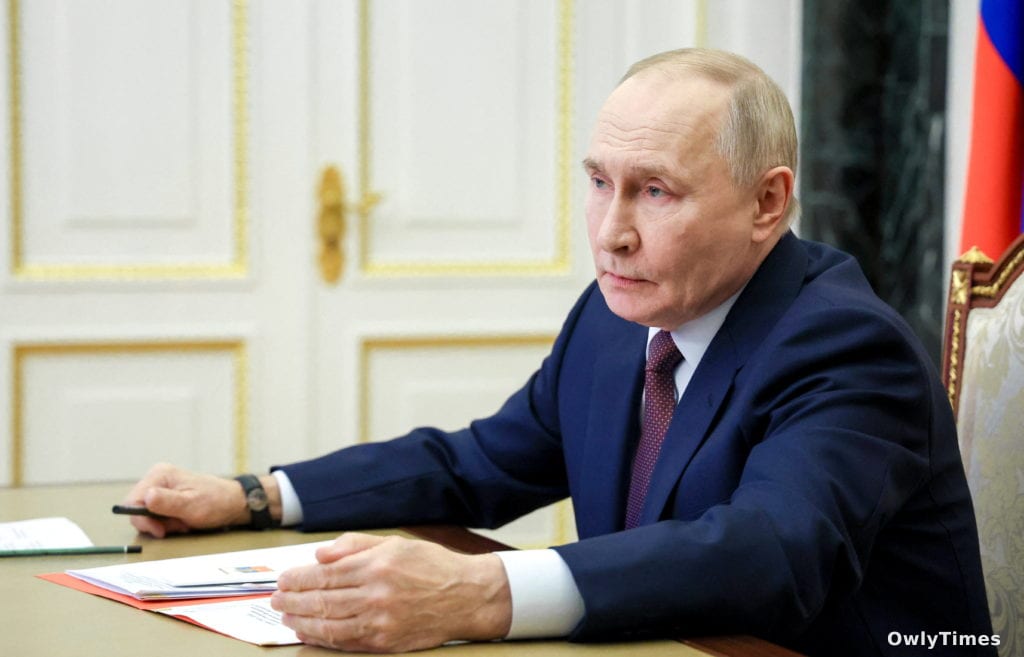

Is anyone else noticing the increasingly bizarre dance of former presidents brokering shadow diplomacy while actual geopolitical crises unfold? The Kremlin announced Monday that Donald Trump and Vladimir Putin spoke, ostensibly about the war in Iran and “other issues.” While the White House has remained conspicuously silent – a silence that speaks volumes – the real story here isn't the call itself, it’s the normalization of a backchannel network operating entirely outside established diplomatic protocols, and what that means for the average person bracing for potential fallout from escalating global instability. We’ve moved beyond awkward photo ops; we’re now in a world where ex-presidents appear to be conducting foreign policy via burner phones.
The Silence From Washington Isn't Neutral
The lack of official comment from the Biden administration is, frankly, the most alarming part of this story. A simple “we are aware the former president is a private citizen” would suffice, yet the vacuum of information allows speculation to run rampant. This isn’t about partisan politics; it’s about the erosion of established norms. Imagine a scenario where a major international agreement hinges on a conversation between two individuals who no longer hold office, individuals with demonstrably different approaches to international law and alliances. The implications are staggering. The State Department, for all its bureaucratic failings, at least operates under a framework of accountability and Congressional oversight. A private phone call? Not so much.
This article draws on reporting from PBS.
The Kremlin’s statement, predictably, painted the conversation as “constructive,” noting a discussion of the situation in Iran. This is particularly unsettling given Trump’s previously stated desire to negotiate directly with Iran, a position that consistently clashed with established US policy and alienated key allies. Remember the Joint Comprehensive Plan of Action (JCPOA), the Iran nuclear deal that Trump unilaterally withdrew from in 2018? That decision, widely criticized by European powers and non-proliferation experts, significantly escalated tensions in the region. Now, the possibility of a renewed, off-the-books negotiation, potentially undermining current diplomatic efforts, looms large. This isn’t about achieving peace; it’s about creating leverage through chaos.
Iran as the Pressure Point
The focus on Iran isn’t accidental. The ongoing conflict between Israel and Hamas, coupled with Iran’s support for regional proxies, has created a volatile situation ripe for miscalculation. Oil prices, already sensitive to geopolitical instability, jumped nearly 2% following news of the call, a clear indication of market anxiety. For the average American, this translates to higher gas prices at the pump and increased inflationary pressure. But the impact extends beyond the economic. A wider conflict in the Middle East could trigger a new wave of refugees, further straining global resources and potentially destabilizing already fragile regions. The Kremlin’s interest in Iran is also clear: Russia seeks to strengthen its alliances with countries challenging the US-led world order, and Iran is a key partner in that strategy.
The Kremlin’s readout specifically mentioned a discussion of “other issues,” a deliberately vague phrase that raises further concerns. What else was on the agenda? Discussions about Ukraine? Cybersecurity? The 2024 US election? The lack of transparency is deeply troubling. We know Putin has a long history of exploiting information asymmetry to his advantage, and this situation provides fertile ground for disinformation and manipulation. It’s a classic tactic: create confusion, sow doubt, and then exploit the resulting chaos. The average social media user, already bombarded with conflicting narratives, is particularly vulnerable to this kind of manipulation.
Beyond Diplomacy: A New Era of Shadow Politics
This isn’t an isolated incident. We’ve seen Trump engaging in similar, unofficial diplomatic efforts in the past, often bypassing traditional channels and relying on personal relationships. But the stakes are higher now. The world is more fractured, the threats are more complex, and the potential for miscalculation is greater. The real story here isn't about two former leaders having a chat – it's about the emergence of a parallel diplomatic system, one that operates outside the bounds of accountability and transparency. This isn’t about restoring stability; it’s about creating a new power dynamic where personal connections and backroom deals trump established protocols and international law.
The implications for ordinary citizens are profound. A world governed by shadow diplomacy is a world where decisions are made without public input, where accountability is lacking, and where the risk of conflict is significantly increased. It’s a world where your gas prices, your national security, and even the stability of the global economy can be affected by a private phone call between two individuals operating in the shadows.
Here’s what to watch for: over the next six months, pay attention to any sudden shifts in US policy towards Iran, particularly if those shifts appear to contradict the stated goals of the Biden administration. Specifically, monitor any signals suggesting a willingness to re-engage in direct negotiations with Iran outside the framework of the JCPOA. If that happens, consider it a clear indication that the shadow diplomacy network is gaining traction, and brace yourself for a potentially turbulent ride.





