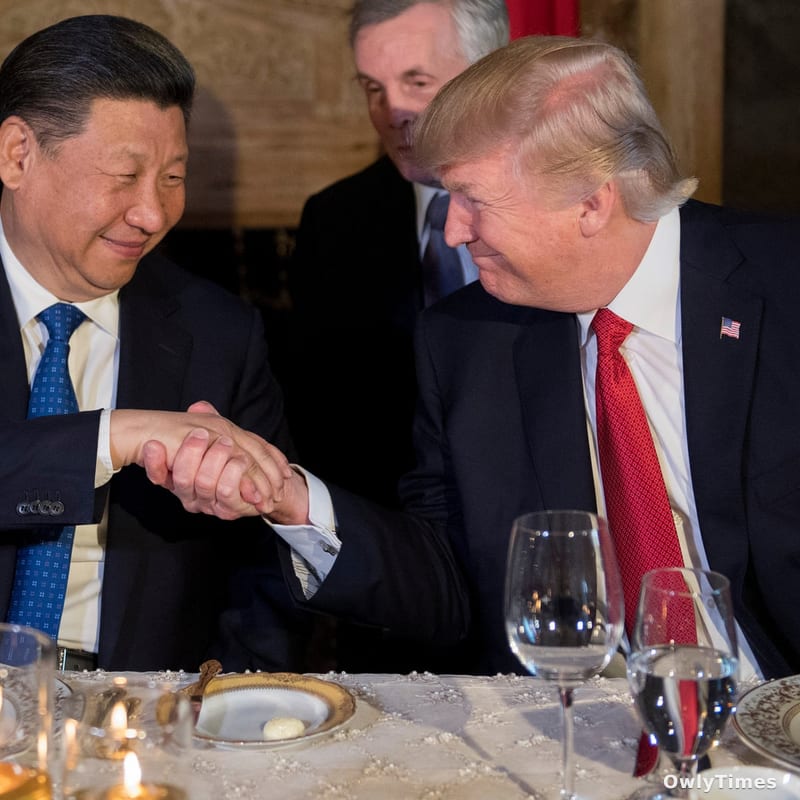

Does a presidential trip to a rival power, laden with the titans of American technology, signal a new era of open dialogue and collaborative innovation? Or is it merely a well-orchestrated distraction from a far more profound shift underway in Washington's approach to tech governance? Donald Trump is indeed heading to China this week, flanked by an astonishing roster of Silicon Valley's most influential figures, ostensibly to discuss technology with Xi Jinping, perhaps after navigating the complexities of the ongoing war in Iran. But the real story here isn't the prospect of a new wave of tech deals — it's the growing paradox of the US government subtly mirroring China's stringent AI oversight even as it promotes a "hands-free" approach to innovation abroad.
On Monday, the news broke that the US president's delegation would include Tim Cook, the outgoing CEO of Apple, and Elon Musk, the outspoken chief of SpaceX and Tesla. They'll be joined by a powerful contingent, including Dina Powell McCormick, Meta’s recently appointed president; Sanjay Mehrotra, CEO of computer memory giant Micron; Chuck Robbins, CEO of longtime telecom behemoth Cisco; and Cristiano Amon, CEO of semiconductor maker Qualcomm, as confirmed by a White House official. This star-studded guest list suggests an administration eager to project American technological prowess and foster high-stakes negotiations, perhaps hoping to replicate the flurry of tech deals seen during Trump's Middle East visit in May 2025.
Notably absent from this power parade is Jensen Huang, Nvidia’s CEO. While known to be close to Trump, Huang publicly criticized US limitations on chip sales to China in an April interview, asserting that he didn’t want a "loser mentality" to cost the US its edge in AI. His absence makes a major semiconductor deal, particularly involving the world's most critical chipmaker, seem less likely, though an announcement from Micron remains a possibility. Trump's inclusion of Cook is also strategic; Apple's iPhone 17 has been enormously successful in China, catapulting the company's quarterly earnings to their highest point ever. Furthermore, Apple’s announcement of Cook’s retirement specifically highlighted his diplomatic skills, indicating that such global engagements might become a consistent feature of his post-CEO responsibilities, as noted by The Guardian.
The Shifting Sands of AI Regulation
While the optics of a robust US tech presence in Beijing suggest an open, competitive landscape, a starkly different narrative is unfolding domestically. For years, the US has championed a less interventionist stance on technological development, allowing companies to innovate with minimal government entanglement. Yet, the White House is now increasingly involving itself in the work of frontier AI labs in the US, adopting policies that bear a striking resemblance to China's more stringent regulatory framework. China, for instance, requires AI companies to submit their models to Beijing for review, not just for national security but also for political sensitivity, prohibiting content deemed objectionable.
This "do as I say, not as I do" approach is becoming evident. Trump is reportedly mulling an executive order that would require AI companies to submit their newest models for White House review. This isn't just a theoretical proposal; the administration has already announced deals with a growing number of big players in the field, including Google DeepMind, Microsoft, and xAI just last week, for national security reviews of their latest releases. These critical evaluations will be conducted by the Center for AI Standards and Innovation (CAISI), a division of the US Department of Commerce, signaling a clear intent to exert greater governmental oversight over cutting-edge AI. The implications for ordinary users are significant; the very models powering future applications, from healthcare diagnostics to personalized assistants, could be shaped by these security and content reviews. You can learn more about the department's role in tech and trade at commerce.gov.
Unpacking Domestic Tensions
The push for domestic AI oversight isn't without its internal battles. The Pentagon's standoff with Anthropic continues in court, stemming from the startup's qualms about military usage of its technology and the bureau’s subsequent designation of the company as a supply chain risk. Vice-president JD Vance has even requested that Anthropic not expand access to its powerful cybersecurity-focused model, Mythos, beyond its initial list of partners, according to the Wall Street Journal. These incidents underscore the palpable tension between national security imperatives and the tech sector's desire for autonomy and open development.
The paradox of the US government sending its tech champions to engage with China while simultaneously adopting a more China-like regulatory stance on AI at home is a complex, evolving story. It suggests a recognition that the "hands-free" approach, while fostering innovation, might not adequately address the profound national security and societal implications of advanced AI. The next measurable signal will be the content and scope of Trump's anticipated executive order. Its details will reveal just how deeply the US intends to weave government oversight into the fabric of its rapidly advancing AI landscape, fundamentally altering the relationship between Silicon Valley and Washington, and ultimately, how technology impacts all of our daily lives.