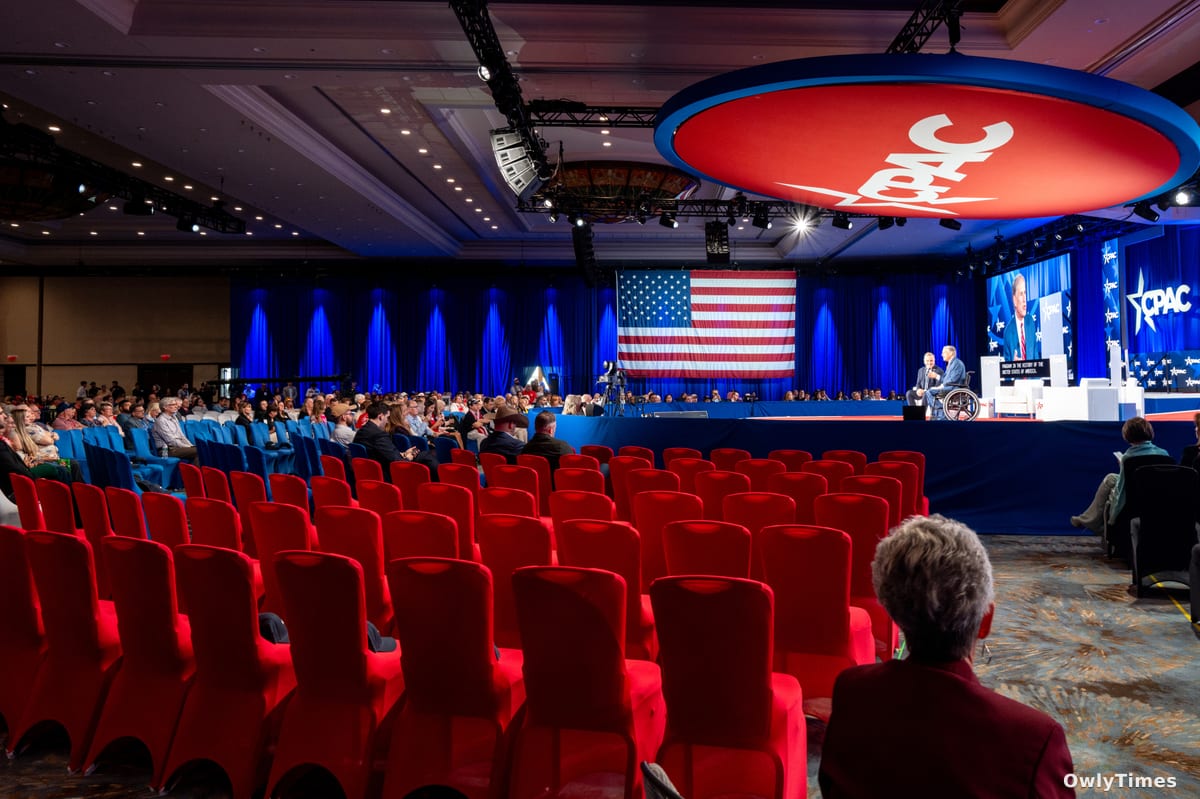

Is the MAGA movement capable of life after Trump? That’s the question hanging over this year’s Conservative Political Action Conference (CPAC) in Dallas, a question far more urgent than any policy debate unfolding on stage. While the faithful gathered to celebrate the former president’s agenda, his conspicuous absence – the first CPAC skip in a decade – wasn’t a snub, but a symptom. The real story here isn't the celebration of Trumpism, it’s the fracturing within the coalition he built, exposed by a war many attendees feel he’s leading them into against their will.
Greg Abbott, speaking at CPAC on Friday, embodied the continued loyalty many Republicans feel towards Donald Trump, but even that loyalty is showing cracks. A Pew Research Center survey reveals that roughly eight in ten Republicans approve of Trump’s handling of the conflict with Iran. That number sounds impressive, until you consider the demographic shifts within the party. Support plummets among younger Republicans and conservative-leaning independents – the very voters Trump actively courted and, arguably, needed to secure his 2024 victory. This isn’t a simple disagreement over foreign policy; it’s a fundamental breach of trust.
Joseph Bolick, a 30-year-old Army and Marine Corps veteran from Tyler, Texas, and a former Trump voter, articulated the sentiment echoing through the conference halls: “I feel betrayed because he’s promised no new wars.” Bolick’s frustration isn’t isolated. It’s a direct challenge to the core promise of Trump’s “America First” platform. He, like many, questions why resources are being diverted overseas when domestic issues – a struggling economy, rising costs – demand attention. The lone voice from the stage openly questioning the war, former Florida congressman Matt Gaetz, warned of higher prices and potentially escalating the conflict, a message that resonated with a growing number of attendees. This isn’t about being “soft” on foreign policy; it’s about prioritizing the needs of American citizens, a concept that feels increasingly distant from the current administration’s actions.
The shift in focus away from domestic policy at CPAC is telling. Traditionally, the conference served as a launching pad for midterm strategies and a showcase for rising GOP stars. This year, however, the lineup felt…thin. Rumored presidential hopefuls were conspicuously absent, and even congressional candidates largely stayed on the sidelines. Michael Whatley, a candidate for Senate in North Carolina, attempted to rally the base around the midterms, framing them as crucial to securing Trump’s agenda. But the energy felt forced, lacking the organic enthusiasm that typically defines CPAC. The focus wasn’t on building a future, but on defending a past.
This article draws on reporting from NPR.
What’s more striking is the influx of new faces, figures less tethered to Trump’s traditional orbit. Speakers like Nick Shirley, the 23-year-old content creator who went viral with unsubstantiated claims about Minneapolis day-care centers, and international figures like former British Prime Minister Liz Truss and Eduardo Bolsonaro, son of the former Brazilian president, signal a broadening – and perhaps desperate – attempt to export “MAGA conservatism” abroad. While this expansion might appeal to a certain segment of the base, it also risks alienating the voters who initially propelled Trump to power. Matt Schlapp, CPAC chairman, attempted to frame this diversity of opinion as a strength, arguing that “boring” unity isn’t the goal. But the reality is, Trump’s absence reveals a lack of a unifying figure capable of holding the disparate factions of the party together.
The conference straw poll results only underscored this point. While Vice President JD Vance topped the poll for the 2028 presidential nomination, securing 53% of the vote, the fact that he didn’t achieve a landslide victory – and that Secretary of State Marco Rubio garnered 35% – demonstrates a clear lack of consensus. This isn’t a party confidently looking towards the future; it’s a party grappling with an identity crisis. The question isn’t simply who will lead the GOP after Trump, but if the coalition he assembled can even remain intact without his singular presence.
Watch for this in the next 18 months: a surge in localized, issue-driven conservative movements, splintering off from the national party as they attempt to define their own agendas. The CPAC of 2026 won’t be about finding the next Trump; it will be about navigating the wreckage of Trumpism.