
$630 Billion Shift: Why Market Optimism Now Rides Solely on Perceived Risk Aversion
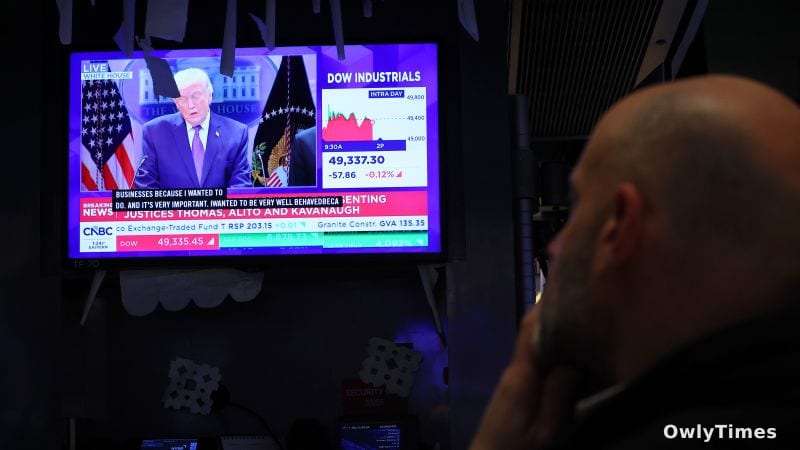
A single overnight reversal – a five-day postponement of threatened military action against Iran – triggered a $630 billion surge in US equity value on Monday. This wasn’t a response to fundamental economic improvement, or a genuine shift in geopolitical risk; it was a calculated bet on President Trump’s demonstrated preference for stable market conditions. The Dow Jones Industrial Average’s 1.4% jump, following a near-correction last week (less than 10% from recent highs), isn’t a sign of bullish conviction, but a stark illustration of how foreign policy is now inextricably linked to Wall Street’s short-term performance.
Based on the original CNN report.
The initial catalyst was President Trump’s weekend ultimatum regarding the Strait of Hormuz, followed by a Monday morning announcement of “VERY GOOD AND PRODUCTIVE CONVERSATIONS” with Tehran. While Iranian officials dispute the existence of these talks, the market reaction was immediate. US stock futures soared, and crude oil prices declined, signaling a collective exhale among investors bracing for potential conflict. This dynamic isn’t new. As recently as two weeks ago, a similar, quickly retracted claim of “war being very complete” prompted a comparable rally and subsequent pullback. The emergence of the “TACO” trade – “Trump Always Chickens Out” – underscores the growing recognition that policy decisions are often calibrated to minimize negative market fallout.
This isn’t about believing President Trump’s pronouncements; it’s about anticipating his reactions. Daniel Alpert, managing partner of Westwood Capital, succinctly captured the prevailing sentiment: “There’s no real fundamental reality to any of this trading – it’s just trading Trump.” This highlights a critical shift in market psychology. Traditional metrics like earnings reports, economic indicators, and geopolitical analysis are increasingly overshadowed by the perceived risk tolerance – or, more accurately, risk aversion – of a single individual. The market is operating on a Keynesian “beauty contest” principle, as Alpert explained, where investors aren’t focused on intrinsic value, but on predicting what other investors will perceive as valuable.
The Monday rally wasn’t solely driven by speculation. Steve Sosnick, chief market strategist at Interactive Brokers, points to the leading role of oil traders. With a more direct exposure to the risks in the Persian Gulf, their reaction – a significant drop in crude prices – provided a degree of validation for the equity market’s optimism. Had stocks rallied without a corresponding decline in oil, the gains would have appeared far more tenuous, a clear indication of being “faked out” by the President. The interplay between these two markets reveals a complex feedback loop, where oil traders assess tangible risk, and equity traders react to the perceived containment of that risk by the administration.
Adding fuel to the fire was a potent dose of FOMO – fear of missing out. Sosnick noted that even the “slightest bit of good news” now elicits a “strong reaction, if not potentially an overreaction.” This suggests a market primed for gains, where investors are eager to jump on any positive signal, regardless of its underlying substance. The $630 billion surge wasn’t a testament to economic strength or diplomatic progress; it was a demonstration of how quickly sentiment can shift when the perceived downside risk is temporarily alleviated.
What this means for your wallet: Watch for continued volatility tied directly to presidential statements regarding Iran and other geopolitical hotspots. The market is now demonstrably reactive to perceived presidential risk aversion, meaning short-term gains are likely to be fragile and dependent on maintaining the narrative of de-escalation. The question isn’t whether the administration’s policies are sound, but whether they will continue to prioritize market stability over pursuing more aggressive foreign policy objectives. Investors should prepare for a scenario where policy decisions are less about achieving strategic goals and more about managing the daily fluctuations of the Dow.