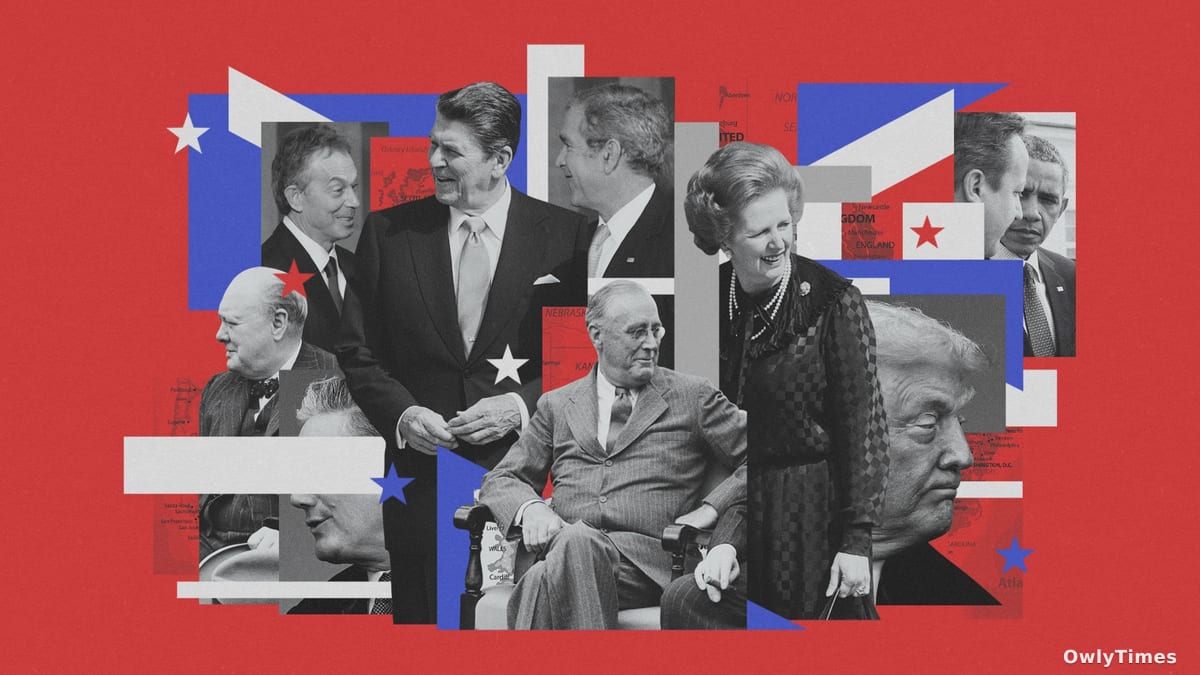

The calculated risk of diminished access is the core of the current fissure between the United States and the United Kingdom. Donald Trump’s unusually pointed rebuke of Keir Starmer – dismissing him with the loaded phrase “This is not Winston Churchill that we’re dealing with” – wasn’t simply a personal insult, but a strategic signal regarding the evolving power dynamics in the transatlantic relationship. The immediate trigger was Starmer’s initial refusal to allow the US to utilize the British-controlled Chagos Islands for strikes against Iran, a delay Trump characterized as taking “three or four days” to resolve. This wasn’t about the Chagos Islands themselves; it was about demonstrating to Starmer, and through him to the British political establishment, the cost of independent action when it conflicts with US foreign policy objectives.
Who benefits and who loses from this public display of frustration? The US, in the short term, loses operational efficiency and faces a symbolic dent to its global authority. More significantly, the UK, by asserting a degree of autonomy, attempts to reposition itself as a distinct actor on the world stage, potentially opening space for a more independent foreign policy. However, this comes at the risk of jeopardizing the deeply embedded economic and intelligence ties that have historically defined the “special relationship.” The calculus for Starmer is particularly acute: he’s attempting to distance himself from the legacy of Tony Blair’s Iraq War – explicitly referencing “the mistakes of Iraq” as justification for his caution – while simultaneously navigating the unavoidable reality of US influence.
This piece references the theweek.com report.
The situation echoes historical precedents where a dominant power tests the boundaries of a subordinate alliance. Consider the Suez Crisis of 1956, where US pressure forced Britain and France to withdraw from Egypt, effectively ending Britain’s pretense of being a global power operating independently of Washington. While the current situation isn’t as dramatic, the underlying dynamic is similar: a US president signaling displeasure with an ally’s deviation from its preferred course. However, unlike 1956, Britain isn’t facing an immediate economic collapse as a result of US pressure. The UK’s economic reliance on the US remains substantial – the two nations are each other’s largest investors, supporting over a million jobs in each country – but the leverage isn’t absolute. This allows Starmer a degree of maneuvering room that his predecessors lacked.
The narrative of a “special relationship” has always been fraught with asymmetry. As James Schneider of The New Statesman points out, it was “never one of equals,” but rather a mechanism for Britain’s ruling class to maintain relevance by amplifying US power. Trump’s actions, while seemingly disruptive, are arguably a continuation of this historical pattern – the US using its economic, military, and intelligence advantages to “discipline friend and foe alike.” The tariffs imposed on the UK, the Greenland debacle, and now the Chagos Islands dispute are all manifestations of this underlying reality. The question isn’t whether the US is a benevolent partner, but whether the benefits of the alliance still outweigh the costs of diminished sovereignty.
Despite the bluster, many within the intelligence and defense communities on both sides of the Atlantic downplay the significance of the current rift. As Kitty Donaldson of The i Paper notes, reports of the relationship’s demise are premature, citing the “underlying bedrock” of the “intertwined military and intelligence alliance.” This perspective suggests that the public spat is largely performative, a characteristic pattern of Donald Trump’s diplomatic style. However, the personal element cannot be dismissed. Trump’s reported “ancestral yearning for the UK,” fueled by his Scottish heritage and admiration for the monarchy, introduces a wildcard into the equation. The upcoming visit of King Charles III to the US in April could provide an opportunity for de-escalation, or conversely, become another point of contention.
The political chess move to watch next isn’t whether Starmer will cave to US pressure on Iran, but how he responds to the internal demands within the Labour party to adopt a “tougher line” against Trump. The pressure to “move leftwards” and distance himself further from the US administration is growing, particularly as Starmer’s domestic popularity wanes. Will he risk further alienating the US – and potentially jeopardizing future trade negotiations – to appease his base? Or will he attempt to navigate a middle ground, preserving the core alliance while asserting a greater degree of British autonomy? The answer to that question will define the future of the “special relationship” far more than any single dispute over a military base.





