
The Erosion of Institutional Norms: Trump’s Governor Invitations as a Power Play
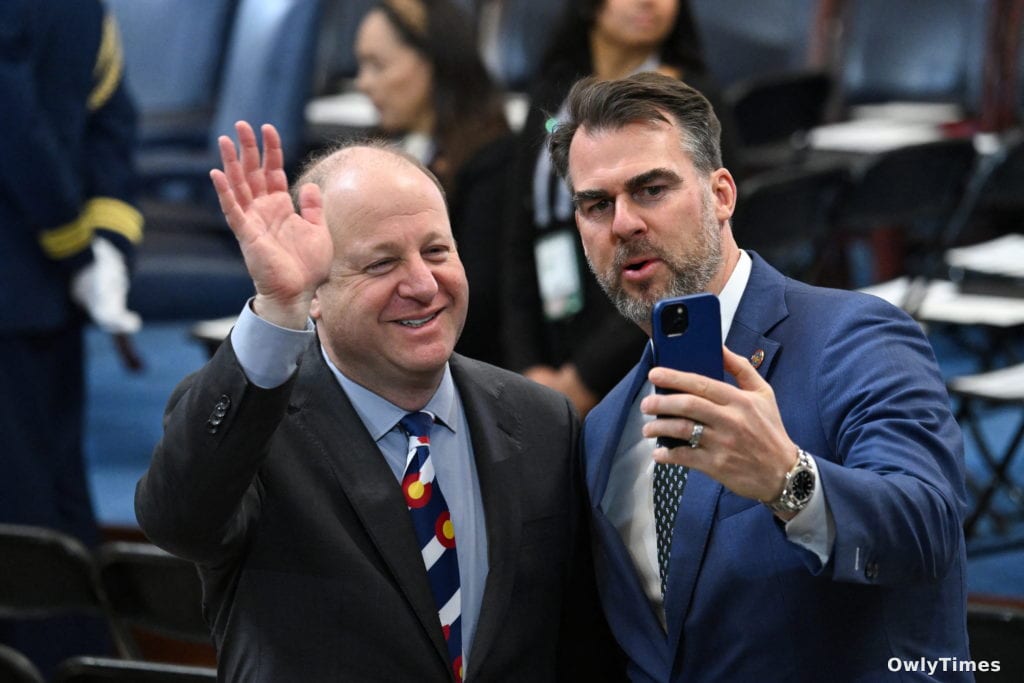
The decision by the National Governors Association (NGA) to withdraw from its annual White House meeting isn’t simply a scheduling change; it’s a calculated demonstration of eroding institutional norms and a direct challenge to the traditionally collaborative relationship between the federal government and the states. President Donald Trump’s deliberate exclusion of Governor Jared Polis of Colorado and Governor Wes Moore of Maryland from the event – and his subsequent public disparagement of them as “not worthy” – isn’t a spontaneous outburst, but a strategic move to redefine the boundaries of presidential power and enforce ideological conformity, even within a forum historically designed for bipartisan engagement. The immediate consequence is a fractured meeting, but the longer-term effect is a further weakening of the guardrails protecting against overt politicization of state-federal relations.
The core calculus here is simple: Trump is prioritizing loyalty and public displays of support over the pragmatic benefits of bipartisan cooperation. This isn’t new. Throughout his presidency, and particularly during his second term, Trump has demonstrated a willingness to weaponize federal resources and leverage personal animosity against political opponents, from threats to withhold funding to deploying federal troops against the wishes of state and local leaders. The NGA’s response – a full withdrawal rather than a partial attendance – signals a collective recognition that participating in a selectively inclusive event would legitimize a practice that fundamentally undermines the organization’s purpose. Governor Kevin Stitt of Oklahoma, the NGA chair, attempted to mediate, only to be publicly rebuked by Trump as a “RINO,” illustrating the risks of attempting to bridge the gap with a president who appears to actively seek division.
Who benefits and who loses in this scenario? Trump clearly benefits from consolidating control over the narrative and demonstrating his dominance, even at the cost of alienating potential allies. His base will likely view the exclusion of Polis and Moore as a sign of strength and unwavering commitment to their values. Conversely, the NGA loses a valuable platform for advocating for state interests, and the governors as a whole – even those aligned with Trump – are left with a stark reminder of the president’s willingness to bypass established protocols. Governor Spencer Cox of Utah, speaking at a Politico event, bluntly acknowledged that Trump “is not putting his mind to” unifying the country, a statement that, while not surprising, is particularly damning coming from a fellow Republican. The states themselves lose a crucial avenue for collective bargaining and a unified voice in Washington.
This piece references the PBS report.
This situation echoes historical precedents, though with a distinctly modern twist. Consider the fraught relationship between President Andrew Jackson and the states during the Nullification Crisis of the 1830s, where states’ rights were invoked to resist federal authority. While the context differs – Jackson’s conflict centered on tariffs and states’ sovereignty, while Trump’s is rooted in personal animosity and ideological purity – the underlying dynamic remains the same: a president testing the limits of executive power and challenging the established balance between the federal government and the states. However, Trump’s use of social media to directly attack governors, bypassing traditional channels of communication and fostering a climate of personal grievance, represents a new level of direct confrontation. Governor Moore’s surprisingly charitable response – stating he “prays” for Trump – highlights the unusual nature of the situation, a governor attempting to extend grace to a president actively undermining his position.
The NGA’s withdrawal is not merely a reaction to a snub; it’s a strategic retreat designed to preserve the organization’s integrity and signal its unwillingness to participate in a process that legitimizes political retribution. The fact that Polis and Moore are continuing to meet with governors from both parties while in Washington underscores their commitment to the original purpose of the NGA – fostering collaboration and sharing best practices, regardless of partisan affiliation. But the question now is whether this incident will trigger a broader reassessment of the NGA’s role and its ability to effectively advocate for state interests in an increasingly polarized political landscape. The political chess move to watch next is whether other organizations traditionally involved in state-federal relations will begin to distance themselves from the White House, signaling a wider trend of institutional resistance to Trump’s confrontational style.