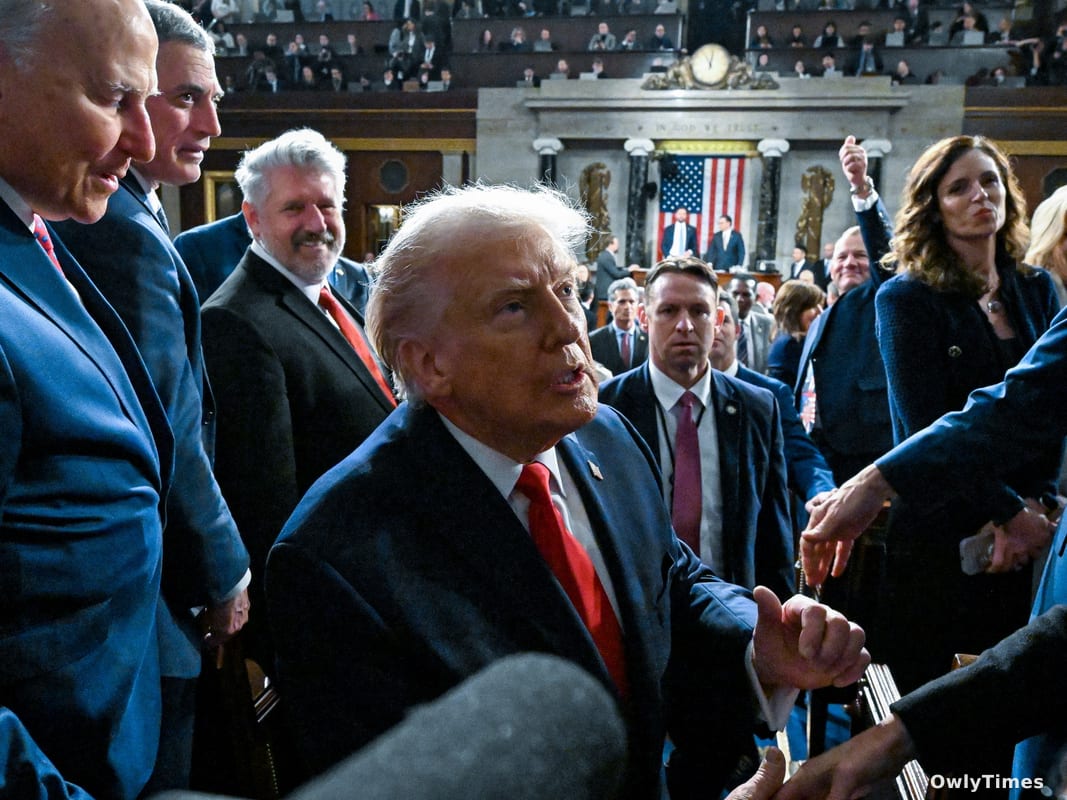

The Illusion of Transformation: Trump’s State of the Union as a Base-Securing Operation
Donald Trump’s State of the Union address wasn’t a proclamation of a transformed America, but a calculated maneuver to solidify support amongst his core constituency ahead of a challenging midterm election cycle. The speech, delivered against a backdrop of legal setbacks – notably the Supreme Court’s rejection of his signature tariff policy – wasn’t about persuasion, it was about reinforcement. This isn’t a president attempting to broaden his appeal; it’s a leader recognizing the limitations of his legislative victories and the fragility of his executive actions, and doubling down on the political base that delivered him to power. The strategic calculus is clear: with legal challenges mounting and public sentiment lukewarm, Trump needs to maximize turnout amongst loyal voters, even if it means alienating potential swing voters.
This article draws on reporting from Al Jazeera.
The address functioned as a victory lap for the “Big Beautiful Bill” – derided by critics as the “Big Ugly Bill” – passed last July. This legislation, codifying campaign promises like tax cuts and adjustments to Social Security, represents Trump’s most substantial legislative achievement to date. However, the celebratory tone clashes with the reality of public perception. While Trump touted improvements in the lives of Americans, polls indicate a disconnect between his narrative and the lived experiences of many citizens. His approval rating has declined since the bill’s passage, and views on his handling of the economy are slipping. This highlights a fundamental tension: Trump is claiming credit for economic gains that a significant portion of the electorate isn’t feeling, a tactic reminiscent of Ronald Reagan’s optimistic messaging during the 1980s, but without the accompanying broad-based economic recovery readily apparent to voters.
Who benefits and who loses from this strategy? Trump’s base – largely comprised of working-class voters and those who feel left behind by globalization – benefits from the rhetoric of economic populism and the promise of a return to American greatness. Republicans facing tough re-election campaigns in swing districts, however, are placed in a precarious position. They must navigate the demands of a president who prioritizes base mobilization over bipartisan compromise. Democrats, meanwhile, gain ammunition to portray Trump as out of touch and focused on divisive issues. The long-term cost for the GOP could be further polarization and a diminished ability to govern effectively. The situation echoes the political dynamics of the late 1960s, when Richard Nixon successfully exploited cultural anxieties to build a “silent majority,” but at the cost of deepening societal divisions.
The President’s focus on affordability – pitching legislation on healthcare, housing, and retirement accounts – underscores a recognition that economic anxieties are a potent political force. However, his reliance on Congress to enact these proposals reveals a vulnerability. Despite his preference for unilateral action, Trump needs legislative buy-in to achieve many of his objectives. This dependence on Congress is further complicated by the ongoing standoff over funding for the Department of Homeland Security (DHS), with Democrats demanding oversight and reform of immigration policies. The DHS funding dispute isn’t merely about border security; it’s a power play designed to extract concessions from a president who has consistently pushed the boundaries of executive authority. The parallels to the government shutdowns of the Clinton era are striking, where ideological clashes over spending priorities led to protracted political battles.
The fate of Trump’s tariff policy remains a significant question mark. Despite the Supreme Court’s ruling, Trump is attempting to circumvent legal challenges by invoking new authorities and promising to increase tariffs further. However, these measures are likely to face legal scrutiny, and the expiration date just months before the midterm elections adds a layer of urgency. The libertarian CATO Institute has already questioned the legality of the new tariffs, foreshadowing further legal battles. The unresolved issue of refunds for previously collected tariffs also presents a political vulnerability for Republicans. This situation mirrors the protectionist policies of the early 20th century, which ultimately proved unsustainable and contributed to the Great Depression.
The political chess move to watch next isn’t a grand legislative initiative, but the outcome of the DHS funding negotiations. Will Democrats successfully leverage their position to secure concessions on immigration policy, or will Trump force a government shutdown to maintain his hardline stance? The answer will reveal whether the President is willing to compromise to achieve his broader political goals, or if he remains committed to a strategy of base mobilization at all costs. The midterm elections hinge on this calculation.





