
The Calculus of Constraint: Supreme Court Tariff Ruling Reshapes Presidential Power
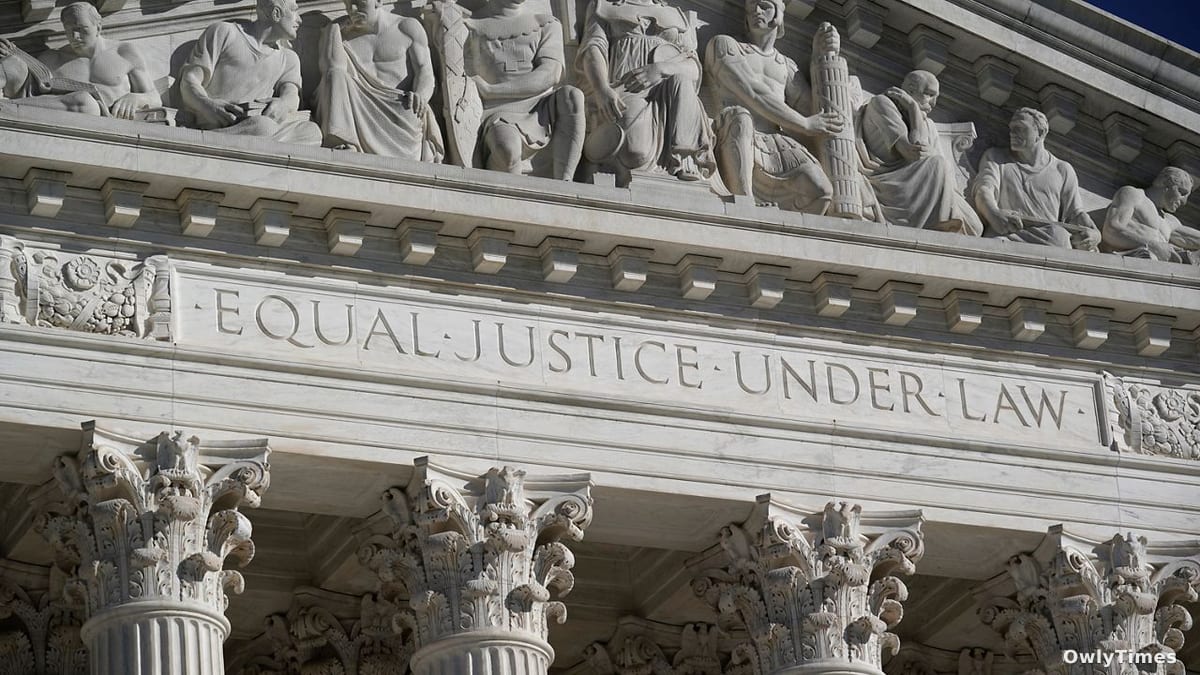
The Supreme Court’s 6-3 decision striking down President Trump’s global tariffs wasn’t simply a legal setback; it was a strategic realignment of power, meticulously calculated to reassert Congressional authority over trade policy. The immediate fallout – outrage from a significant faction of the Republican party and cautious optimism from Democrats – reveals a deeper tension: the ongoing struggle to define the boundaries of executive power in the 21st century. This ruling isn’t about tariffs themselves, but about who controls the economic levers of influence, and the implications ripple far beyond the balance sheets of American companies.
The core of the dispute rests on the International Emergency Economic Powers Act (IEEPA) of 1977, a law originally intended to address specific national security threats. Donald Trump’s administration aggressively expanded its interpretation, using IEEPA to justify broad tariffs on goods from countries across the globe, ostensibly to protect American industries. The Court’s decision effectively resets that precedent, arguing the President lacks the authority to impose such sweeping economic measures without explicit Congressional approval. This echoes a historical pattern: periods of expanded executive authority, often during wartime or perceived crises, are inevitably followed by attempts to reassert legislative control. Consider the debates surrounding the War Powers Resolution in the 1970s, a direct response to perceived presidential overreach in Vietnam – a similar attempt to define the limits of executive action.
Original reporting: Spectrum News.
Who benefits and who loses from this ruling is far from straightforward. Immediately, American consumers stand to gain, potentially seeing a reduction in costs as the roughly $175 billion in tariffs estimated by Penn-Wharton Budget Model economists are potentially refunded. However, as Lloyd Doggett, D-Austin, pointed out, the benefits may not be evenly distributed. The refunds are likely to flow to corporations, and there’s no guarantee those savings will be passed on to consumers. This highlights a critical contradiction: the Court’s decision aims to alleviate economic pressure on families, but the actual impact hinges on corporate behavior. Conversely, the immediate losers are those within the Republican party who championed Trump’s tariff policy as a means of bolstering American manufacturing and holding “unfair trade partners accountable.” Brian Babin, R-Woodville, expressed this frustration directly on X, lamenting the decision as undermining the President and blocking a “key tool.”
The reaction from Texas lawmakers underscores the partisan divide. While Democrats like Henry Cuellar, D-Laredo, celebrated the ruling as a win for consumers and a reaffirmation of Congressional authority, Republicans largely condemned it. Lance Gooden, R-Terrell, framed the decision as a blow to the American worker, while Keith Self, R-McKinney, publicly praised dissenting Justice Clarence Thomas as a “national treasure.” This isn’t simply about economic policy; it’s about a fundamental disagreement over the role of the presidency and the balance of power within the federal government. The invocation of past administrations – Gooden’s reminder that presidents from Biden to Clinton have imposed tariffs – is a strategic attempt to normalize Trump’s actions and deflect criticism as partisan. However, the scale and scope of Trump’s tariffs were demonstrably different, pushing the boundaries of IEEPA to a breaking point.
The $200 billion collected by Customs and Border Protection from tariffs last year – $133.5 billion specifically from IEEPA duties – represents a significant revenue stream now potentially disrupted. This financial impact adds another layer of complexity. The administration will now need to find alternative sources of revenue or adjust spending priorities. More importantly, the ruling forces a reckoning with the long-term implications of relying on executive action to shape trade policy. The question now isn’t whether tariffs will be used, but how they will be implemented. Will Congress take the initiative and craft comprehensive trade legislation, or will the administration attempt to circumvent the ruling through alternative legal avenues?
The political chess move to watch next is Congress’s response. Will House Republicans, emboldened by the ruling, attempt to further restrict presidential authority over trade? Or will they seek to negotiate a bipartisan compromise that provides a more stable and predictable framework for international commerce? The answer will reveal not only the future of trade policy, but also the enduring struggle to define the limits of presidential power in a deeply polarized nation.





