
$1.5 Billion Reputation at Risk: The Economic Fallout of Attacks on Dubai
A reported 500 drones and ballistic missiles launched by Iran at the United Arab Emirates represent a $1.5 billion gamble – not just against infrastructure, but against the carefully constructed image of stability that underpins Dubai’s economy. While direct, catastrophic damage to the Burj Khalifa itself appears limited, the disruption to tourism and investor confidence following Saturday’s attacks poses a significant threat to the UAE’s diversification strategy, a plan explicitly built around landmarks like the world’s tallest building. This isn’t simply about physical damage; it’s about eroding the perception of safety that has drawn foreign capital and tourists to the region.
Original reporting: deccanchronicle.com.
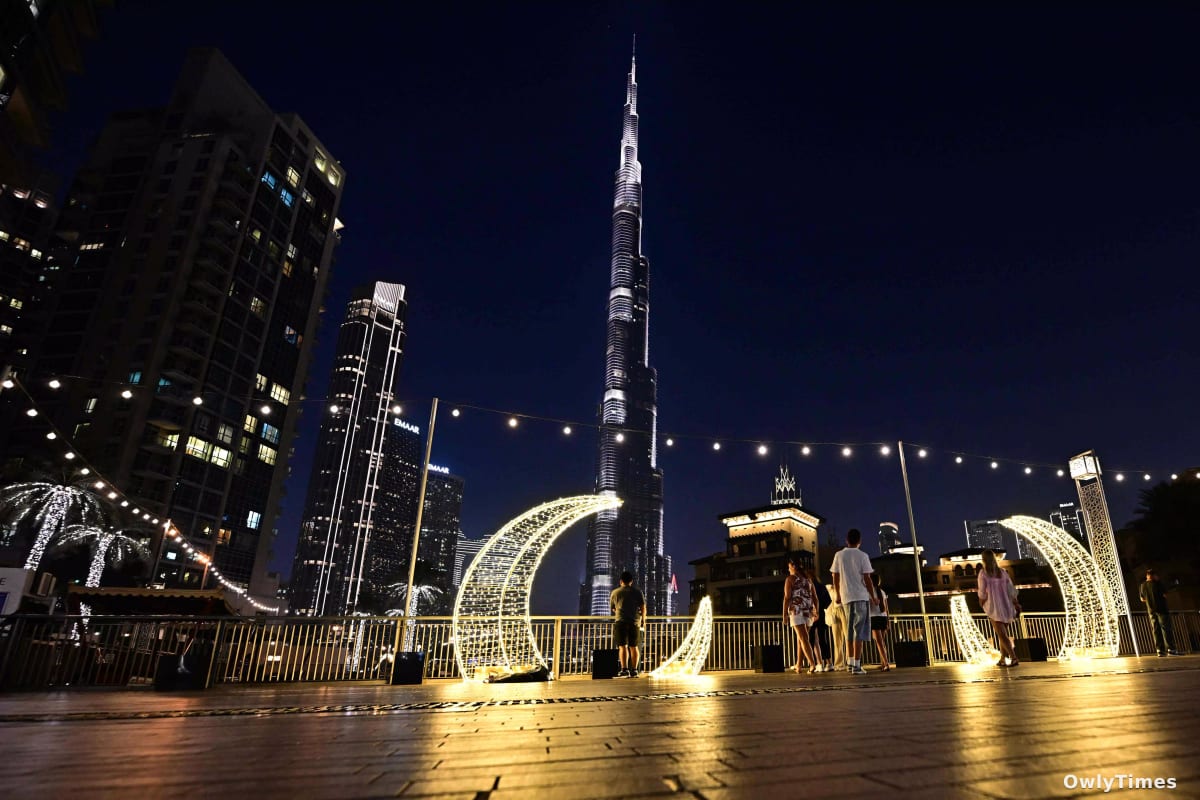
The attacks, framed by Iranian media with visuals purportedly showing strikes on the Burj Khalifa, triggered immediate evacuations and a security lockdown of the tower complex. Though many incoming projectiles were intercepted, debris impacted residences and landmarks, particularly in the vicinity of the 830-meter skyscraper. Built at a cost of $1.5 billion, and completed in 2010 after five years of construction utilizing 35,000 tons of structural steel, the Burj Khalifa was conceived as a cornerstone of the UAE’s shift away from oil dependency towards a service and tourism-based economy. The tower’s average daily water consumption alone – 946,000 liters delivered through 100 kilometers of pipe – illustrates the scale of the operation it supports.
The immediate impact is clear: tourism activities have been temporarily halted. However, the longer-term consequences are more concerning. Dubai’s tourism sector accounted for approximately 11.5% of the UAE’s GDP in 2019, pre-pandemic, and while figures have rebounded, they remain sensitive to geopolitical instability. A 2023 report by Colliers International estimated Dubai’s hospitality sector would generate $8.3 billion in revenue, a figure now demonstrably at risk. The disruption to UAE airlines following the strikes further compounds the problem, limiting access for potential visitors and impacting the broader logistics network. The fact that dozens have been reported killed underscores the severity of the situation, moving beyond economic concerns to a humanitarian crisis.
The strategic rationale behind targeting Dubai, and specifically areas near the Burj Khalifa, is rooted in economic pressure. The UAE, under the leadership of figures like the late Khalifa bin Zayed Al Nahyan – for whom the tower is named – has cultivated close ties with the US and Israel. Iran views these relationships as a direct threat, and the attacks can be interpreted as an attempt to raise the cost of those alliances. This is a calculated move to destabilize a regional economic hub and potentially force a reassessment of the UAE’s foreign policy. The building’s cladding system, designed to withstand the harsh desert climate, is a testament to the long-term investment the UAE has made in its image, an image now demonstrably vulnerable.
The damage isn’t solely financial. The UAE has spent decades building a reputation for strict laws and a safe, wealthy environment. The visible explosions across the Dubai skyline, even from intercepted debris, have inflicted a psychological shock on residents and tourists alike. This erosion of trust is harder to quantify than lost tourism revenue, but it’s arguably more damaging in the long run. The question now is whether the UAE can effectively restore that confidence, and at what cost. Will investors demand higher risk premiums for future projects in the region, or will the attacks trigger a broader reassessment of the UAE’s role as a safe haven for capital? This is what your wallet needs to watch for: a potential increase in travel costs and a slowdown in investment opportunities within the UAE as the market recalibrates to a new, more volatile risk profile.