
The modern insurance industry rests on a foundation of statistical probability, yet the professionals responsible for the stability of this sector often remain invisible to the public they serve. Actuaries, the architects of risk assessment, essentially perform the high-stakes task of predicting the future to ensure that when disaster strikes, capital is available to cover the cost. This profession requires more than just a facility for numbers; it demands a synthesis of finance, risk management, and long-term strategic planning.
The Academic Blueprint for Risk Assessment
Developing a curriculum for this field is a rigorous exercise in balancing theoretical mathematics with practical application. At St. Mary’s University, the actuarial science program was designed through direct consultation with industry professionals to ensure the coursework met real-world expectations. According to Jason Shaw, Ph.D., who was tasked with building the program by then-Dean Winston Erevelles, Ph.D., the university prioritized input from practicing actuaries and insurance companies to define the essential skill sets for success.
The resulting curriculum is substantial, requiring 45 hours of mathematics, including calculus, probability theory, and statistics, alongside 33 hours of specialized actuarial science coursework. Students are also required to complete foundational business courses, such as Principles of Finance and Fundamentals of Risk Management. By integrating these disciplines, the program aims to prepare graduates for roles like that of Maroun Harb (B.B.A./B.S. ’23), who currently works with the capital modeling team at USAA.
Separating Career Prospects from Market Hype
While the professional outlook for actuaries is robust, it is important to distinguish between broad industry growth and the specific daily reality of the job. The U.S. Bureau of Labor Statistics projects that the employment of actuaries will grow by 22% over the next 10 years, a rate significantly faster than the average for all occupations. With a median annual salary of $125,700, the financial incentive is clear, yet this figure represents a national average that can be influenced by geographic location, years of experience, and specific industry specialization.
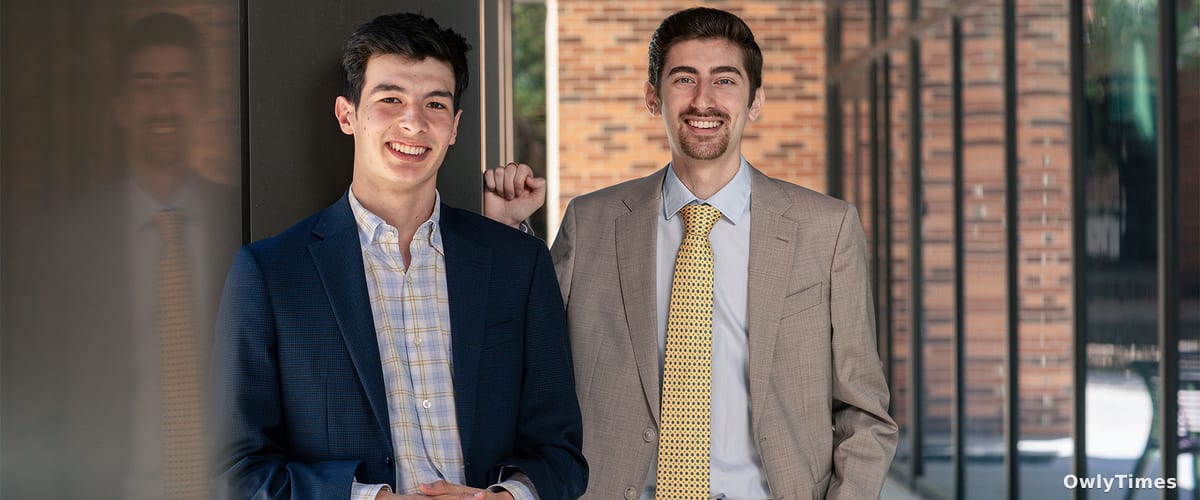
It is critical to note that while the Society of Actuaries recognizes St. Mary’s within its Universities and Colleges with Actuarial Programs list, there is no single, globally mandated accreditation for actuarial programs. The value of such a degree lies in its ability to prepare students for the rigorous series of professional examinations required for certification. Students like Roland “RJ” Rojas, who pivoted from Mechanical Engineering to actuarial science, highlight that the appeal of the field often lies in discovering the mechanics behind the ubiquity of insurance premiums.
Limitations to Consider and Future Trajectories
The primary limitation of current actuarial education is the inherent difficulty of simulating the volatility of real-world crises in a classroom setting. While case competitions, such as those hosted at the University of Texas at Austin, offer students a platform to analyze business scenarios, they cannot fully replicate the high-pressure environment of managing company reserves during a period of unexpected loss. Furthermore, the field is evolving as data collection methods and machine learning capabilities advance, requiring universities to continuously update their statistical modeling tools.
The next steps for this field involve observing how these programs adapt to the increasing reliance on complex, automated predictive models. The ongoing integration of students into professional environments—such as the internship RJ Rojas is slated to complete at CSAA Insurance Group—will serve as a key metric for academic programs. The sustained performance of these graduates in the workplace will indicate whether current pedagogical strategies are successfully bridging the gap between abstract mathematical theory and the complex demands of global risk management.





