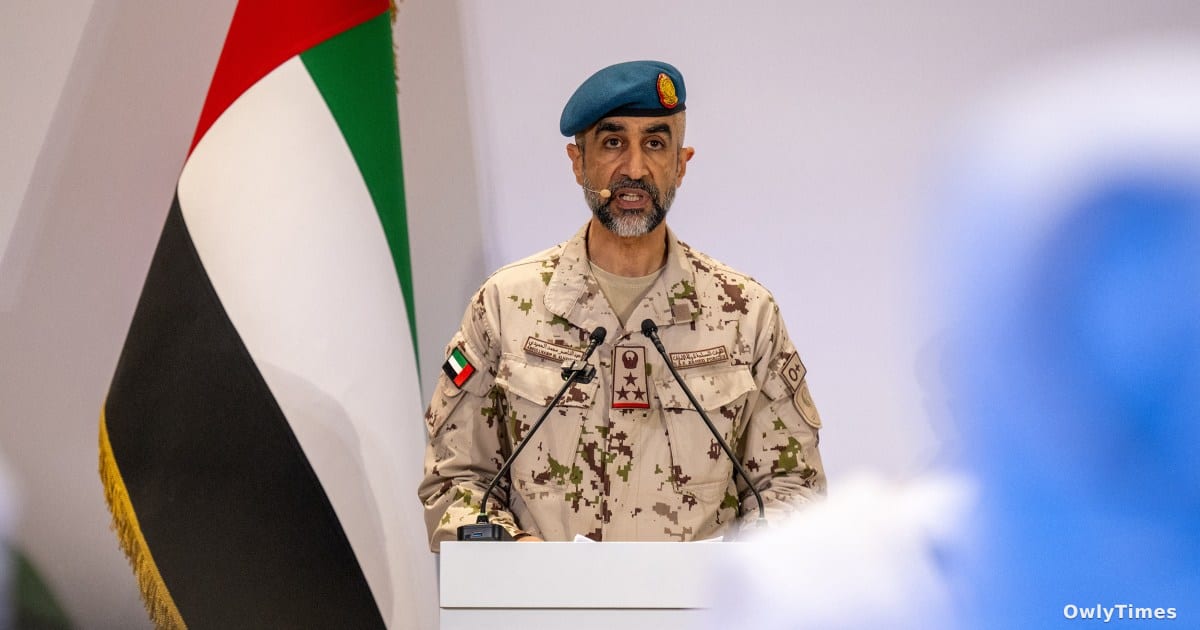

Is the future of Middle East security really about better missile defense systems, or is it about who’s willing to get dragged into a war they didn’t start? The narrative coming out of Abu Dhabi, as of April 3, 2026, is carefully calibrated: defense, deterrence, and a firm denial of being an active participant in the escalating conflict between the U.S. and Iran. But beneath the surface of Maj. Gen. Abdul Nasser Al Humaidi’s interview with MS NOW lies a chilling pragmatism – the UAE hasn’t ruled out joining the fight. The real story here isn’t the UAE’s impressive 99% missile interception rate – it’s the quiet calculation of how much damage they’re willing to absorb before deciding the best defense is a more aggressive offense.
The UAE has become a focal point, absorbing over 2,500 drones, cruise, and ballistic missiles since the conflict began – more than any other Gulf state and comparable to the barrage Israel has faced. Twelve people are already dead, a statistic that feels tragically understated when considering the potential for catastrophic damage to critical infrastructure like airports and energy facilities. Al Humaidi proudly cites a “high success rate” in intercepting these attacks, a testament to decades of investment in layered air defense systems and collaboration with international partners, including the U.S. But success rates, however impressive, don’t bring back the dead or erase the economic disruption caused by constant threat. They simply buy time.
Original reporting: ms.now.
This isn’t just about military hardware. It’s about the UAE’s strategic position. For years, the Emirates have walked a tightrope, maintaining close security ties with Washington while simultaneously attempting to de-escalate regional tensions. Hosting U.S. forces is a long-term commitment, even after the conflict ends, according to Al Humaidi. But that commitment is being tested. Iran’s claim – vehemently denied by the UAE – that U.S. strikes originate from Emirati territory is a dangerous accusation, designed to justify further attacks and potentially draw the UAE directly into the crosshairs. It’s a calculated gamble by Iranian Foreign Minister Abbas Araghchi, attempting to broaden the conflict’s scope.
The UAE’s defensive posture is, understandably, its public face. Al Humaidi repeatedly emphasizes the country’s right to self-defense and its commitment to protecting its territory. But the UAE’s ambassador to the United States is signaling a growing impatience, calling for a “conclusive ending” to the war. This isn’t simply a desire for peace; it’s a recognition that a stalemate leaves Iran capable of repeating these attacks indefinitely. The question isn’t if Iran will try again, but when. And that’s where the carefully worded ambiguity about future involvement comes into play.
The impressive air defense network, while effective, isn’t a magical shield. It’s a delaying tactic. The UAE’s long-term security isn’t guaranteed by intercepting 95% of incoming missiles; it’s guaranteed by deterring Iran from launching them in the first place. And deterrence, in this context, increasingly looks like a willingness to escalate. The UAE is essentially saying: we’re not looking for a fight, but don’t mistake our restraint for weakness. We’ve built the defenses, we’ve made the alliances, and we’re prepared to use them if necessary.
What happens next hinges on President Trump’s next move. If U.S. and Israeli strikes on Iran intensify, the pressure on the UAE to move beyond a purely defensive posture will become unbearable. Watch for a shift in rhetoric from Abu Dhabi in the coming weeks. Specifically, pay attention to whether the UAE begins to publicly emphasize its offensive capabilities, rather than solely focusing on its defensive successes. If they start talking about “options” beyond territorial defense, consider it a clear signal that the UAE is preparing to join the war – not because they want to, but because they believe they have no other choice.





