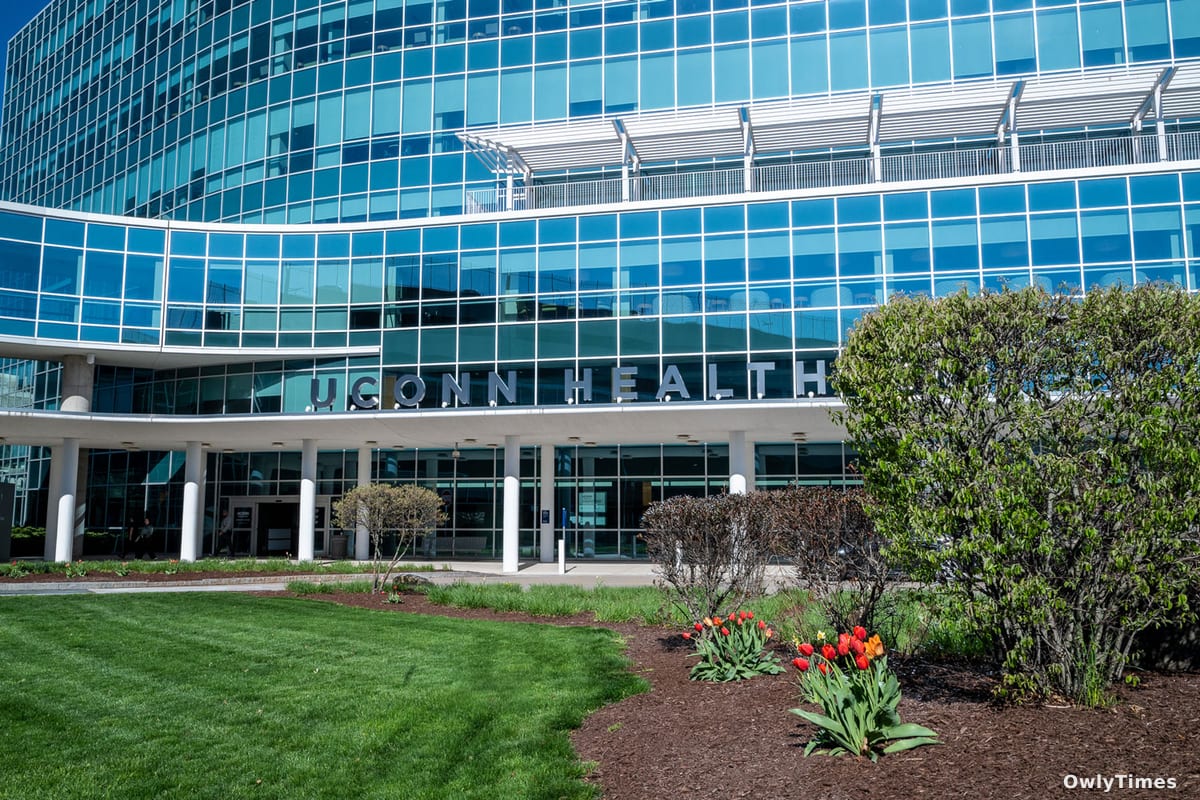

How do we reconcile the resource-heavy nature of modern healthcare with the global urgency to reduce carbon emissions? This is the core question facing institutions like the UConn School of Medicine, which has recently been recognized as the top-performing institution among the 54 U.S. medical schools graded by the 2026 Planetary Health Report Card. Released annually on Earth Day, the report evaluates schools on curriculum, community outreach, and campus sustainability. UConn’s jump to an overall ‘A’ grade—up from an ‘A-’ last year—marks a significant shift in how academic medicine integrates climate health into its core mission.
While headlines often frame such recognition as a sign that medical education has “solved” its climate impact, the reality is more granular. The report card measures institutional commitment, but the true test lies in the translation of these policies into clinical practice. At UConn, this involves a multi-pronged approach: embedding sustainability into the Health Systems Science curriculum and operationalizing change within high-energy environments like the UConn John Dempsey Hospital operating room.
Dr. Kirsten Ek, an assistant professor of medicine and member of the school’s sustainability working group, notes that the goal is to make the relationship between environmental health and patient outcomes tangible. For instance, in late January 2026, students participated in a zero-waste event in North Hartford, a community that has historically faced challenges with local landfill and incinerator waste. By connecting medical students with local community members, the program aims to shift the focus toward environmental determinants of health—a vital, if often overlooked, aspect of clinical care.
However, clinical sustainability faces a persistent tension: the need to maintain, or even increase, patient volume while simultaneously shrinking a carbon footprint. John Lombardi, director of facilities engineering and sustainability, admits that growth complicates these efforts. “Adding an additional operating room or linear accelerator increases our greenhouse gas footprint while simultaneously we are trying to drive down to meet goals,” he explains.
This tension is most visible in the operating room, which is traditionally one of the most resource-intensive areas of any hospital. Dr. Adam Fischler, the OR medical director, has been spearheading efforts to mitigate this through technical adjustments. By installing 14 new anesthesia machines and refining air exchange rates, the team has reported a reduction in volatile anesthetic gas usage of more than 50%. These machines are designed to lower fresh gas flows to 0.3 liters per minute, offering a potential greenhouse gas reduction of 75% or greater.
Limitations to consider include the reality that many of these initiatives rely on high-capital investment and specific state-funded pilot programs. For example, the Creative Child Center on UConn’s lower campus saw a 51% reduction in energy use following the installation of ultra-high performance heating, ventilation, and air conditioning (UHP HVAC) systems. This project was fully funded by Connecticut Innovations, a strategic venture capital arm of the state’s Office of Manufacturing. While the results—a savings of nearly $8,600 over nine months—are impressive, the scalability of such projects across aging hospital infrastructure remains a complex engineering and financial hurdle.
Looking ahead, the next phase of UConn’s sustainability strategy will be measured by the efficacy of its upcoming infrastructure retrofits. The university has initiated a $1 million project to insulate heating distribution piping, with nearly $900,000 covered by utility incentives. The success of this project—and whether it achieves the estimated two-year recovery of the university’s investment—will serve as a key metric for whether these operational changes can remain self-sustaining as the institution continues to expand its patient care capacity.





