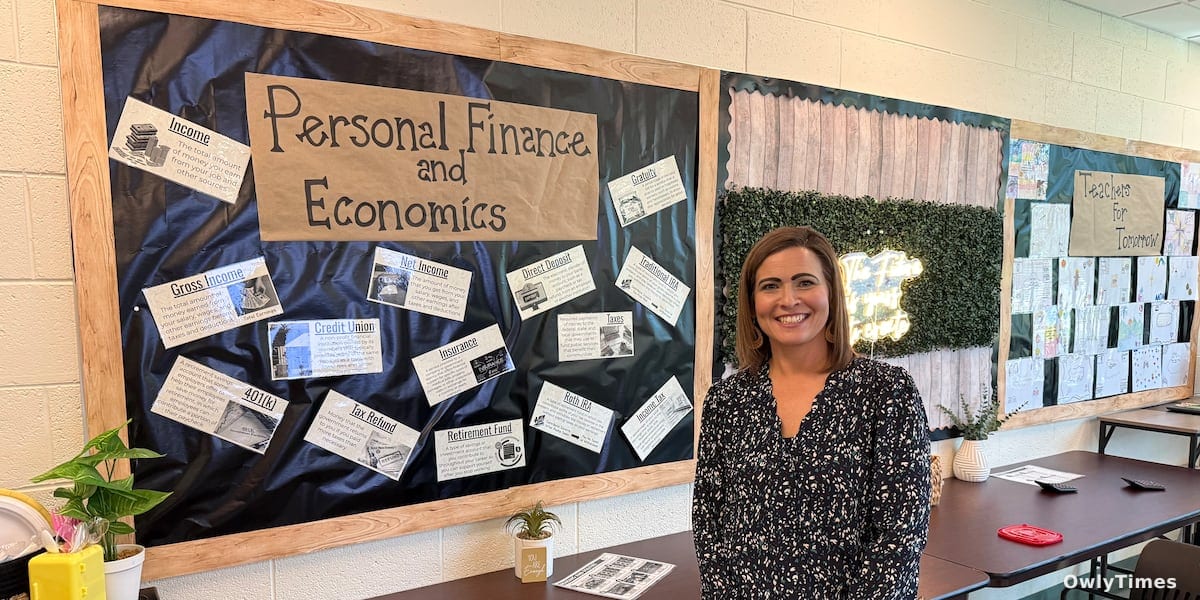

6 is the number of times Narrows High School in Giles County has earned a spot on the “100 Best High Schools Teaching Personal Finance” list, a recurring recognition that highlights a growing trend in Virginia’s educational landscape. This year, the institution reached a new milestone by securing a position in the top 10 nationally for the first time. The consistency of this achievement underscores a shift in how the commonwealth approaches long-term economic stability: by mandating Personal Finance and Economics as a graduation requirement.
Following the Money: From Classroom to Capital
When we follow the money behind these rankings, we find the influence of W!SE (Working in Support of Education), the nonprofit behind the certification program. President & CEO David Anderson notes that the program uses a dual-testing model—a pre-test for benchmarking and a post-test for certification—to quantify financial literacy. This data-driven approach moves beyond theoretical concepts, providing a measurable metric for whether students are actually prepared for real-world financial demands. By elevating this curriculum, Anderson argues that policymakers are essentially investing in the future fiscal health of the workforce.
Practical Skills vs. Theoretical Risk
The curriculum at Narrows High School, led by teacher Crystal Boggess, focuses on the mechanics of modern finance: employment documentation, tax filing, and credit management. For the students, the stakes of this education are immediate. Tenth grader Kirstyn Buracker characterizes the instruction as a direct guide on "how to correctly spend my money," while ninth grader Cooper Sutphin notes the preventative value of the course in avoiding the cycle of debt and bankruptcy that often plagues those entering adulthood without a financial roadmap.
The tension here lies between the rising cost of living and the preparation provided to the next generation of consumers. Boggess emphasizes that her instruction is aimed at mitigating the "crucial impacts" of early financial mistakes. By simulating the realities of loan applications and budgeting, the program forces students to confront the reality of living within their means before they are exposed to the predatory nature of credit markets.
Measuring Long-Term Economic Resilience
The success of programs like the one at Narrows High serves as a signal for the broader market. When high school graduates enter the workforce or higher education with a baseline understanding of debt instruments and tax structures, the systemic risk of financial illiteracy decreases. The data collected by W!SE in the coming academic cycles will offer a clearer picture of whether this top-10 ranking correlates with improved financial outcomes for Giles County graduates.
For the individual consumer and investor, the takeaway is clear: financial literacy is increasingly being treated as a foundational human capital investment rather than an elective skill. As these students transition from simulation to real-world employment, watch for the next reading of state-wide graduation requirement assessments; they will serve as the primary indicator of whether Virginia’s emphasis on personal finance is successfully insulating its future tax base from the volatility of poorly managed personal debt.




