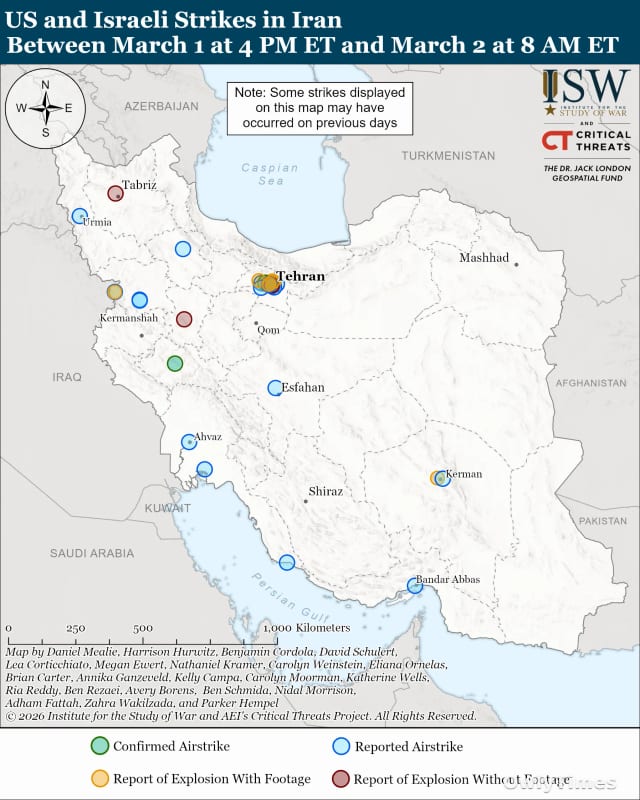

The escalating reliance on open-source intelligence (OSINT) isn’t simply a technological shift in national security – it’s a fundamental reimagining of how conflict is understood, and increasingly, prevented. While headlines often focus on the dramatic reveals OSINT provides – identifying troop movements, exposing disinformation campaigns – the real story lies in the painstaking methodology that underpins these insights, and the implications of a world where publicly available information is both a weapon and a shield. The Institute for the Study of War (ISW), a non-partisan think tank, has been at the forefront of this evolution, and a closer look at their work reveals a nuanced picture of OSINT’s power, and its inherent limitations. It’s not about replacing traditional intelligence gathering, but about augmenting it, creating a more comprehensive and rapidly updating understanding of global events.
Mapping the Gray Zone: Beyond Traditional Intelligence
For decades, national security relied heavily on classified intelligence – signals intercepts, human sources, and reconnaissance. This model, while still vital, operates with inherent delays and limitations in access. OSINT, by contrast, leverages the vast and rapidly growing ocean of publicly available data: satellite imagery, social media, news reports, government statements, and even commercial data streams. ISW’s signature contribution is its “Map Room,” producing detailed, frequently updated maps of conflict zones, most notably in Ukraine and the Middle East. These aren’t simply geographical representations; they’re visual syntheses of hundreds of data points, analyzed by a team of experts to identify patterns and trends. As ISW Director of Operations Katherine Lawlor explained in a recent briefing, the goal is to “provide a common operating picture” for policymakers, journalists, and the public, reducing ambiguity and fostering informed decision-making. This contrasts sharply with the often-opaque nature of traditional intelligence briefings, and the potential for selective information release. In 2023 alone, ISW published over 300 maps and associated analyses, a volume that would have been unthinkable even a decade ago.
This article draws on reporting from understandingwar.org.
The Human Element in a Data Deluge
The sheer volume of data is both OSINT’s strength and its greatest challenge. It’s not enough to simply collect information; it must be verified, contextualized, and analyzed. This is where ISW’s methodology distinguishes itself. Their approach isn’t automated; it’s deeply human-driven. Analysts are trained to critically evaluate sources, identify biases, and corroborate information from multiple independent streams. The team employs a rigorous process of “source triangulation,” meaning a single claim isn’t accepted as fact until it’s confirmed by at least two, and preferably three, independent sources. This is particularly crucial in conflict zones, where disinformation is rampant. A recent ISW report on Russian information operations in Ukraine detailed how the organization identified and debunked dozens of fabricated narratives designed to undermine Ukrainian morale and sow discord among Western allies. The report didn’t just state the narratives were false; it meticulously outlined the evidence used to disprove them, including geolocation data, inconsistencies in reporting, and analysis of social media activity.
Limitations to Consider: The Illusion of Completeness
Despite its advantages, OSINT isn’t a panacea. A critical limitation is its inherent bias towards information that is publicly available. This means that activities deliberately concealed – clandestine operations, covert funding, or private communications – will likely remain outside its scope. Furthermore, the quality of OSINT data varies dramatically. Social media posts, while valuable, are often unverified and prone to manipulation. Satellite imagery, while precise, is expensive and limited by cloud cover and access restrictions. ISW acknowledges these limitations, and consistently emphasizes that OSINT should be used in conjunction with, not as a replacement for, traditional intelligence methods. A recent internal review highlighted the difficulty of assessing battlefield damage in Syria due to restricted access for independent observers and the deliberate obfuscation tactics employed by all parties involved. The review noted that while ISW could confirm the location of strikes, accurately assessing the extent of damage and casualties remained challenging.
The Future of Conflict Understanding: Predictive Analysis and Cognitive Warfare
Looking ahead, the next frontier for OSINT lies in predictive analysis and understanding the dynamics of cognitive warfare. ISW is expanding its team of geospatial intelligence analysts and investing in new technologies to automate data processing and identify emerging threats. They are also focusing on the study of “cognitive warfare” – the use of information operations to manipulate perceptions and influence behavior. This includes analyzing the spread of disinformation, identifying vulnerabilities in public opinion, and developing strategies to counter hostile narratives. A key question ISW is currently investigating is how to effectively detect and attribute cognitive warfare attacks, particularly those originating from state-sponsored actors. The challenge isn’t simply identifying the attacks themselves, but proving their origin and intent. As the lines between physical and digital conflict continue to blur, the ability to understand and respond to these threats will be crucial for safeguarding national security. Will the development of more sophisticated AI tools enhance OSINT’s predictive capabilities, or will they simply accelerate the arms race between information and disinformation? That’s the question policymakers and analysts will be grappling with in the years to come.