
The escalating conflict with Iran isn’t simply about retaliation for the killing of Ayatollah Ali Khamenei; it’s a calculated risk by Tehran to test the limits of U.S. and allied commitment to the region, and to simultaneously consolidate influence amongst its proxy forces. Monday’s events – Hezbollah’s first attack on Israel in over a year, the downing of three U.S. F-15E fighter jets over Kuwait due to apparent friendly fire, and attacks targeting U.S. bases in Iraq and Kuwait – weren’t spontaneous outbursts, but coordinated pressure points designed to stretch the U.S. military response and expose vulnerabilities in the regional security architecture. The incident over Kuwait, in particular, underscores the inherent dangers of operating in a highly contested airspace, and the potential for escalation even amongst allies.
The immediate fallout reveals a clear delineation of winners and losers. Iran benefits from demonstrating its capacity to project force across multiple fronts, bolstering its image as a regional power and rallying support from its network of proxies. Hezbollah gains leverage in Lebanon, potentially strengthening its political position amidst a fragile government attempting to avoid full-scale war. Conversely, Kuwait, despite the safe recovery of the U.S. aircrew, finds itself squarely in the crosshairs, its strategic importance as a U.S. military ally making it a prime target. The Lebanese government is losing control, forced to contemplate arresting members of Hezbollah – a move that could trigger a civil conflict. And, of course, the civilian populations of Lebanon, Israel, and potentially Gulf states are the most immediate losers, facing the prospect of escalating violence and displacement, as evidenced by the 31 deaths and 149 injuries reported in south Lebanon.
See the original NPR story for the full account.
This multi-pronged offensive echoes historical precedents of states employing simultaneous pressure tactics during periods of conflict. Consider the Soviet Union’s strategy during the Cold War, often supporting proxy wars in multiple locations to divert U.S. resources and test American resolve. Similarly, the North Vietnamese strategy during the Vietnam War involved coordinated offensives across South Vietnam to overwhelm U.S. forces and erode public support for the war. Iran appears to be employing a similar playbook, aiming to create a crisis too complex and widespread for a decisive U.S. response. The claim by Iran of shooting down a U.S. F-15, even if unconfirmed by U.S. Central Command, serves to amplify this narrative of strength and capability. The reported attacks on oil tankers in the Gulf, and the closure of the Strait of Hormuz, are direct economic pressure points, threatening global energy supplies and raising the stakes considerably.
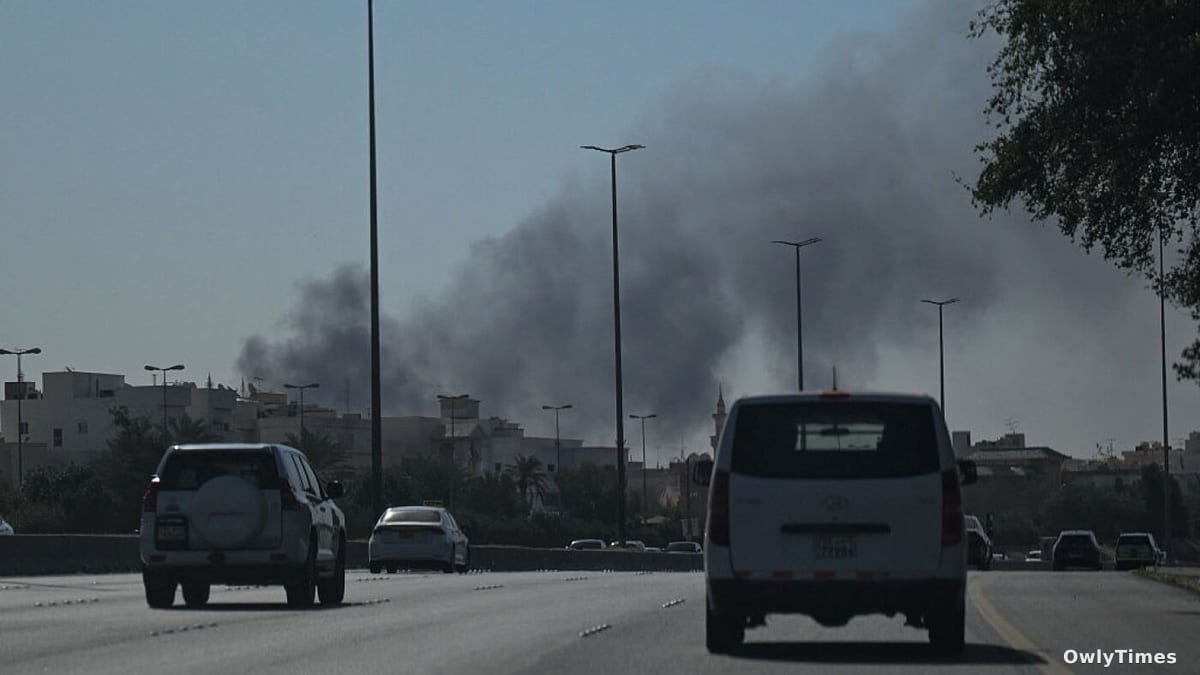
The situation in Kuwait is particularly fraught. The downing of the F-15Es, attributed to “friendly fire,” raises serious questions about coordination and communication between U.S. and Kuwaiti forces. While Kuwait has acknowledged the incident and initiated an investigation, the fact that it occurred during “active combat” – including attacks from Iranian aircraft – suggests a breakdown in situational awareness. The reported attack on the U.S. Embassy in Kuwait City, even if unconfirmed, adds another layer of complexity, potentially triggering a more direct U.S. response. The photograph from AFP/Getty Images showing smoke rising near the embassy is a potent symbol of the escalating threat. The three U.S. troops killed in Kuwait, as reported by a Defense Department official, represent a tangible cost of this escalating conflict, and will undoubtedly fuel calls for a stronger response.
President Trump’s rhetoric – pledging to “avenge” the deaths of American troops while simultaneously suggesting openness to dialogue with a new Iranian leadership – is a classic example of coercive diplomacy. He’s attempting to signal both strength and a willingness to negotiate, but the announced intention to sustain the assault for “four to five weeks” suggests a commitment to significant military action. The conflicting reports regarding the extent of damage inflicted on Iranian warships – Trump’s claim of sinking nine versus U.S. Central Command’s inability to confirm – highlight the challenges of information control during wartime. The British government’s consideration of evacuating citizens from the region, as stated by Yvette Cooper, underscores the growing sense of insecurity and the potential for a wider regional conflict.
The political chess move to watch next isn’t whether Iran will escalate further – that’s almost guaranteed. It’s whether Saudi Arabia will abandon its relatively passive role and directly intervene. The reported interception of drones targeting its refineries, while successfully defended, represents a direct threat to its critical infrastructure. If Saudi Arabia concludes that its own security is at risk, it could dramatically alter the balance of power and trigger a full-scale regional war. The question is not if the conflict will expand, but when and how Saudi Arabia will respond.





