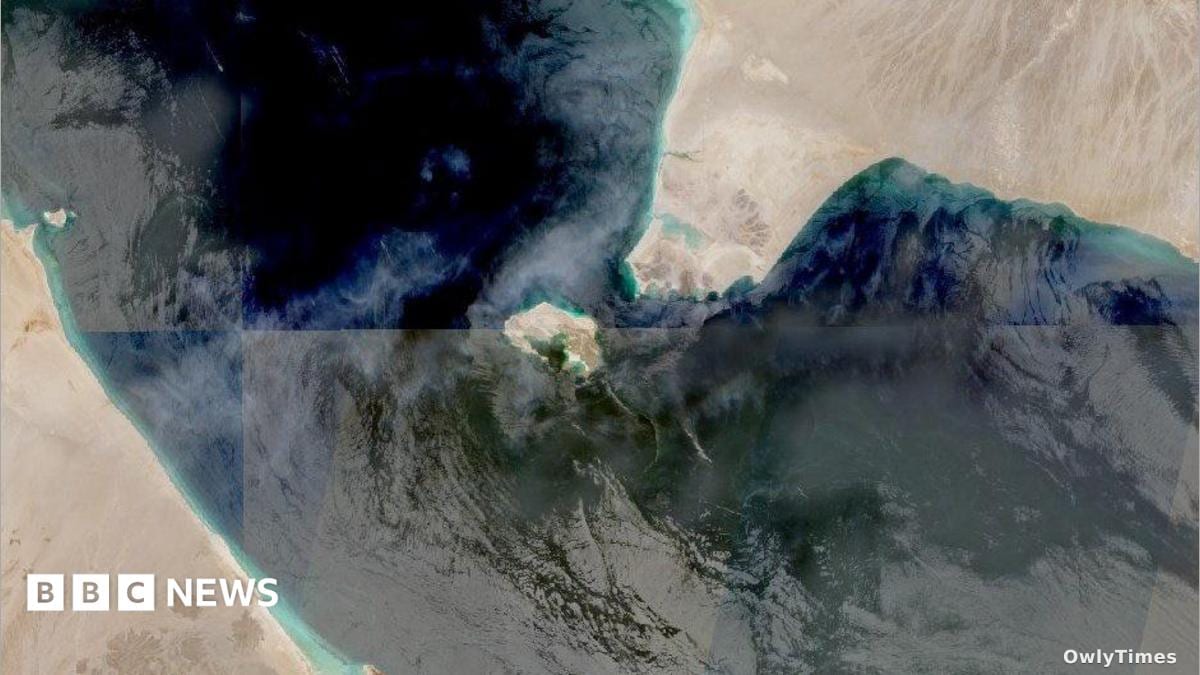

The coordinated closure of Middle Eastern airspace – triggered not by regional conflict escalation, but by a calculated, joint US-Israeli military operation in Tehran, as stated by Donald Trump – reveals a strategic willingness to accept significant economic disruption as a demonstration of force. This isn’t simply about responding to Iranian actions; it’s about establishing a new threshold for acceptable risk in the region, and signaling to Iran, and globally, the costs of challenging the existing security architecture. The immediate impact is the grounding of hundreds of flights, but the deeper calculation concerns the reshaping of power dynamics and the potential for broader economic leverage.
Air India and the Ripple Effect of Calculated Risk
Air India’s decision to divert its Delhi-Tel Aviv flight (AI139) and suspend all Middle East routes, mirroring actions taken by airlines like Turkish Airlines, Bulgaria Air, British Airways, and Air France, isn’t a reactive measure born of panic. It’s a direct consequence of a pre-planned scenario, anticipating airspace closures following a direct strike on Iranian soil. The speed with which these airlines adjusted operations – Turkish Airlines cancelling flights until March 2, 2026, for example, a timeframe that seems deliberately excessive – suggests prior coordination and contingency planning. This isn’t simply about passenger safety, though that is the stated justification; it’s about aligning with a geopolitical strategy orchestrated by Washington and Jerusalem. Who benefits and who loses here is stark: airlines absorbing substantial financial losses, passengers facing disruption, and Iran experiencing a direct, albeit non-kinetic, economic pressure point.
Moscow’s Alignment and the Shifting Geopolitical Landscape
The involvement of Russia, directing its national carriers to suspend flights to Israel and Iran while simultaneously preparing alternative, longer flight routes, is the most telling development. Russia’s transport ministry, in cooperation with Rosaviatsiya, isn’t merely reacting to the situation; it’s actively managing the fallout in a way that minimizes disruption to its own interests. The acknowledgement that “flight times will increase due to the longer distances” is a tacit admission of the economic cost, but also a signal of acceptance. This aligns with Russia’s broader strategic posture – maintaining a working relationship with Iran while avoiding direct confrontation with the US and Israel. The move subtly reinforces a narrative of shared regional concerns, even if the underlying motivations differ. This is a calculated positioning, designed to preserve influence while avoiding entanglement in a potentially escalating conflict.
Reporting from livemint.com informs this analysis.
Historical Echoes: The Suez Crisis and Airspace Control
The current situation bears a striking resemblance to the 1956 Suez Crisis. Then, as now, control of airspace became a critical component of geopolitical leverage. Egypt’s closure of the Suez Canal and airspace forced airlines to reroute flights, significantly increasing costs and disrupting global trade. The current closures, while less geographically concentrated, serve a similar purpose: to exert economic pressure and demonstrate control. The long-term cancellations announced by some airlines – extending into 2026 – are particularly noteworthy. This isn’t a temporary inconvenience; it’s a deliberate attempt to create a sustained disruption, forcing a reassessment of travel and trade routes in the region. The sheer scale of cancellations – impacting airlines from Kuwait to KLM Royal Dutch Airlines – underscores the coordinated nature of this response.
Beyond Disruption: The Next Phase of Pressure
The immediate consequence is stranded passengers and financial losses for airlines. IndiGo’s advisory to check flight status and Delhi Airport’s push for official updates are standard responses, but they mask the larger strategic game at play. The question now isn’t if flights will resume, but under what conditions. Will the airspace reopen unconditionally, or will there be demands for concessions from Iran regarding its nuclear program or regional activities? The extended cancellation timelines suggest the latter. The political chess move to watch next isn’t a military escalation, but the conditions attached to the reopening of these vital air corridors. Specifically, will the US and Israel insist on verifiable guarantees from Iran before allowing normal flight operations to resume, effectively weaponizing civilian air travel as a bargaining chip?