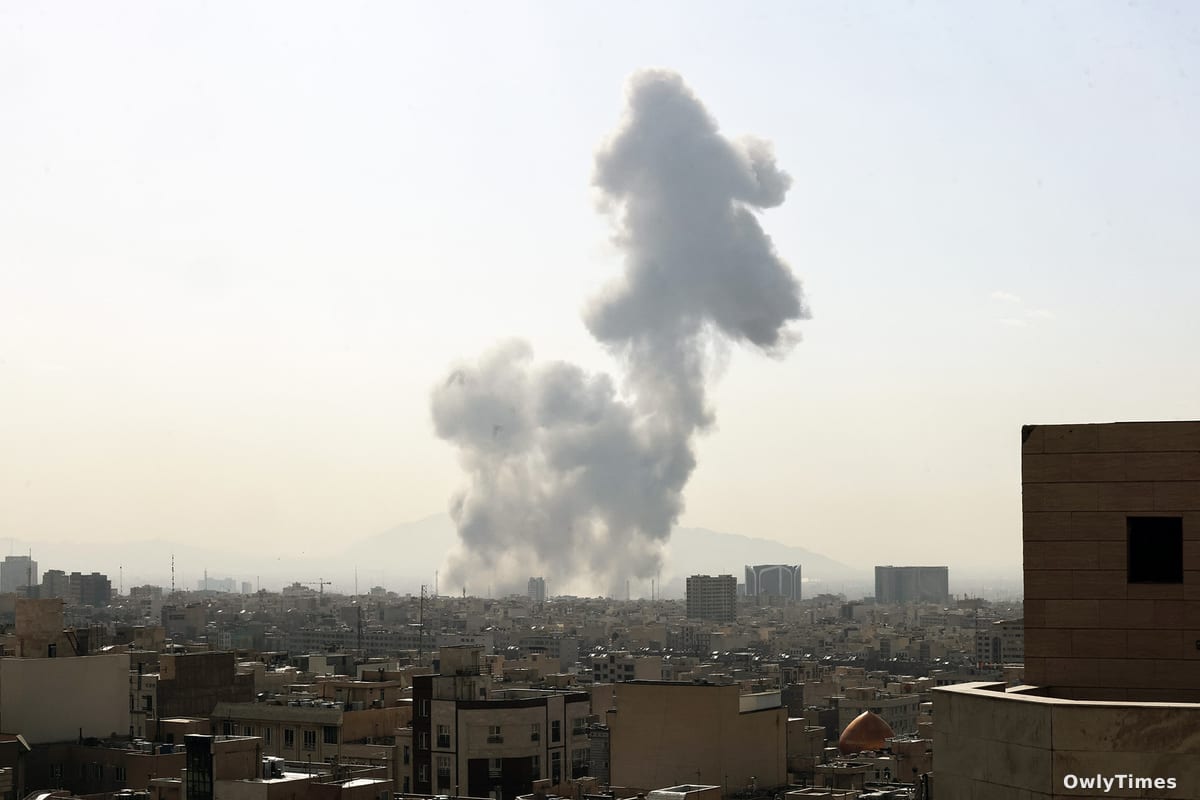

The calculated gamble unfolding in the Middle East isn’t about destroying Iran’s nuclear program – it’s about exploiting a window of perceived weakness to force a regime change, a strategy predicated on the belief that decades of containment have failed and direct confrontation is now necessary. The recent wave of U.S. and Israeli attacks, coupled with the surprisingly muted response from key Iranian proxies like Hezbollah, reveals a meticulously planned operation designed not merely for military degradation, but for political upheaval. This isn’t a spontaneous escalation; as Elliott Abrams of the Council on Foreign Relations points out, the timing and scope of the attacks were agreed upon two weeks prior, during Benjamin Netanyahu’s visit to Washington, signaling a level of coordination unprecedented in U.S.-Israeli security cooperation.
The core calculus is simple: the Trump administration, and by extension Netanyahu, believe the Iranian regime is vulnerable. Years of economic sanctions, coupled with recent internal protests – brutally suppressed, as noted by Ray Takeyh – have eroded public support. The hope, explicitly stated by President Trump himself, is that military pressure will trigger a popular uprising and topple the clerical government. This is a high-stakes bet, but one rooted in the assessment that diplomacy has exhausted its potential. As news accounts indicate, Iranian Foreign Minister Abbas Araghchi had even proposed a phased suspension of uranium enrichment, a concession seemingly dismissed as insufficient or, more cynically, as a delaying tactic before the strikes commenced. The abrupt end to negotiations, as Takeyh observes, leaves Iranian officials with a legitimate reason to suspect diplomacy was never a genuine option.
Reporting from cfr.org informs this analysis.
Who benefits and who loses from this escalation? Israel stands to gain the most, achieving a long-held objective of weakening – or eliminating – its primary regional adversary. For Netanyahu, facing a challenging re-election campaign, a successful military operation against Iran offers a potent demonstration of his leadership and security prowess. The United States, in the administration’s view, benefits from removing a destabilizing force from the region and potentially securing a more favorable outcome in ongoing geopolitical struggles. However, the potential losers are far more numerous. Iran’s regional allies – Syria, Hezbollah, and various Shia militias – face increased pressure and potential disruption. Gulf states, while privately welcoming the prospect of regime change, are bracing for instability and potential retaliatory attacks, as evidenced by the condemnation of Iranian strikes on Bahrain, Kuwait, Jordan, Qatar, and the UAE, and Saudi Arabia’s offer of support. The global economy, already fragile, faces the risk of oil price shocks and wider regional conflict.
This situation echoes historical precedents, most notably the lead-up to the 2003 invasion of Iraq. Like Saddam Hussein’s regime, the Iranian government is portrayed as an existential threat, possessing weapons of mass destruction (or, in this case, pursuing them) and supporting terrorism. The rationale for military intervention rests on the belief that regime change is the only viable solution. However, the Iraq experience serves as a stark warning: toppling a government does not automatically lead to stability or democracy, and can often create a power vacuum that breeds further conflict. Max Boot of the Council on Foreign Relations rightly points out the difficulty of ending a war once it has begun, a lesson repeatedly learned throughout history. The assumption that air power alone can achieve regime change, as Trump appears to believe, is particularly dubious, mirroring the flawed assumptions that plagued the early stages of the Iraq War.
The initial response from Iran, targeting U.S. bases and Israel, suggests a calculated escalation, but the lack of immediate, overwhelming retaliation from proxies like Hezbollah is noteworthy. As Elisa Ewers observes, Hezbollah is currently at its weakest point, having suffered significant losses in recent years. This suggests a deliberate decision to avoid direct confrontation, potentially due to internal constraints or a reassessment of its strategic interests. However, this doesn’t preclude future involvement, and the question remains whether Iran will attempt to draw Hezbollah into the conflict as the situation evolves. Steven A. Cook highlights the anxieties of Gulf states, who fear a weakened, vengeful Iran more than the current regime, and the delicate balancing act they must perform in navigating this crisis.
The political chess move to watch next isn’t a military one, but a diplomatic one. Will the Trump administration, despite its rhetoric, leave open a channel for negotiations with elements within the Iranian regime, or will it remain committed to a policy of maximal pressure and regime change? The answer to that question will determine whether this conflict spirals into a wider regional war or, however improbably, finds a path towards de-escalation. The silence from Tehran, beyond the initial strikes, is not acquiescence – it’s a strategic pause, a waiting game to assess the extent of U.S. commitment and the potential for international pressure.





