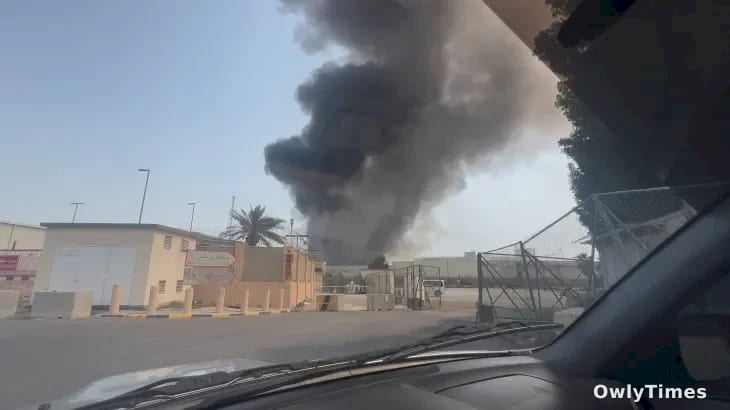

A Calculated Chorus: The Geopolitics of Condemnation
The swift, unified condemnation of Iran’s recent attacks issued by the Gulf States alongside the United States isn’t simply a moral outcry; it’s a meticulously calibrated signal designed to constrain Iran’s regional ambitions and, crucially, to establish a clear legal and political framework for potential future action. The joint statement from Qatar, Saudi Arabia, Bahrain, Jordan, Kuwait, the United Arab Emirates, and the United States – a coalition encompassing both rivals and allies – isn’t about spontaneous outrage, but about building consensus before escalation, and defining the narrative of escalation itself. The phrasing, particularly the assertion of “our right to self-defense,” is not accidental. It’s a pre-emptive invocation of Article 51 of the UN Charter, laying the groundwork for justifying retaliatory measures should they be deemed necessary. This isn’t a spontaneous reaction; it’s a carefully constructed legal and diplomatic posture.
The Stakes for Regional Stability
The statement’s core accusation – that “Iranian actions represent a serious escalation, and targeting civilians is reckless behavior” – is deliberately broad. While the immediate trigger was Iran’s attack, the language is intended to encompass a pattern of destabilizing activity, including support for proxy groups and attacks on commercial shipping. This framing is critical. It moves beyond a response to a single incident and positions Iran as a systemic threat to regional security. Qatar and the UAE, both having recently engaged in direct diplomatic overtures towards Tehran, are particularly notable signatories. Their inclusion signals that even those seeking de-escalation view Iran’s actions as having crossed a red line, and that the benefits of engagement are contingent on restraint. The economic implications are substantial; the region accounts for roughly 20% of global oil supply, and sustained instability could drive prices upwards, impacting global markets.
Reporting from sadanews.ps informs this analysis.
Echoes of Past Containment Strategies
The current situation bears a striking resemblance to the diplomatic maneuvering preceding the first Gulf War in 1990-91. Then, as now, a coalition of regional and international powers sought to isolate Saddam Hussein’s Iraq following an act of aggression. The key difference is the complexity of the Iranian regime and its network of proxies. Unlike Iraq in 1990, Iran operates through a multi-layered strategy, making direct attribution and response more challenging. The 1990-91 coalition relied heavily on UN Security Council resolutions to legitimize military action. While the current statement doesn’t explicitly call for military intervention, the invocation of self-defense and the emphasis on escalation are intended to create similar international pressure. The question is whether the current geopolitical climate – with a deeply divided UN Security Council and a reluctance among major powers to become directly involved in another Middle Eastern conflict – will allow for the same level of unified action.
Who Benefits and Who Loses from This Alignment?
The primary beneficiary of this unified front is, undoubtedly, Saudi Arabia and the UAE. Both nations have long viewed Iran as a strategic competitor and have invested heavily in building alliances to counter its influence. The statement reinforces their position as key security partners for the United States and legitimizes their concerns about Iranian aggression. Jordan and Kuwait, geographically vulnerable to Iranian influence, also benefit from the collective security guarantee implied by the statement. Iran, predictably, loses. The condemnation isolates it diplomatically and increases the risk of further economic sanctions or military confrontation. However, it’s crucial to note that Israel, while not a signatory, is a significant beneficiary of this alignment. The statement effectively validates Israel’s long-standing warnings about Iran’s destabilizing behavior and strengthens the case for a more assertive regional policy. The United States, while appearing to lead the charge, also faces risks. Over-commitment to the region could strain its resources and divert attention from other strategic priorities, particularly in Ukraine and the Indo-Pacific.
The Next Chess Move: Targeting the Proxies?
The immediate political chess move to watch isn’t whether the United States or its allies will directly attack Iran – though that remains a possibility. It’s whether the coalition will shift its focus to dismantling Iran’s network of proxy groups in Lebanon, Syria, Yemen, and Iraq. A sustained campaign targeting these groups, while avoiding direct confrontation with Iran, could significantly degrade Iran’s regional influence and serve as a powerful deterrent. The challenge lies in navigating the complex political landscape within each of these countries and avoiding actions that could further destabilize already fragile states. Will the coalition prioritize a targeted approach, or will the pressure for a more decisive response escalate the risk of a wider conflict? The answer to that question will determine the future trajectory of regional security.





