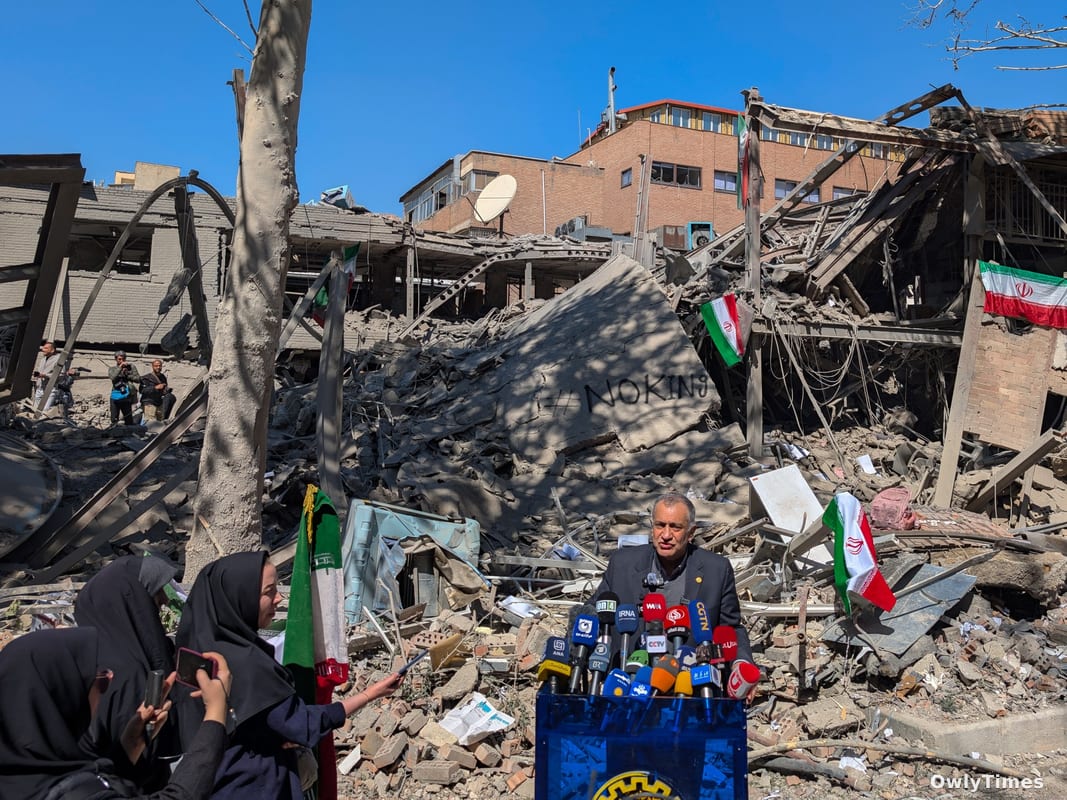

Is the future of warfare now measured in terabytes lost, not lives? The escalating conflict between Iran, the United States, and Israel isn’t playing out solely on battlefields; it’s a deliberate assault on Iran’s intellectual capital. While headlines focus on threats to power plants and railways, the systematic targeting of universities and research facilities reveals a chillingly precise strategy. The real story here isn't simply geopolitical maneuvering – it's a calculated attempt to cripple Iran’s technological advancement, specifically in fields like artificial intelligence, and the implications for how nations compete in the 21st century are profound.
Masoud Tajrishi, president of the Sharif University of Technology in Tehran, articulated the core concern bluntly following Monday’s bombing of his institution: “We believe the reason the enemy targeted these buildings and destroyed the entire infrastructure is that it did not want us to achieve AI technology.” This isn’t rhetoric; Sharif University, along with over 30 other Iranian universities, has been directly hit since February 28th. The damage isn’t accidental. It’s a focused dismantling of a nascent AI ecosystem, one that, according to Tajrishi, was developing Persian-language AI models and serving hundreds of companies – all built domestically due to crippling US sanctions. The fact that Iran was forced to innovate in isolation because of sanctions only seems to have intensified the perceived threat.
Reporting from Al Jazeera informs this analysis.
The attacks aren’t limited to AI. The century-old Pasteur Institute, a photonics lab at Shahid Beheshti University, and a satellite development lab have all been struck. This isn’t about removing a regime; it’s about preventing a nation from reaching a point where it can independently challenge the existing technological order. The US and Israel haven’t offered official justifications for these strikes, conveniently framing them as targeting the “governing establishment.” But the evidence suggests a broader objective: to stifle Iranian innovation before it matures. Consider the context – the global race for AI dominance is already fiercely competitive, with billions being poured into research and development. To see a potential competitor actively dismantled before it can even fully emerge is a disturbing precedent.
The response from within Iran is fractured, revealing a deep internal tension. While the Islamic Revolutionary Guard Corps (IRGC) has predictably declared US and Israeli-affiliated universities “legitimate targets,” a coalition of 15 university heads, led by Mohammad Hossein Omid of Tehran University, initially pleaded with the IRGC to refrain from retaliatory attacks, framing universities as “human and global heritage” entities. Omid later reversed course under pressure from hardline media, highlighting the precarious position of Iranian academics caught between geopolitical forces and internal ideological battles. This internal conflict underscores a critical point: the attacks aren’t simply about physical destruction; they’re about sowing discord and undermining the foundations of Iranian society.
Donald Trump’s increasingly bellicose rhetoric – boasting that rebuilding Iran would take “20 years” if the US withdrew today, but “100 years” if the war continues – isn’t just bluster. It’s a calculated assessment of the damage being inflicted. He’s not just targeting infrastructure; he’s targeting the potential for future infrastructure, the skilled workforce needed to rebuild, and the intellectual capacity to innovate. The claim that “a whole civilisation will die tonight” isn’t hyperbole in this context; it’s a chillingly literal description of the long-term consequences of systematically dismantling a nation’s ability to progress. The accusations leveled by the Fars news agency, affiliated with the IRGC, against dissidents abroad – specifically Ali Sharifi Zarchi – for allegedly providing coordinates, demonstrate the paranoia and internal blame game that’s taking root.
But the narrative of external betrayal conveniently ignores the fact that many of these facilities are easily identifiable through publicly available resources like Google Maps. The real vulnerability isn’t a lack of security; it’s a deliberate targeting of civilian infrastructure under the guise of strategic necessity. This sets a dangerous precedent, normalizing the destruction of knowledge and innovation as a legitimate tactic in international conflict. The students at Shahid Beheshti University, grappling with the possibility of power outages and an uncertain future, understand this all too well. Their anxieties aren’t about regime change; they’re about the fundamental right to learn, to work, and to build a future.
Looking ahead, watch for a shift in how nations invest in “critical infrastructure.” The definition will expand beyond power grids and transportation networks to explicitly include research institutions and digital infrastructure. The attacks on Iran demonstrate that intellectual property and technological capacity are now prime targets in modern warfare. Expect to see increased calls for international protocols protecting universities and research facilities, but also a parallel surge in defensive measures – from enhanced cybersecurity to geographically dispersed research networks – designed to safeguard knowledge in a world where even the pursuit of AI can be considered an act of defiance.