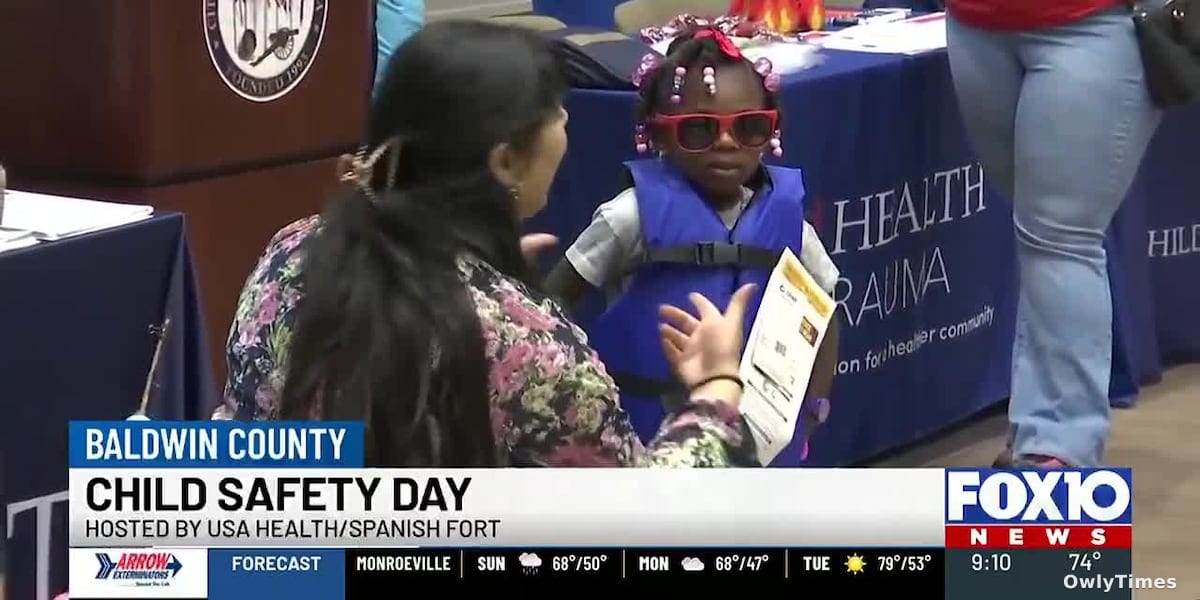

The arrival of warmer weather isn’t simply a cue for shedding layers; it’s a predictable shift in the landscape of childhood injury. While public health campaigns often focus on seasonal illnesses like the flu, a less-discussed but equally critical concern is the surge in preventable accidents that accompany spring and summer. Today’s child safety day, hosted by USA Health at the Spanish Fort Community Center, isn’t just about handing out free life jackets – it’s a response to a documented pattern, a proactive attempt to mitigate risks before they escalate. The event, and a planned follow-up at the National Maritime Museum of the Gulf next month, highlight a growing awareness that safety education must be geographically targeted and consistently reinforced.
Beyond the Life Jacket: Addressing Emerging Risks
The focus on water safety, with the distribution of free life jackets, is a cornerstone of these events, and for good reason. According to data from the Centers for Disease Control and Prevention, drowning remains a leading cause of unintentional injury and death for children aged 1-4, with rates disproportionately higher among certain racial and ethnic groups. However, what distinguishes this year’s USA Health initiative is the inclusion of education surrounding electric bikes and scooters. This reflects a rapidly evolving risk profile. While traditional bicycle safety has been a long-standing focus, the increased speed and power of e-bikes and scooters present new challenges – and a corresponding lack of widespread public knowledge about safe operation. Courtney Thompson with USA Health articulated the core motivation behind the event, stating that “seeing kids’ smiling faces makes it all worth it,” but the underlying purpose is clearly preventative.
This piece references the fox10tv.com report.
A Shift in Public Health Approach: Proactive Outreach
Historically, child safety initiatives have often relied on reactive measures – responding to incidents after they occur. This approach, while necessary, is inherently limited. The decision by Children’s and Women’s Hospital to host these events directly within the community represents a shift towards proactive outreach. Holding the first event at the Spanish Fort Community Center, and the second at the National Maritime Museum of the Gulf, demonstrates a deliberate effort to meet families where they are, rather than expecting them to seek out safety information. This is particularly important in areas with limited access to healthcare resources or where cultural barriers might hinder information dissemination. The choice of locations also suggests an understanding of local recreational patterns – areas where children are likely to be engaging in activities that carry inherent risks.
What the Study Actually Found vs. What Headlines Claim
It’s crucial to understand that these events aren’t the result of a single, definitive “study” demonstrating a spike in specific injuries. Rather, they are informed by a confluence of data: national drowning statistics, local emergency room reports, and an observed increase in e-bike/scooter related incidents. The narrative often simplifies this to “USA Health holds safety day,” which risks downplaying the complex epidemiological reasoning behind the initiative. The events themselves aren’t being studied in real-time for efficacy; they are a direct intervention based on existing knowledge. This is a subtle but important distinction. We aren’t waiting for data to tell us children are at risk near water or on fast-moving scooters; we are acting on established risk factors.
Limitations to Consider
While the proactive approach is commendable, several limitations should be considered. The immediate impact of these events is difficult to quantify. Did the distribution of life jackets demonstrably reduce drowning rates? Did the e-bike/scooter safety talks lead to behavioral changes? These questions require longitudinal data collection, which is not currently part of the initiative. Furthermore, the reach of these events is limited by geography and attendance. Families who are already engaged with healthcare systems or actively seeking safety information are more likely to participate, potentially creating a selection bias. The effectiveness of the message also depends on consistent reinforcement – a single safety talk is unlikely to have a lasting impact without ongoing education.
The next critical step is to integrate data collection into these events. Tracking attendance, conducting pre- and post-event surveys to assess knowledge levels, and collaborating with local emergency departments to monitor injury trends would provide valuable insights into the program’s effectiveness. More importantly, we need to watch for a potential divergence: will communities with access to these targeted safety programs experience a slower rate of increase in relevant injuries compared to similar communities without such programs? That comparison, over the next two to three years, will reveal whether this proactive model is truly making a difference, or simply offering reassurance without measurable impact.





