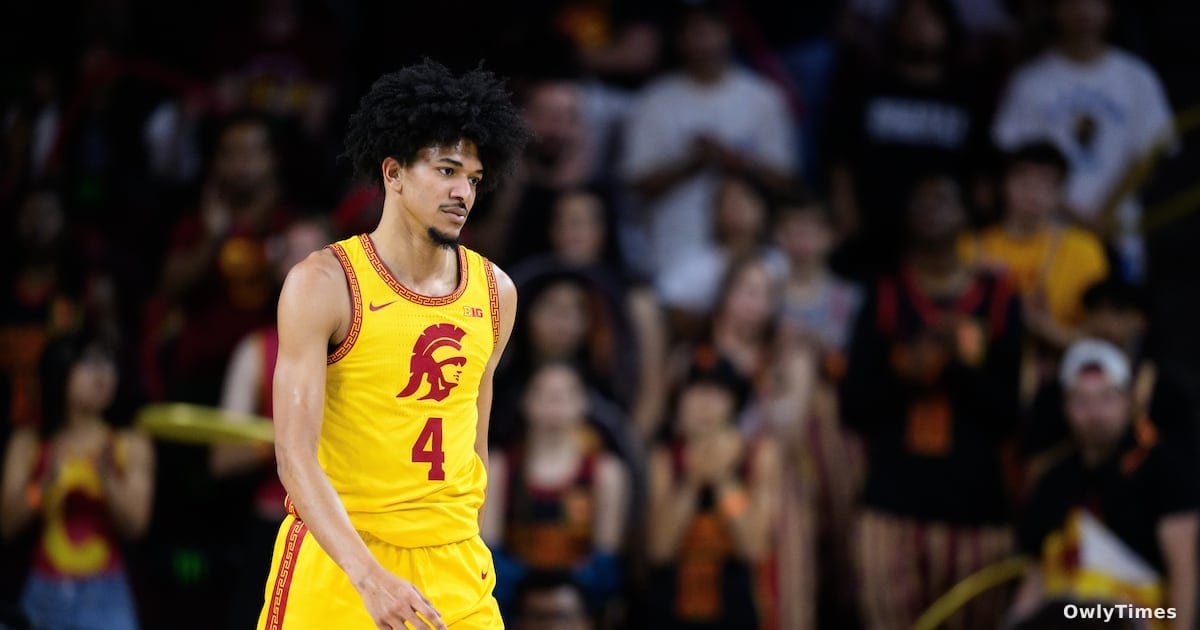

The chipped paint on the Galen Center’s benches seemed to mirror the unraveling of USC’s season as Chad Baker-Mazara walked away, mid-game, during Saturday’s loss to Nebraska. It wasn’t a dramatic exit – no shouting, no visible confrontation – just a quiet departure that spoke volumes about the pressures simmering beneath the surface of college basketball. The timing, days before the NCAA tournament, felt less like a player making a decision and more like a fracture along a fault line. This isn’t just about a lost player; it’s about the increasingly precarious balance between athletic ambition and the mental wellbeing of young athletes, a tension that’s reshaping the landscape of college sports.
A Tournament Dream Dissolves in University Park
Baker-Mazara’s abrupt exit isn’t an isolated incident, but a symptom of a larger trend. He led the Trojans with career-high averages of 18.6 points, 4.4 rebounds, and 2.8 assists across 26 games, starting 22 of them. To lose a player of that caliber, especially now, is devastating. USC representatives cite “an accumulation of issues over time,” a carefully worded statement that hints at complexities beyond a simple change of heart. The Trojans were already reeling, losers of their last five games, and now face an uphill battle to even secure a bid to the National Invitation Tournament. The prediction that they’ll fall from bubble contention feels less like analysis and more like a grim inevitability. With the 11th-best resume in what’s shaping up to be a competitive nine-bid conference, the margin for error was already razor-thin. Now, it’s vanished. The upcoming games against Washington and, crucially, UCLA, feel less like opportunities and more like exercises in damage control.
Original reporting: uscannenbergmedia.com.
Garland’s Debut Eases Clipper Concerns – For Now
Across town, the mood is cautiously optimistic. The initial anxiety surrounding the James Harden-Darius Garland trade, and what it meant for the Los Angeles Clippers’ championship aspirations, appears to be easing. Garland’s debut against the Golden State Warriors on Monday night – 12 points, 2 assists, 2 rebounds in a 114-101 win – wasn’t a spectacular performance, but it was a promising one. His scoring bursts, integrated into the Clippers’ already potent offense, suggest a potentially seamless fit. However, the five turnovers are a glaring red flag. The Clippers built their identity on ball movement and minimizing mistakes; Garland will need to refine his decision-making to truly unlock his potential within the team’s system. The Clippers’ success isn’t solely reliant on Garland’s individual brilliance, but on his ability to complement Kawhi Leonard and Paul George. The question isn’t whether he can be a star, but whether he will prioritize team cohesion.
Baseball’s Global Stage Comes to American Soil
While basketball dominates the local headlines, the World Baseball Classic is quietly building momentum. The tournament, kicking off with pool play across four cities – Tokyo, San Juan, Houston, and Miami – represents a fascinating collision of national pride and international talent. The United States, still smarting from their 2023 loss, are heavily favored, boasting a roster featuring Will Smith and the recently retired Clayton Kershaw representing Los Angeles. But the competition is fierce. Defending champions Japan, led by the unparalleled Shohei Ohtani and Yoshinobu Yamamoto, are determined to retain their title. Venezuela and Mexico are also poised to make deep runs, showcasing the growing global reach of the sport. This tournament isn’t just about crowning a champion; it’s about expanding baseball’s footprint beyond its traditional strongholds.
Beyond the headlines of individual performances and team wins, these events reveal a broader shift in the sports landscape. The pressure on college athletes is reaching a breaking point, forcing a reckoning with the demands placed on their physical and mental health. The Clippers’ success hinges not just on acquiring talent, but on fostering a culture of collaboration and accountability. And the World Baseball Classic demonstrates the power of sport to transcend national boundaries and unite fans around a shared passion. The question now isn’t simply who will win, but how these forces will reshape the future of athletics – and what safeguards will be put in place to protect the athletes at the heart of it all. Will we see more players prioritizing their wellbeing over tournament bids, or will the pressure to perform continue to outweigh the need for support?