
$7.4 Billion Reason Hollywood is Rethinking Asian Representation
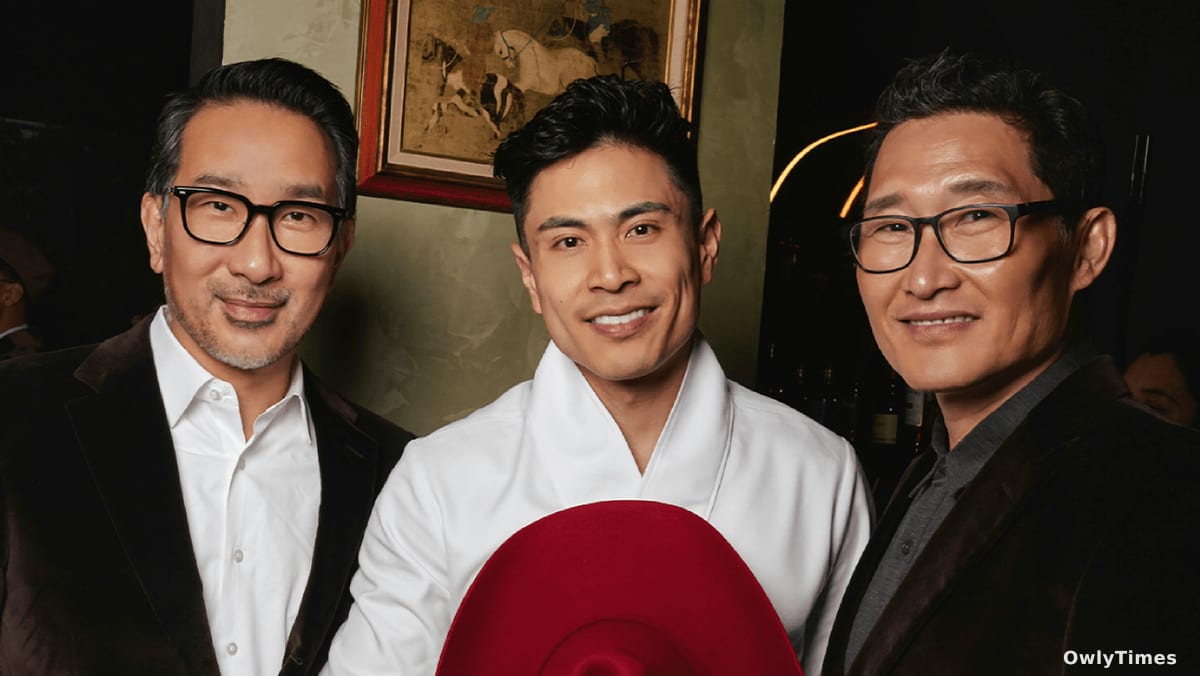
A 32% year-over-year increase in box office revenue from films with predominantly Asian-led casts – totaling $7.4 billion globally in 2023 – is the quiet force behind Wednesday’s Celebration of Asian Excellence in Entertainment, hosted by UTA and Gold House in Beverly Hills. While framed as an awards season toast, the event, attended by stars like Lee Byung-hun, Anderson .Paak, and Daniel Dae Kim, represents a calculated shift in Hollywood power dynamics, driven not by altruism, but by demonstrable financial returns. “Follow the money” reveals a clear message: Asian representation isn’t just a matter of social justice, it’s a lucrative business strategy.
Reporting from The Hollywood Reporter informs this analysis.
The gathering, held just before Lunar New Year, wasn’t simply a celebratory dinner; it was a strategic alignment of talent agencies, production companies, and industry leaders. UTA partner David Park, in his 30th year with the agency, explicitly acknowledged the historical lack of Asian representation, stating that building a room like the one assembled Wednesday was “mind-boggling.” This admission isn’t merely anecdotal. For decades, Asian actors and creatives faced systemic barriers to entry, resulting in a significant underrepresentation relative to their proportion of the population – and, crucially, their demonstrated spending power. The current surge in recognition, and the events like this one designed to foster community, are a direct response to a market correction.
Bing Chen, co-founder and CEO of Gold House, framed the evening as a “homecoming,” emphasizing the importance of community support after achieving industry accolades. However, his remarks also touched on a critical tension: the anxieties surrounding media consolidation and the rapid advancement of technology. Chen pointedly noted the parallels between the current industry climate and the 2008 financial crisis, arguing that the key to navigating disruption lies in “building deeply where we couldn’t build quietly.” This isn’t a call for insularity, but a pragmatic recognition that independent creatives and minority-owned businesses must strengthen internal networks to withstand external pressures. The 2008 period Chen references saw the rise of the Marvel Cinematic Universe, the breakthrough of directors like Ryan Coogler, and the global expansion of South Korean content – all examples of building alternative power structures.
The event’s timing, coinciding with the Year of the Fire Horse, is also significant. The Fire Horse is associated with ambition, energy, and a willingness to take risks – qualities increasingly valued in a Hollywood grappling with declining linear television viewership and the unpredictable nature of streaming. The custom-designed red cowboy hats, courtesy of Stetson, symbolize a deliberate attempt to blend cultural identity with mainstream American iconography. This visual messaging underscores the broader goal: to normalize Asian excellence within the existing Hollywood framework, rather than creating a separate, niche market. The presence of executives from Amazon and Hybe America signals that major players are actively seeking to capitalize on this trend.
However, the celebratory atmosphere shouldn’t obscure the underlying vulnerabilities. Chen acknowledged a sense of “depression and burnout” among attendees, fueled by industry instability and the perceived threat of technological disruption. The fact that established media companies are now “consolidating with daddy’s money” – a pointed reference to the influx of capital from tech giants – raises concerns about creative control and the potential for further marginalization. The $7.4 billion in box office revenue is a powerful argument for representation, but it’s not a guarantee against future setbacks.
What this means for your wallet: Expect to see more Asian-led projects greenlit in the coming years, not necessarily because of a sudden surge in inclusivity, but because studios are chasing demonstrable returns. As consumers, the question isn’t whether Hollywood will represent Asian stories, but whether it will do so authentically, and whether the current momentum will translate into sustained opportunities for Asian creatives beyond the box office. Watch closely for whether the increased representation leads to genuine equity in ownership and creative control, or simply becomes another marketing tactic.