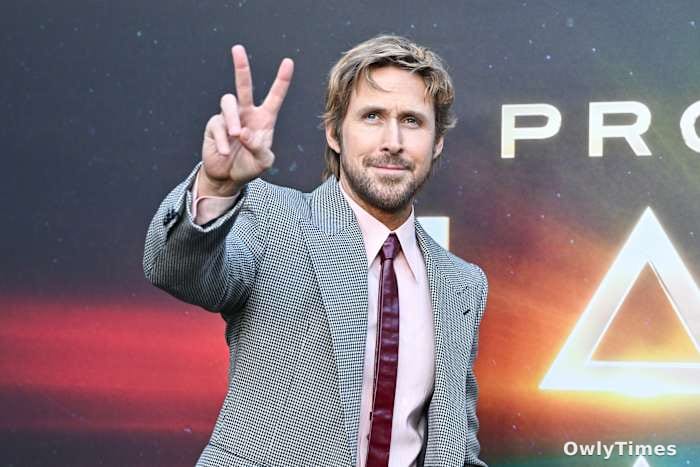

The scent of popcorn hung thick in the air at the Lincoln Center premiere, but it wasn’t just the promise of a good movie drawing the crowds on Wednesday, March 18th. It was a collective exhale, a hesitant hope that maybe, just maybe, the theatrical experience wasn’t a relic of the past. Ryan Gosling, radiating a quiet charisma, was there for the premiere of “Project Hail Mary,” and the film’s subsequent $80.5 million opening weekend – the biggest of the year and second-highest for a non-franchise film since “Oppenheimer’s” $82.4 million in 2023 – felt less like a box office number and more like a lifeline thrown to a struggling industry. This wasn’t just a hit movie; it was a validation.
For months, Hollywood has been grappling with a paradox: audiences say they want original stories, but consistently flock to established franchises. The success of “Oppenheimer” last year offered a glimmer of possibility, proving a well-crafted, character-driven narrative could still draw crowds. But one outlier doesn’t make a trend. The industry, still reeling from the pandemic and the rise of streaming, needed a consistent demonstration that audiences would return to theaters for something new. “Project Hail Mary,” a science fiction epic based on the novel by Andy Weir, delivered that message with a resounding clarity. It’s now one of only three non-franchise movies in the past decade to open over $70 million, alongside “Oppenheimer” and Jordan Peele’s “Us.”
The numbers are particularly striking when viewed against the backdrop of recent box office performance. While the year-to-date box office is up around 21% according to Comscore, that growth hasn’t been evenly distributed. Many original films have struggled to find an audience, overshadowed by the marketing behemoths of superhero movies and legacy sequels. Kevin Wilson, Amazon MGM Studios’ head of domestic distribution, acknowledged the challenges, stating, “We all know theatrical is not an easy business. It's tougher today I think than it's ever been…And sci-fi movies, to break out to a broad audience, is not the easiest thing to do.” Yet, “Project Hail Mary” not only broke out, it shattered expectations, exceeding the debuts of space operas like “The Martian,” “Gravity,” and “Interstellar.”
This success isn’t solely attributable to the film’s quality, though critics and audiences alike have praised Phil Lord and Christopher Miller’s direction and the compelling narrative. It’s also a testament to the enduring power of star power. Wilson directly credited Ryan Gosling, stating, “It leaves no doubt that Ryan Gosling is a singular star that has the massive global appeal and charisma to anchor a story like this.” In an era where the value of movie stars is constantly debated, Gosling’s performance serves as a potent reminder that a recognizable, bankable lead can still be a significant draw. The film also tapped into a demographic hunger for immersive experiences, with premium large format screens accounting for 56% of the weekend’s gross and IMAX alone contributing $27.6 million globally.
This piece references the news4jax.com report.
But beyond the headlines of record-breaking numbers and star power, a more subtle shift is occurring. “Project Hail Mary” isn’t just a win for Amazon MGM Studios – it’s a win for risk-taking. The film’s $200 million production budget was double that of “Oppenheimer,” a significant investment in an original property. That Amazon MGM was willing to take that gamble, and that audiences responded so enthusiastically, signals a potential recalibration of the industry’s priorities. The performance of “Project Hail Mary” is, as Paul Dergarabedian of Comscore put it, “a momentum builder like no other and it’s reinvigorating the movie marketplace.” The question now isn’t whether audiences will return to theaters, but what will bring them back – and whether studios will be bold enough to offer more than just the familiar comfort of established franchises. Will this success inspire a wave of original, high-budget films, or will it be seen as a lucky anomaly, quickly forgotten in the pursuit of guaranteed returns? The next few months will be crucial in determining whether “Project Hail Mary” truly heralded a new era for cinema, or simply offered a fleeting moment of hope.