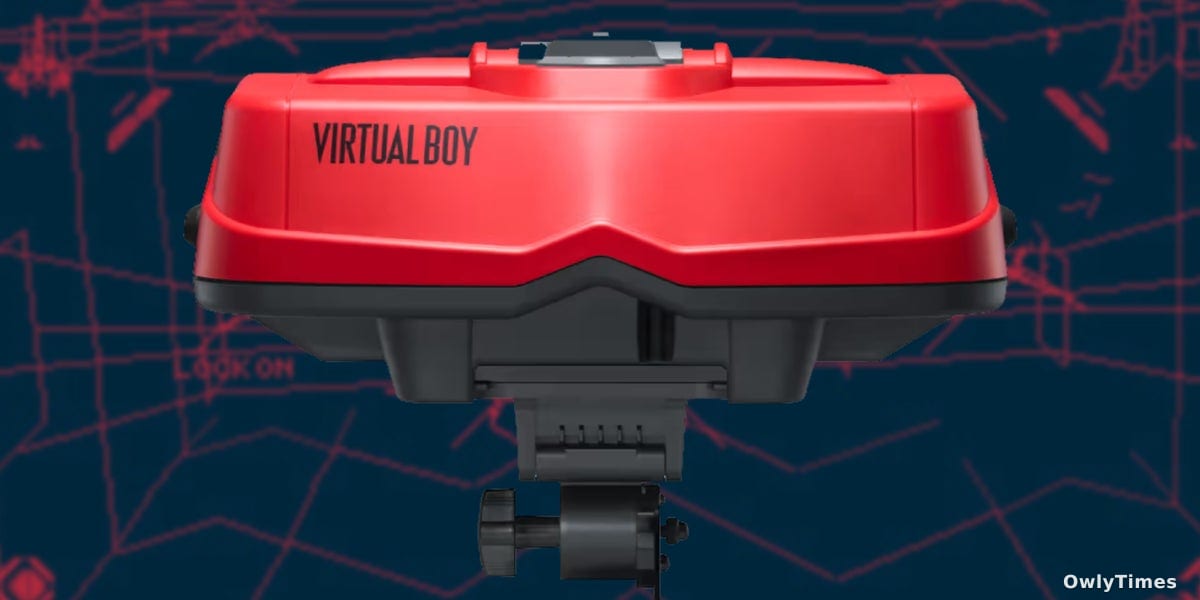

The posture is the first thing that hits you. Not the red-and-black visuals, not the headache warnings flashing on the screen, but the sheer physical contortion required to truly experience a Virtual Boy game in 2024. I found myself hunched forward, Switch nestled awkwardly into a plastic replica of Nintendo’s infamous 1995 experiment, neck craned at an unnatural angle. It felt less like playing a video game and more like submitting to a low-stakes medical procedure. And that, perhaps, is the point. Nintendo’s decision to bring the Virtual Boy library to Switch Online + Expansion Pack isn’t about delivering a polished retro experience; it’s about preserving a fascinating, flawed, and frankly bizarre piece of gaming history – even if accessing it requires a potentially chiropractor-approved accessory.
The arrival of Virtual Boy titles on Switch has sparked the usual debate about retro gaming access. Nintendo’s subscription model, offering a rotating library of classic games, is generally well-received. The addition of Sega Mega Drive titles has been a particular highlight. But the Virtual Boy is different. Unlike simply unlocking ROMs, playing these games requires a separate purchase: a £67 peripheral designed to mimic the original console’s stereoscopic display. It’s a move that feels distinctly at odds with the spirit of accessibility that defines the Switch Online service, and one that raises questions about ownership and the evolving definition of “retro” in the digital age. As Eurogamer’s Alex discovered some time ago, the allure of the Virtual Boy is strong, but is it strong enough to justify a dedicated, and potentially temporary, piece of plastic?
Source material: eurogamer.net.
This isn’t just about a price point. It’s about a fundamental shift in how we consume retro games. We’ve grown accustomed to the convenience of digital libraries, the ability to jump into classics with a click. The Virtual Boy peripheral feels like a throwback to a different era, one where gaming was a more tactile, hardware-dependent experience. Nintendo could have easily offered 2D versions of these games, sacrificing the original 3D effect but preserving the gameplay. The fact they didn’t suggests a deliberate choice to prioritize historical accuracy over user-friendliness. But is that accuracy worth the cost – both financial and physical? The discomfort isn’t just anecdotal; reports are surfacing of players experiencing eye strain and neck pain, mirroring the complaints leveled at the original console nearly three decades ago.
The financial equation is also curious. A fully modeled Virtual Boy replica, lacking the controllers, costs £67 – the same price as the Switch peripheral. A cardboard version, offering a decidedly less immersive experience, can be had for just £17. Would anyone willingly spend £67 on a plastic accessory that becomes obsolete the moment their Switch Online subscription lapses? Perhaps. But the more compelling proposition, as many fans have pointed out, is a bundled package: the peripheral and all the Virtual Boy games for a single, higher price point – around £80 feels reasonable. This would appeal to the hardcore collectors, the enthusiasts eager to own a piece of Nintendo history. The current fragmented approach feels like a missed opportunity, failing to fully capitalize on the collector’s angle inherent in this project, especially with Nintendo planning to release two games never originally available on the Virtual Boy hardware.
But to focus solely on the games themselves is to miss the larger point. As I found while revisiting titles like Virtual Boy Wario Land (widely considered the system’s best game), the quality of the software is almost secondary. Wario Land is a surprisingly tight platformer, making clever use of the limited 3D visuals and boasting a fantastic soundtrack. But even the less impressive titles – Galactic Pinball, Red Alarm – are valuable artifacts. This is a time capsule, a window into a moment in gaming history when Nintendo was willing to take a massive risk, and spectacularly fail. The experience, even a slightly painful one, is worth it simply for the historical context. It’s a reminder that innovation isn’t always about success, and that even failures can be fascinating.
The Virtual Boy’s arrival on Switch isn’t just a nostalgic trip; it’s a challenge to the industry. It forces us to confront the tension between preserving gaming history and making it accessible to a modern audience. It highlights the complexities of digital ownership and the limitations of subscription models. And it begs the question: as we continue to revisit and remaster classic games, how do we balance authenticity with playability? Will we see more peripherals required to experience “authentic” retro experiences, or will Nintendo reconsider its approach and offer more inclusive options? The future of retro gaming may depend on the answer.