
Is Nintendo deliberately trolling us, or is this a genuine attempt at historical preservation? This week, the company resurrected its infamous Virtual Boy – a console so spectacularly unsuccessful it became a cautionary tale – not as a sleek reimagining, but as…an accessory for the Switch. The real story here isn't about bringing back retro gaming; it’s about Nintendo’s uniquely bizarre relationship with its own failures, and what that says about the current obsession with nostalgia in the tech world.
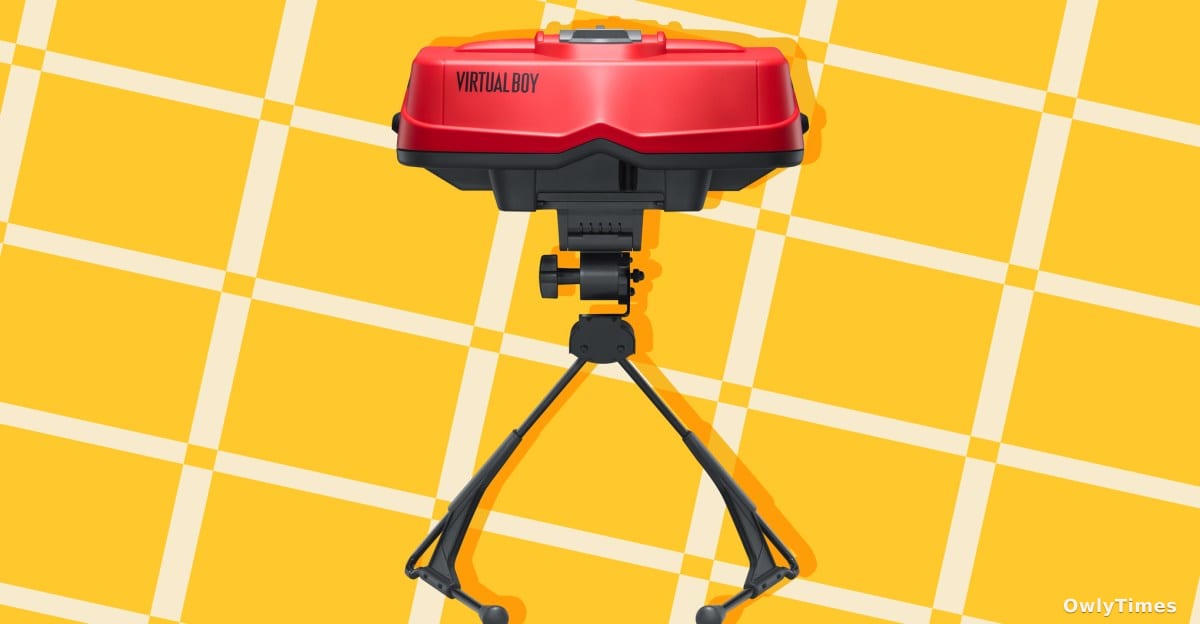
First released in 1995, the original Virtual Boy wasn’t virtual reality, not really. It was a red-and-black stereoscopic 3D viewer propped up on a stand, offering a headache-inducing experience that lasted barely a year before being discontinued. Fewer than two dozen games were ever released for it. Now, Nintendo is offering Switch Online subscribers the chance to relive that glory – for a price. You’ll need either a $100 plastic replica of the original Virtual Boy, or a $25 cardboard version, just to play the games added to the Classics collection. Technically, the games run in portable mode without an accessory, but are rendered so small they’re functionally unplayable.
Drawn from The Verge.
The design itself is a marvel of engineered irony. The plastic model, complete with a fake controller port and volume dial, is essentially an elaborate Switch case. You slot your Switch (Joy-Cons detached) inside, close it up, and peer through the goggles. It avoids the weight issues of modern VR headsets, which is a plus, but comfort remains elusive. As Andrew Webster of The Verge discovered, finding an optimal viewing angle is a struggle, and those original red graphics haven’t aged well. He reported being “perpetually sore” from testing the device, a sentiment that speaks volumes. This isn’t a comfortable stroll down memory lane; it’s a physical commitment.
This launch isn’t just about resurrecting a failed console; it’s a microcosm of the broader retro gaming trend. We’re seeing a surge in remakes, remasters, and now, bizarre accessory-based revivals. But unlike the carefully curated Super Mario All-Stars or the polished Metroid Prime Remastered, the Virtual Boy feels…different. It’s not a beloved classic being given a new lease on life; it’s a footnote in gaming history being exhumed, warts and all. The seven launch titles – including 3D Tetris, Galactic Pinball, and Wario Land – are interesting, even enjoyable in short bursts, but the limited library and the inherent discomfort raise a fundamental question: why bother? The absence of a tentpole title like Mario’s Tennis, especially given the recent release of Mario Tennis Fever, feels like a missed opportunity, or perhaps a deliberate signal that this isn’t meant to be a mainstream success.
Nintendo’s relationship with its past is notoriously complex. The company often downplays its failures, preferring to focus on its successes. Yet, the Virtual Boy’s revival feels like a grudging acknowledgement of its missteps. It’s a product that requires significant investment – both financial and physical – for a limited return. And, crucially, it’s tied to the Nintendo Switch Online subscription service, meaning access to these games is contingent on continued subscription and service availability. Buy the $100 accessory, and you’re essentially purchasing a costly paperweight if Nintendo ever pulls the plug. This isn’t preservation; it’s a limited-time rental disguised as a collectible.
The Switch Virtual Boy is weird, awkward, and undeniably niche – which, as Webster points out, perfectly replicates the experience of the original. But here’s what will happen next: Nintendo will quietly monitor sales of the Virtual Boy accessory. If it performs surprisingly well, expect more obscure hardware revivals, not as celebrations of gaming history, but as calculated attempts to extract revenue from nostalgia. Watch for the Power Glove 2.0, or perhaps a fully functional, Switch-powered Virtual Reality headset that actually delivers on the promise the original never could. The question isn’t whether Nintendo will revisit its past, but how cynically they’ll monetize it.