
Is Nintendo deliberately trying to remind us of its failures? The re-release of the Virtual Boy, a console so spectacularly unsuccessful it’s become a cautionary tale, isn’t a celebration of gaming history – it’s a meticulously crafted experiment in nostalgia marketing, and a surprisingly revealing commentary on where Nintendo sees the future of play. The real story here isn't reviving a forgotten console; it's testing the limits of how much consumers will pay to re-experience discomfort.
A Red Headache, Reimagined for 2026
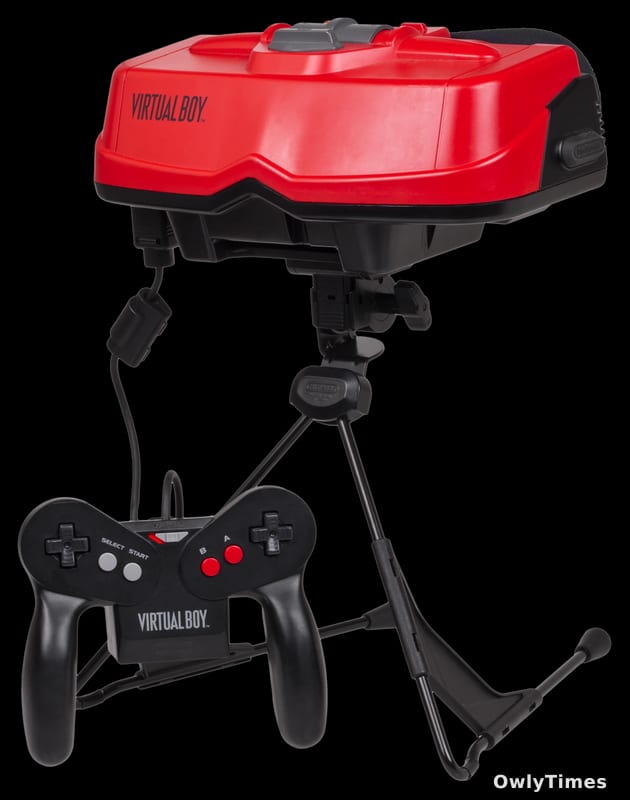
For those blissfully unaware, the original Virtual Boy, launched in 1995, was Nintendo’s first foray into 3D gaming. It wasn’t a triumph. The console, a bulky, red monstrosity requiring players to hunch awkwardly over a tiny, monochrome display, induced headaches and eye strain. It sold roughly 770,000 units worldwide – a fraction of the numbers Nintendo typically commands, and a swift exit from the market within a year. Now, in 2026, you can relive the experience, provided you have a Nintendo Switch Online + Expansion Pack membership and are willing to shell out extra for a dedicated accessory. This isn’t just emulation; it’s a recreation, complete with a $100 peripheral designed to mimic the original’s tabletop form factor, albeit with the convenience of wireless connectivity and a slot for your Switch or Switch 2. A $25 cardboard alternative exists, but let’s be honest, that’s less a revival and more a gag gift.
Original reporting: Engadget.
The price point is the most telling detail. $100 for an accessory that replicates a known-bad user experience? That’s not about honoring a classic; it’s about quantifying the value of ironic nostalgia. Nintendo isn’t banking on people genuinely enjoying the games – they’re betting on people wanting to say they enjoyed them, to share the story of the red-tinted misery, to participate in a collective remembering of a spectacular flop. This is a far cry from the polished, accessible retro offerings like the NES and SNES emulators, which are included with the base Nintendo Switch Online subscription. Those are about accessibility; this is about exclusivity and a very specific kind of cultural cachet.
The Expansion Pack as a Testing Ground
The decision to gate the Virtual Boy experience behind the Nintendo Switch Online + Expansion Pack is also significant. At $50 a year, the Expansion Pack already feels like a premium service for dedicated retro enthusiasts. Adding a $100 accessory requirement effectively turns it into a micro-console purchase. Nintendo is subtly segmenting its audience, identifying those willing to pay a premium for niche experiences. This isn’t just about the Virtual Boy; it’s about data collection. How many people buy the accessory? Which games are played the most? What’s the average playtime? This information will be invaluable as Nintendo considers future retro revivals, and more importantly, as they explore new hardware concepts.
Consider the context: the gaming landscape is awash in VR and AR headsets, all promising immersive experiences. Yet, many struggle with adoption due to cost, comfort, and content. Nintendo’s approach with the Virtual Boy is a low-stakes way to gauge consumer appetite for awkward, visually limited 3D experiences. They’re essentially asking, “How much discomfort are you willing to tolerate for a dose of nostalgia?” The launch titles – 3D Tetris, Galactic Pinball, Golf, The Mansion of Innsmouth, Red Alarm, Teleroboxer, and Virtual Boy Wario Land – are a curated selection of the best (and let’s be real, still fairly limited) titles from the original library, with promises of more to come, including Mario Clash, Mario’s Tennis, and Space Invaders Virtual Collection.
Beyond Retro: A Glimpse at Nintendo’s Future?
The cardboard version, while seemingly a joke, is perhaps the most insightful element. It acknowledges the inherent silliness of the whole endeavor, offering a low-cost entry point for those who want to participate in the meme. It also hints at Nintendo’s continued experimentation with modular hardware, a trend seen with the Labo series. While the Labo VR headset isn’t compatible, the underlying principle – using cardboard to create interactive experiences – remains. This isn’t about building a better Virtual Boy; it’s about understanding how people interact with unconventional hardware.
The success (or failure) of this revival won’t be measured in sales figures alone. It will be measured in data points, in user behavior, and in the insights Nintendo gleans about the evolving relationship between nostalgia, discomfort, and the desire for unique gaming experiences. Don't expect a flood of other forgotten consoles to be resurrected. Instead, watch closely for Nintendo’s next hardware innovation in 2026. Will it prioritize comfort and accessibility, or will it embrace a degree of deliberate awkwardness, pushing the boundaries of what players are willing to endure for the sake of novelty? My prediction: Nintendo will launch a new portable console with a modular design, offering a range of optional (and potentially uncomfortable) accessories, all justified by the promise of “unique” and “immersive” experiences. The Virtual Boy isn’t a relic of the past; it’s a prototype for the future.