
$420 Million Bet: Montgomery County’s VIVA White Oak and the Future of Biotech Hubs
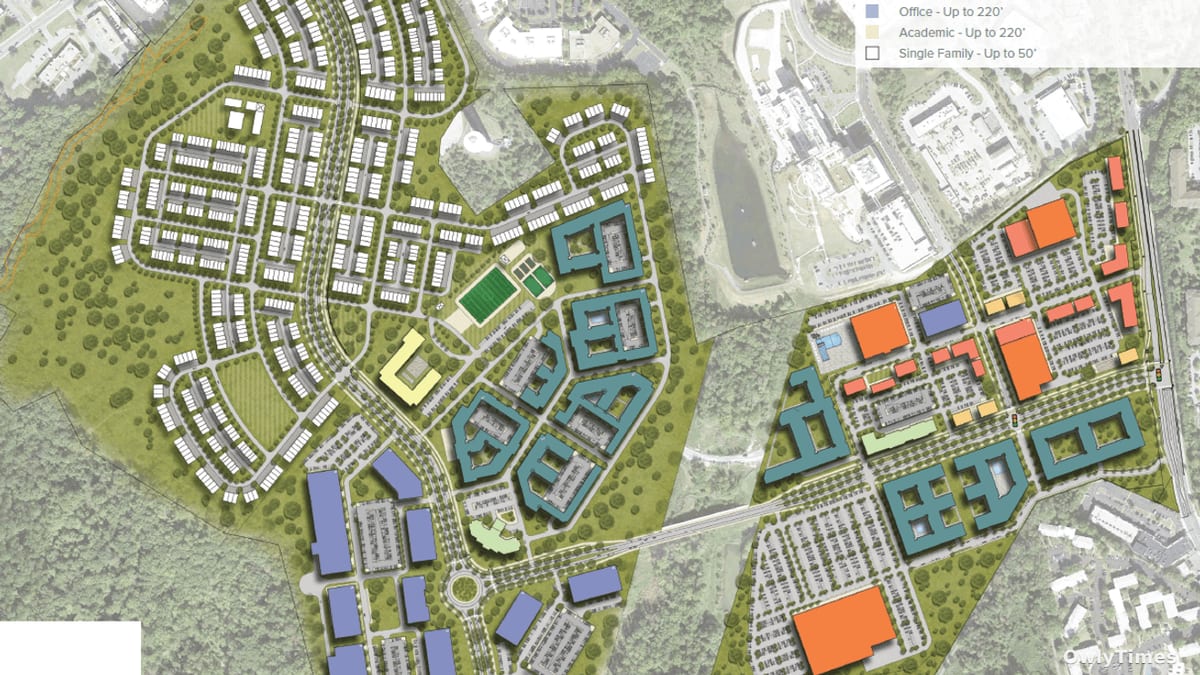
$420 million. That’s the size of the limited obligation Tax Increment Finance (TIF) bonds Montgomery County authorized this Tuesday, a figure that underscores a calculated gamble on the VIVA White Oak development and its potential to transform the region into a major biotech and innovation corridor. While presented as a win for job creation and economic growth, a closer look at the financing structure reveals a significant reliance on future tax revenue – a revenue stream dependent on the successful attraction of high-skilled industries to a location already saturated with competition. The approval isn’t simply about building a mixed-use development; it’s a strategic play to capitalize on proximity to the Food and Drug Administration (FDA) headquarters and position Montgomery County as a key player in the burgeoning life sciences sector.
The Mechanics of Risk: How TIF Bonds Fuel Development
The core of the VIVA White Oak financing hinges on Tax Increment Financing. Essentially, the county is betting that the increased property tax revenue generated by the $2.8 billion development will be sufficient to cover the $420 million in bonds used to fund infrastructure – roads, utilities, and other essential components. This isn’t free money; it’s a debt obligation secured against future growth. This approach differs significantly from traditional municipal bonds, which are backed by the county’s general fund. TIF bonds isolate the financial risk to the development area itself. While this protects the county’s overall credit rating, it also means that if VIVA White Oak fails to attract sufficient investment and generate projected tax revenues, the burden falls squarely on the project, potentially leading to delays or even abandonment. Compared to similar TIF-funded projects in the region, like the redevelopment of National Harbor, VIVA White Oak’s reliance on attracting specific high-value industries – biotech and related fields – introduces a higher degree of uncertainty. National Harbor’s success was driven by a broader appeal to retail and entertainment, a more diversified revenue base.
Based on the original wjla.com report.
Beyond the Headline Numbers: Jobs and Housing Realities
The projected economic impact of VIVA White Oak is substantial: over 17,000 construction jobs, 9,000 permanent positions, and 5,000 new homes. However, the type of jobs created and the affordability of those homes are critical details often glossed over. The emphasis on “high-skilled industries” suggests a demand for specialized labor, potentially exacerbating existing skills gaps in the region. Montgomery County’s unemployment rate currently sits at 2.6%, lower than the national average of 3.9% (Bureau of Labor Statistics, May 2024). Filling 9,000 positions requiring advanced degrees or specialized training will necessitate attracting talent from outside the county, potentially straining existing infrastructure and driving up housing costs. The inclusion of 5,000 homes is presented as a benefit, but the development plan doesn’t specify the proportion of affordable housing units. Given the proximity to the FDA and the anticipated influx of highly paid professionals, there’s a risk that VIVA White Oak could contribute to the county’s existing affordability crisis, pushing lower-income residents further away from employment opportunities.
The FDA Factor: A Competitive Advantage, But Not a Guarantee
The location of VIVA White Oak, directly across from the FDA headquarters, is undeniably a strategic asset. The proximity facilitates collaboration between researchers, pharmaceutical companies, and regulatory agencies, potentially accelerating the drug development process. However, this advantage isn’t unique. Several other regions, including Boston-Cambridge and the Research Triangle Park in North Carolina, have already established themselves as dominant biotech hubs, benefiting from strong university research programs and established industry networks. Montgomery County will need to offer compelling incentives – beyond just proximity – to attract companies away from these established ecosystems. The first phase of the project, encompassing 2 million square feet of development, will be a crucial test of the county’s ability to deliver on its promises. Montgomery County Council’s upcoming consideration of additional bond resolutions this summer will be a key indicator of their continued confidence in the project’s viability.
What This Means for Your Wallet
The VIVA White Oak development isn’t a direct cost to taxpayers today, but its success – or failure – will have ripple effects throughout the region. If the project thrives, it could lead to increased property values, a stronger job market, and a more vibrant local economy. However, if it falters, the county could face financial strain, and residents could see limited benefits. The key question to watch is whether Montgomery County can successfully attract the high-skilled companies and workforce necessary to justify the $420 million investment. Specifically, monitor the types of companies that lease space in the first phase of development – are they established biotech firms, or smaller startups? The answer will reveal whether VIVA White Oak is truly poised to become a biotech hub, or simply another mixed-use development with a hopeful, but ultimately unfulfilled, promise.