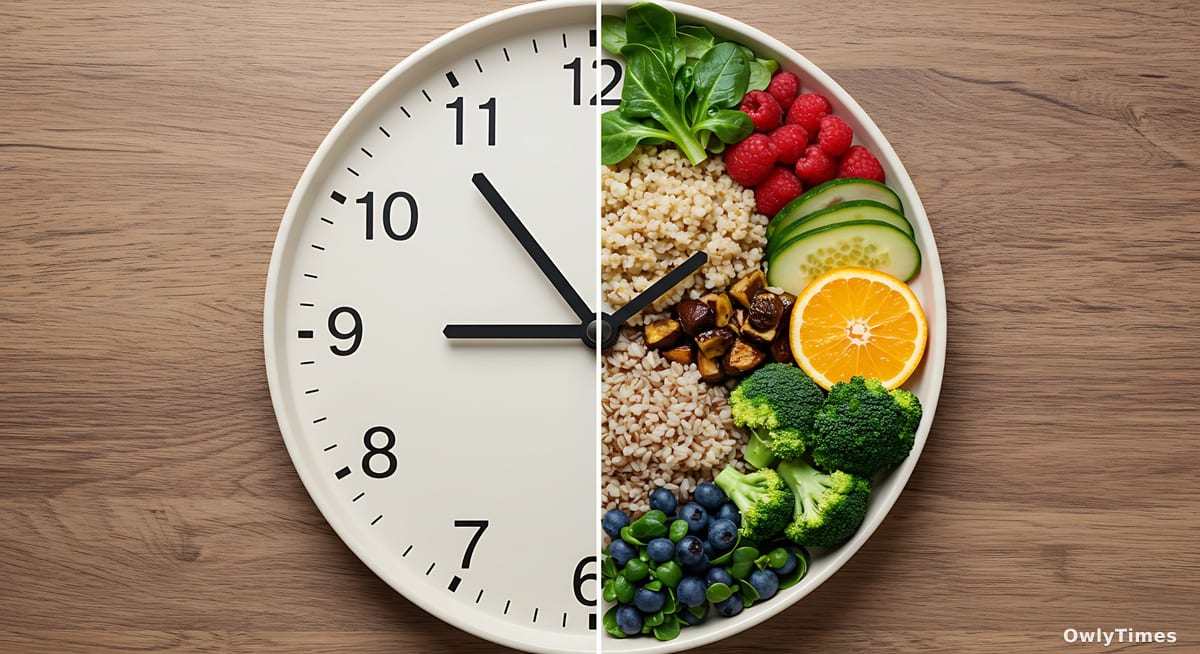

The persistent focus on what we eat in nutrition science has, for decades, overshadowed a deceptively simple question: when do we eat? Recent research into intermittent fasting (IF) and the body’s natural rhythms suggests that the timing of food intake may be as crucial as food choices themselves. While headlines often tout IF as a weight-loss panacea, the emerging picture is far more nuanced, revealing a complex interplay between feeding patterns, gut function, and metabolic health. The current wave of interest in IF isn’t simply about restricting calories; it’s about leveraging the body’s inherent biological processes – processes that are surprisingly sensitive to the predictability of mealtimes.
Intermittent fasting isn’t a single diet, but rather an umbrella term encompassing various eating patterns. These range from time-restricted eating (TRE), where meals are confined to an 8-10 hour window, to alternate-day fasting, and even religious practices like Ramadan. Despite their structural differences, all IF protocols introduce periods of voluntary abstinence from food, triggering a cascade of physiological responses. Manon Oliero, Ph.D., a researcher specializing in nutrition and the gut microbiome, emphasizes the importance of understanding IF as a cyclical process, rather than a static state of deprivation. This perspective clarifies how digestive, microbial, immune, and metabolic processes interact over time, beginning in the gut and extending to systemic metabolism.
The body’s response to fasting begins with synchronization. Consuming meals in the morning or early afternoon demonstrably improves glucose handling, lipid metabolism, and blood pressure regulation, whereas late-night eating can blunt insulin sensitivity, as demonstrated in research by Liu, Yi, and Liu (2023). This isn’t merely about avoiding late-night snacks; it’s about aligning food intake with the body’s natural circadian rhythms. As the fasting period continues, the small intestine activates the migrating motor complex (MMC), a crucial “housekeeping” mechanism described by Pimentel et al. (2002). This wave-like contraction clears residual nutrients and bacteria, potentially preventing bacterial overgrowth – a common issue in conditions like Irritable Bowel Syndrome (IBS).
See the original gutmicrobiotaforhealth.com story for the full account.
Beyond clearing debris, fasting initiates a cellular repair process. Nutrient deprivation reduces endotoxin translocation – the leakage of bacterial components into the bloodstream – and dampens inflammatory signaling. Studies, including one by Guevara-Cruz et al. (2024), show that IF can reduce pro-inflammatory cytokines while increasing those that support lipid metabolism and immune balance. Interestingly, the inflammatory marker IL-6 can transiently rise during fasting, but in this context, it appears to promote fat mobilization rather than chronic inflammation. This effect could be particularly beneficial for individuals with Inflammatory Bowel Disease (IBD), as highlighted by Haskey et al. (2025), though caution is warranted to avoid malnutrition or symptom exacerbation. At a fundamental level, fasting activates autophagy – the cellular “self-cleaning” process – improves mitochondrial efficiency, and reduces oxidative stress, bolstering tissue maintenance and metabolic flexibility. After approximately 10-14 hours without food, the liver’s glycogen stores deplete, and the body shifts to utilizing fat (in the form of ketone bodies) as its primary fuel source. These ketones aren’t just an energy source; they act as signaling molecules, influencing inflammation, oxidative stress, and gene expression.
However, the benefits of IF aren’t solely dependent on when you fast, but also on what happens when you break the fast. Re-feeding is a critical determinant of success. Large, highly refined meals can overwhelm the digestive system, slow gastric emptying, and hinder the absorption of essential minerals. Repeatedly consuming high-sugar or low-fiber foods can blunt microbial fermentation and satiety signals. This highlights a crucial point: IF isn’t a license to indulge during feeding windows. The quality of the diet remains paramount. Mohr et al. (2024) demonstrated that protein pacing alongside IF further enhances gut microbiome remodeling and metabolic improvements.
It’s important to acknowledge the limitations of current research. While promising, clinical evidence remains limited, and much of the data comes from relatively small studies. The optimal IF protocol – the ideal fasting duration and feeding window – likely varies depending on individual factors like genetics, lifestyle, and underlying health conditions. Furthermore, the long-term sustainability of IF remains a concern. The most effective approach is one that can be integrated into a balanced lifestyle and maintained over time. IF is not appropriate for everyone; individuals with diabetes, eating disorders (Mikhael-Moussa et al., 2025a & 2025b), hypotension, or those who are pregnant or breastfeeding should seek professional guidance or avoid fasting altogether.
Looking ahead, research needs to focus on identifying the specific microbial changes that mediate the benefits of IF. Are there particular bacterial species that are consistently enriched by IF and contribute to improved metabolic health? Can we personalize IF protocols based on an individual’s gut microbiome profile? And crucially, what are the long-term effects of IF on gut microbiome diversity and resilience? The next step isn’t simply to determine if IF works, but for whom it works best, and how to optimize its implementation for lasting health benefits. We should be watching for studies that move beyond simple metabolic markers and begin to assess the impact of IF on complex health outcomes, such as cardiovascular disease risk and cognitive function.





