
The air in Verona is thick with anticipation, not of star-crossed lovers, but of athletes shedding their competitive skins for a final, collective exhale. As the Milan-Cortina Olympics draw to a close, the closing ceremony isn’t a solemn passing of the torch, but a full-blown party – a recognition that the Games, at their core, are about human limits pushed and camaraderie forged. But beyond the spectacle of fireworks and flag-waving, this Olympics feels like a turning point, a moment where the very definition of national pride in sport is being renegotiated, and the U.S. team’s performance is a fascinating case study in that shift.
Welcome to the Olympic Edition of the L.A. Times Sports Report, and a final day poised to deliver either a triumphant crescendo or a bittersweet echo for Team USA. John Cherwa’s dispatch from Italy reveals a team on the cusp of history, having already secured a record-breaking 11 gold medals – the most for the U.S. in a single Winter Olympics. They’re now chasing a tie or break of their overall medal record of 34, set at Salt Lake City in 2002, currently sitting at 33 with a guaranteed silver in men’s hockey. But the numbers, while impressive, only tell a fraction of the story. This isn’t simply about medals; it’s about how those medals are won, and who is representing the nation in winning them.
Reporting from the Los Angeles Times informs this analysis.
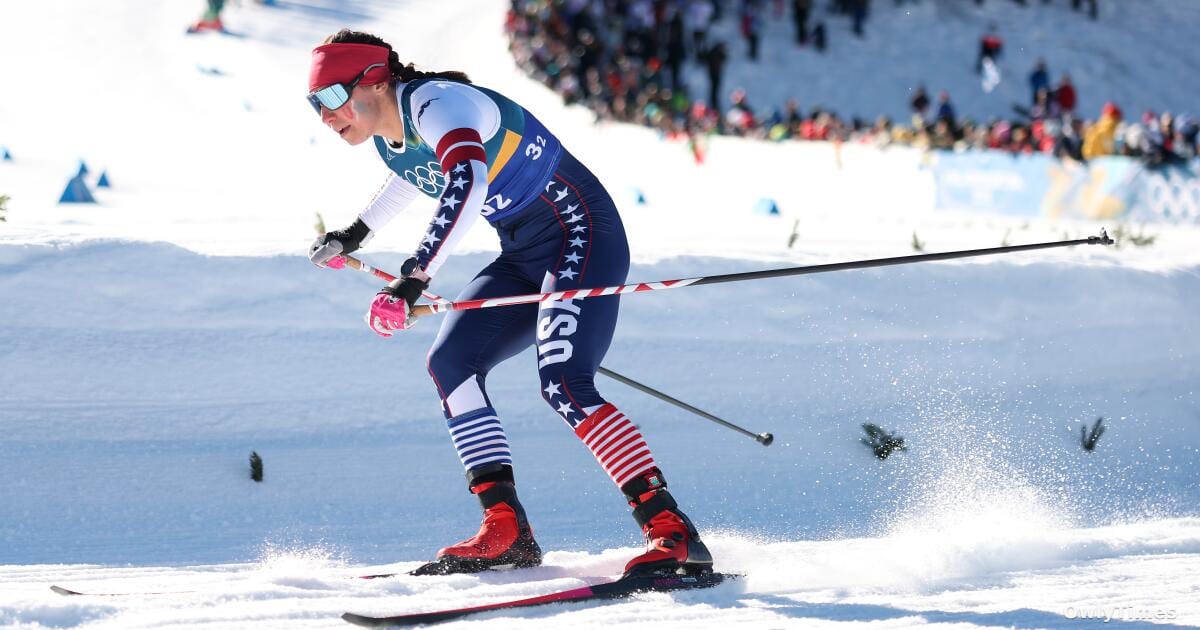
The shadow of Eileen Gu, the American-born freestyle skier competing for China, loomed large over these Games, sparking a particularly pointed debate fueled by figures like Vice President JD Vance. His criticism, and that of others, taps into a raw nerve in American culture – a discomfort with athletes choosing national allegiance based on opportunity rather than birthright. It’s a tension that reflects broader anxieties about globalization, shifting demographics, and the very meaning of “American exceptionalism.” While Gu’s success is undeniable, the controversy surrounding her highlights a growing disconnect between traditional notions of national representation and the increasingly fluid identities of today’s athletes. The U.S. needs one more medal to tie the record, and the pressure on athletes like Jesse Diggins in cross-country skiing and the four-man bobsled team is immense, but the conversation around who should be representing the U.S. is just as significant.
Saturday saw a surge of American success, spearheaded by the mixed team freestyle aerials group – Kalia Kuhn, Connor Curran, and Christopher Lillis – who delivered back-to-back golds in the event. Mia Manganello added a bronze in speedskating, and the two-woman bobsled team of Kaillie Humphries and Jasmine Jones secured another bronze, continuing the familiar narrative of German dominance in the sport. But even within these victories, a pattern emerges. While the U.S. is racking up medals, it’s consistently playing catch-up to Norway, who currently leads the medal count with 40 total, including 18 golds. This isn’t a new phenomenon; Norway has consistently invested heavily in winter sports infrastructure and athlete development, creating a system that consistently produces world-class competitors. The U.S., despite its economic and athletic resources, often lags behind in this long-term commitment.
The men’s hockey gold medal game against Canada, featuring a roster brimming with NHL stars like Auston Matthews, Connor McDavid, and Jack Eichel, is the centerpiece of today’s events. The return of NHL players to the Olympic tournament after a 12-year absence is a boon for the sport, injecting a level of skill and excitement that was sorely missed. But it also underscores a fundamental question: is the pursuit of Olympic glory becoming increasingly reliant on professional athletes, potentially overshadowing the development of homegrown talent? The U.S. team’s roster reads like a who’s who of the NHL, raising concerns about whether the Olympics are becoming a showcase for existing professional leagues rather than a breeding ground for future Olympic stars.
As the Games conclude in Verona, the question isn’t just whether Team USA will tie or break its medal record. It’s whether the U.S. can reconcile its traditional ideals of national pride with the realities of a globalized sporting world, and whether it will invest in the long-term development of its athletes to ensure it remains competitive on the world stage. Will we see a renewed focus on grassroots programs and sustained investment in winter sports, or will the U.S. continue to rely on the talent of athletes who may choose to represent other nations? That’s the legacy of these Milan-Cortina Olympics that will truly define its impact.